How to Organize a Small Closet Without a Custom System
Living in a small rental doesn’t mean resigning yourself to a chaotic closet. With a focused plan you can make every inch count: decide what stays, where it lives, and how often it cycles through — then stick to those rules so your closet stays useful.
Start by mapping your closet’s real estate, picking what belongs in arm’s reach, and limiting how many pieces live in each category. This approach replaces extra hardware with simple habits and a straightforward layout you can maintain in minutes a week.
1. Quick inventory and tidy purge
Begin with a one-time, focused sort. Pull everything out onto a bed or the floor and sort into categories: everyday tops, bottoms, outerwear, special-occasion items, workout clothes, and accessories. For each category, decide what you wear at least once a month. Items that don’t make that cut go into donate, repair, or store piles.
As you sort, assign a capacity limit to each category — that is, how many pieces of that type the closet can realistically hold and still be usable. These capacity limits keep closets from filling up again after a purge.
2. Build a closet rotation map
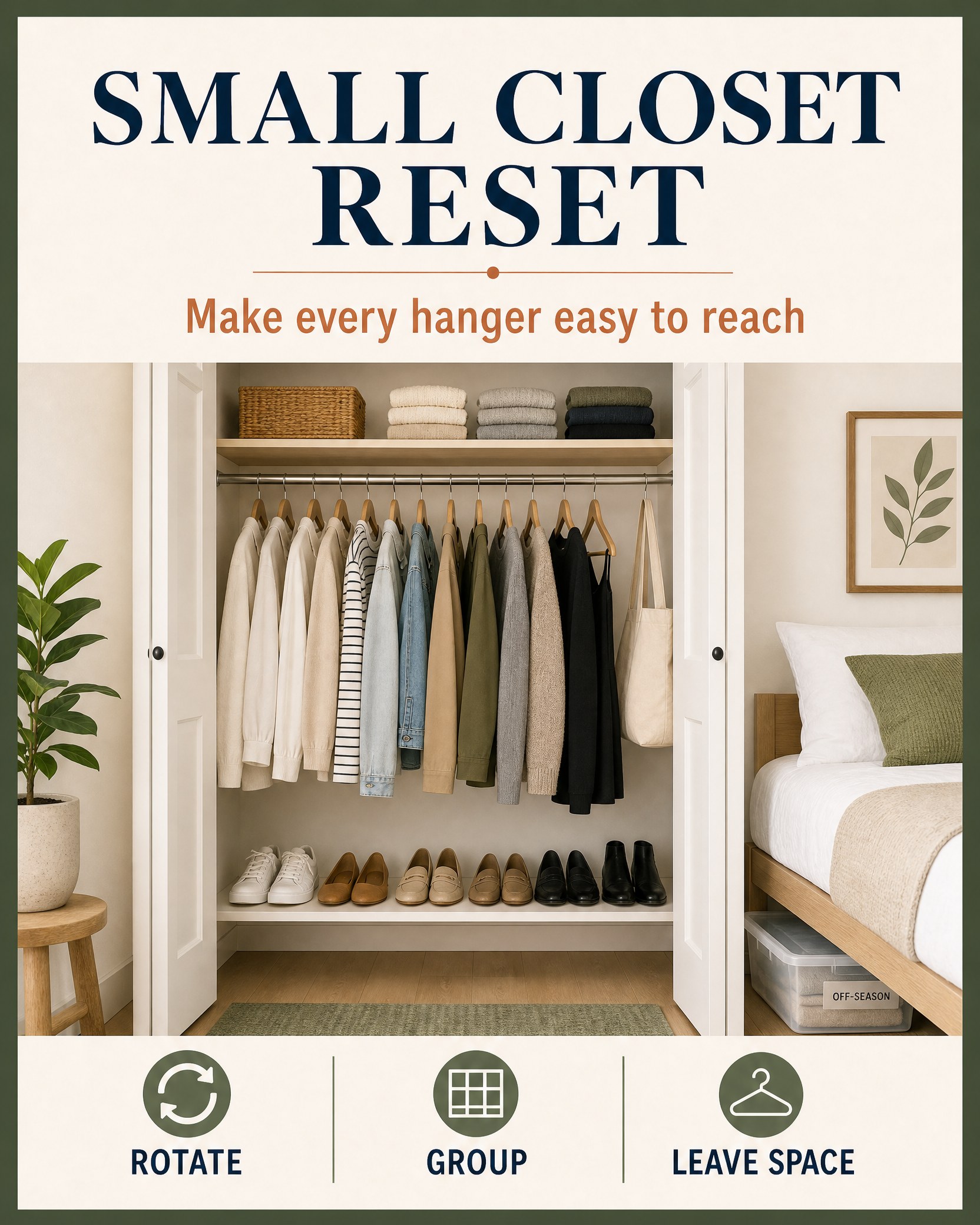
A closet rotation map is a simple diagram of where things live and how often they move. Draw a quick sketch or use sticky notes on the door to mark zones: daily reach (front), occasional (middle/back), seasonal (top shelf or under-bed), and overflow (suitcase or storage bin).
Label which categories go in each zone and how often you’ll rotate them. For example, put everyday tops and one week’s worth of bottoms in the front, with off-season jackets on the top shelf. When seasons change, rotate by swapping the seasonal zone contents with stored boxes.
3. Follow the one-reach rule
The one-reach rule means anything you use daily should be reachable without moving anything else out of the way. That keeps mornings fast and prevents the pile-up that happens when items live behind one another.
What counts as one reach?
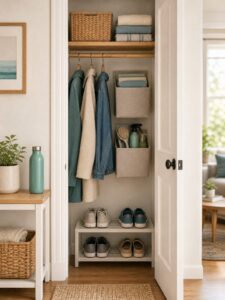
If you can grab an item while standing naturally in front of the closet without stepping into the space or shifting another pile, it meets the rule. Keep one-reach for daily tops, one or two pairs of go-to pants, and frequently used accessories.
4. Smart folding, hanging and vertical layering
Decide which pieces benefit from hanging and which save space folded. Lightweight tops and items that crease easily go on the rod; thicker sweaters and jeans can be folded on a shelf. Stack folded items no more than 6–8 high to avoid toppling and to keep visibility.
Use vertical layers: floor bins under hanging clothes for shoes and workout gear, a middle zone for hanging and folded items at eye level, and the top shelf for seasonal or sentimental items you rarely need.
5. Zones, labels, and small helpers
Mark zones with simple labels or color-coded hangers so you can quickly return items to their home. Small, clear bins or open baskets on shelves help keep accessories organized without hiding contents. Accept the trade-off: visible organization means a slightly busier look, but faster decisions and less time hunting for things.
At-a-glance reference
| Category | Suggested capacity | Best location | Rotation |
|---|---|---|---|
| Tops (everyday) | 8–12 pieces | Front of rod / eye-level shelf | Weekly |
| Bottoms | 4–6 pairs | Hanging or low shelf | Biweekly |
| Outerwear | 2–4 pieces | Top of rod or top shelf | Seasonal |
| Accessories / Shoes | 5–10 items | Floor bins / small shelf | Monthly |
6. Trade-offs to consider
- Visibility vs neatness: Open bins and visible stacks make choices faster but look less uniform. Covers or boxes hide mess but slow retrieval.
- Max capacity vs breathing room: Packing to the limit saves space but increases wrinkling and time spent shifting items. Slightly lower capacities make the closet easier to use.
- Time investment: A 1–2 hour overhaul plus 5–10 minutes weekly maintenance beats frequent weekend-sized resets.
Related guide: Under-Bed Storage: What to Store, What to Avoid, and How to Keep It Useful
7. Daily habits and a maintenance plan
Set two small habits: a nightly five-minute return routine and a monthly spot-check. The return routine is simply putting hangers back in the correct zone, folding any items left out, and tossing anything that doesn’t belong into a staging basket for reassignment. The monthly check reviews your rotation map and capacity limits.
Related guide: A Laundry Routine for Small Apartments: Keep Clothes From Taking Over
FAQ
How often should I rotate seasonal items?
Plan a swap twice a year: once for warm-weather items and once for cold. A brief, scheduled rotation keeps your daily zone uncluttered and prevents seasonal overflow.
Can I use bins and boxes in a rental closet?
Yes. Open or clear bins are especially useful because they keep things tidy and visible without requiring installation. Use labeled boxes on higher shelves for off-season storage.
What if I don’t have a top shelf or a high rod?
Create vertical layers with freestanding solutions like a tidy stack of low-profile bins on the floor or a narrow hanging organizer from the rod. The key is assigning consistent zones so items are easy to find and return.
Next step: schedule a 90-minute session this weekend to do the initial purge, draw your rotation map, and set capacity limits for each category. Once that’s done, commit to the five-minute nightly routine—it’s the small maintenance habit that makes the system stick.
Sources and fact-checking
This article provides practical editorial guidance. Safety, cleaning, disposal, rental, and product decisions can depend on the item, its instructions, and local requirements.
- U.S. Consumer Product Safety Commission — Anchor It! — For furniture, TV, or elevated-storage safety, follow product instructions and secure top-heavy furniture where appropriate.
Fact-checked against the linked official resources on August 27, 2026.