
Heated Lunch Box Power Compatibility: Wall vs. Vehicle
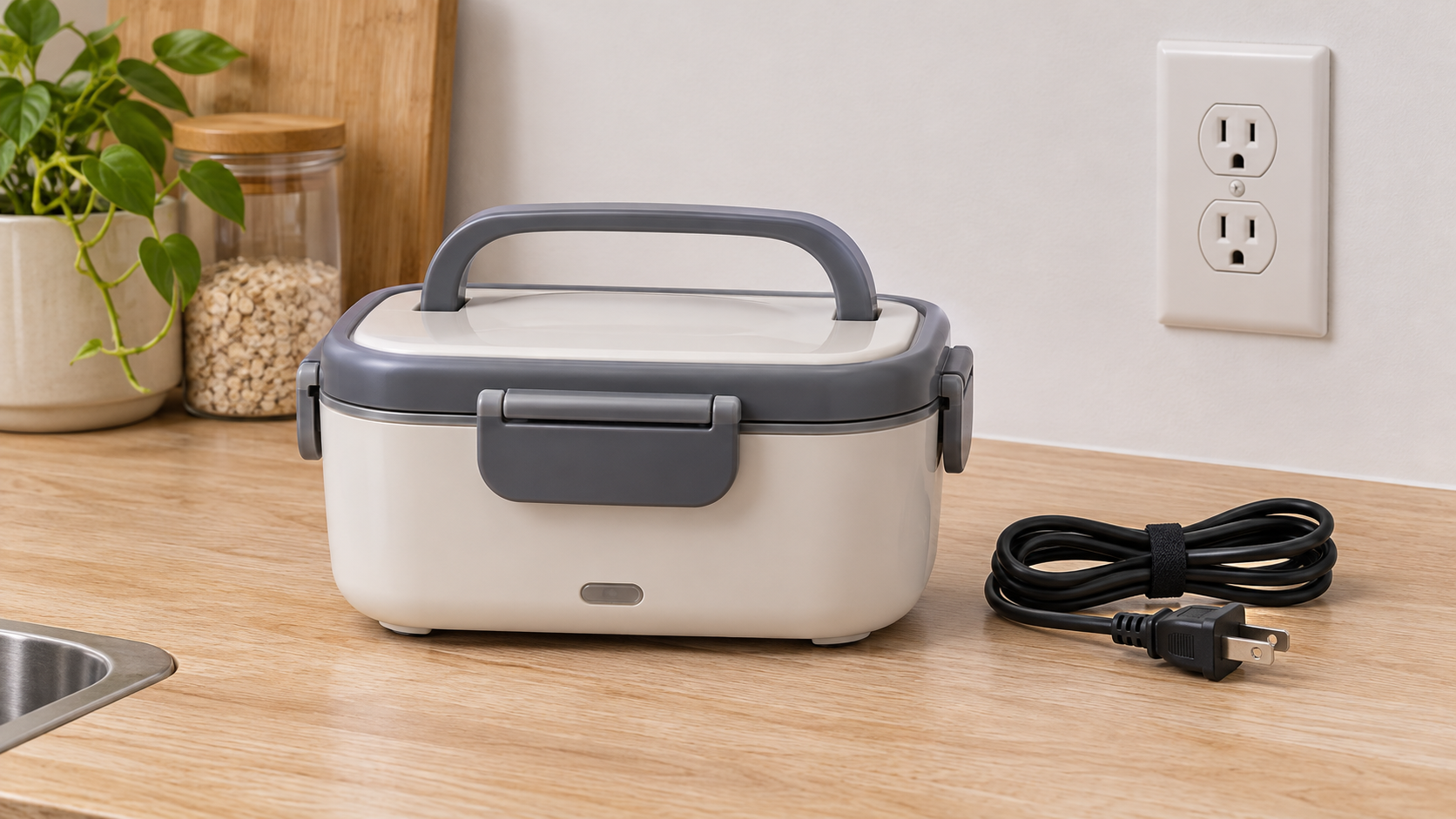
Heated lunch box power compatibility starts with the input label: match the exact appliance input to the power source you plan to use. The two Hot Logic versions described below are separate products, so do not treat their cords or connectors as interchangeable. For example, Hot Logic lists a Mini wall version for standard U.S. wall sockets and a separate Mini vehicle version for 12V vehicle power. Start with the exact model label and its supplied cord, not with how quickly you hope lunch will warm.
Heated lunch box power compatibility starts with the input label
Read the rating label on the appliance and the wording on the product page or manual for that exact model. “120V,” “wall,” or a standard household plug points to a wall-powered version. “12V vehicle” identifies a different product intended for a vehicle power connection. Do not treat the bag shape, heating plate, or brand name as proof that adapters or cords can be swapped.
The current Hot Logic Mini wall listing says it uses 45 watts (0.5 amps) and works with standard U.S. wall sockets. Its separate 12V vehicle listing states 45 watts (3.75 amps) and says to use 12V vehicle power. Those figures are product-specific examples, not a rule for every heated lunch box. Check the label on the unit you are considering, especially when a listing combines several variants.
| Where you plan to eat | What to verify | Decision before checkout |
|---|---|---|
| Desk, break room, hotel room | Exact wall-voltage rating, plug, and manufacturer instructions | Choose a U.S. wall version only if its label matches the outlet |
| Car, truck, or van | Exact vehicle-voltage rating and the supplied vehicle connector | Choose a model expressly sold for that vehicle-power use |
| Outlet plus vehicle use | Whether the manufacturer sells separate approved versions or accessories | Do not assume one cord or converter makes two versions equivalent |
| Shared or rental kitchen | An accessible outlet and a dry, stable place for the appliance | Confirm building rules and keep the cord out of walkways |
Decide where the appliance will actually plug in
Make the power source part of the lunch plan. At a desk, look for an outlet that is close enough that the cord will not cross a doorway, sink area, or chair path. In a vehicle, identify the power port you will use and make sure the product is explicitly designed for that type of vehicle connection. A portable battery, inverter, or adapter changes the setup; do not assume it is suitable unless the appliance maker documents that combination.
Do not make a buying decision from a heating-time claim. Food temperature, starting temperature, container material, portion size, and the product itself can change the result. The manufacturer’s timing language may be useful for its own model, but it is not a promise for another lunch, outlet, or vehicle. Plan a safe food-storage routine separately from the appliance choice.
Measure the lunch setup, not just the bag
Measure the counter or desk footprint, then add room to place a food container without forcing the zipper or lid. Also measure the path to the outlet. A compact appliance can still create an awkward setup if the cord is stretched or the only outlet is behind a microwave. For a rental kitchen, the next practical step may be to map a no-modification food-prep zone using this small rental kitchen setup guide.
Use containers that the appliance maker permits. Keep any food container closed as directed, set the unit on a stable surface, and keep liquids away from the plug, connector, and outlet. Do not attempt to test compatibility by connecting a wall product to vehicle power or the other way around.
Separate electrical fit from food handling
Power compatibility answers only whether the appliance belongs on that source. It does not establish that a meal has been held, reheated, or served at a safe temperature. Follow the food instructions for the meal and the appliance’s own manual. If a workday interruption or outage affects chilled food, use the separate decision steps in our small-apartment food safety check rather than relying on an appliance bag.
Who should skip this purchase
Skip a heated lunch box if you cannot identify the exact input rating, do not have a clear approved power source, or need a guaranteed meal-ready time. A traditional insulated lunch bag and access to a microwave may be a simpler match when power access is uncertain. Also pass if your available surface is wet, unstable, or crowded enough that the cord cannot stay clear.
Check the vehicle connection before travel
For a vehicle version, read the vehicle owner’s manual for the accessory outlet or power port you intend to use. Its permitted load can be a separate limit from the lunch box rating. Use the exact supplied vehicle connector, inspect the connector and outlet for damage, and do not substitute a wall cord, improvised adapter, or loose extension arrangement. Place the appliance on a stable, dry surface where it can stay secured and clear of pedals, controls, airbags, and passengers while the vehicle is moving. Stop if the manufacturer instructions or vehicle manual do not support the planned connection.
When the product arrives, compare the appliance label, included connector, and model number with the version ordered before discarding packaging. A “portable” product title does not identify its input. This check does not predict heating time or food results; it only confirms whether the documented power setup is the one you have.
FAQ
Can I use a 120V heated lunch box in my car?
Not just because it fits physically. Use a vehicle setup only when the manufacturer approves that exact model and connection.
Are all Hot Logic Minis powered the same way?
No. Hot Logic currently lists separate U.S. wall and 12V vehicle versions. Confirm the exact listing and label.
Does lower wattage mean it is safe for every outlet?
No. Use the manufacturer’s instructions and a sound, appropriate outlet. Do not use a damaged cord or unsupported adapter.
Will a compatible lunch box heat food by a certain time?
Do not treat compatibility as a time guarantee. Food and setup conditions vary; follow the product instructions and food-safety guidance.
Sources and fact-checking
Checked against the official sources below on November 27, 2026. This is research-based guidance, not a claim of hands-on product testing.


댓글 0
첫 댓글을 남겨보세요.