What to Do With Old Batteries and Household Chemicals in a Small Home
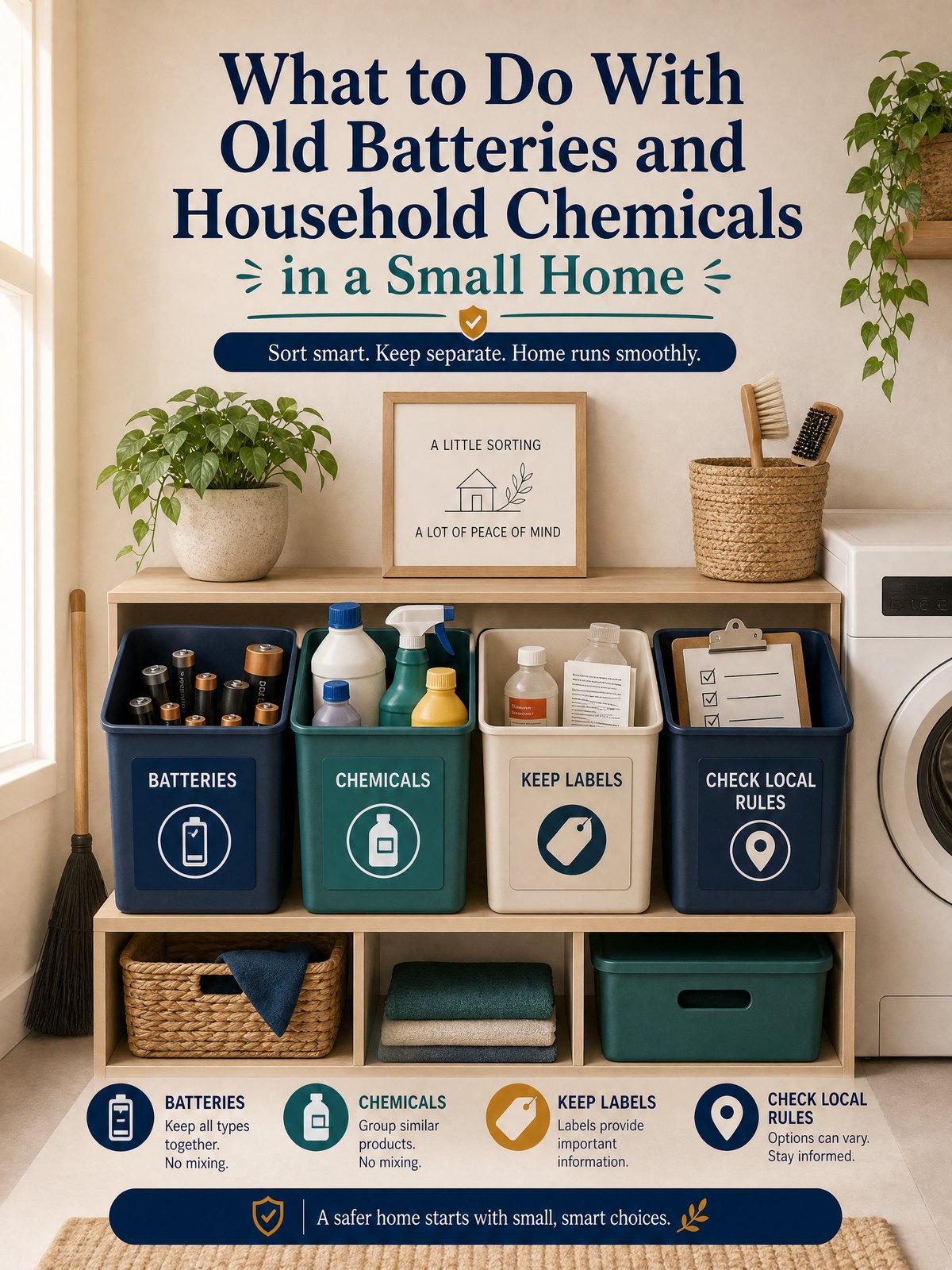
Small homes and rentals often lack a garage, shed, or bulky utility closet where expired cleaners, old batteries, and leftover paints can sit out of the way. That makes these items more likely to be forgotten, mixed together, or stored where they could spill or corrode.
This guide shows a straightforward way to label, separate, and store common household batteries and chemical products so they remain manageable in a small space, and how to identify local collection options. It emphasizes simple habits you can keep up in a studio or small apartment and reminds you to follow product labels and local rules.
Start with the real constraint
Your real constraint is space: limited floor area, limited locked storage, and often strict lease rules about storing hazardous materials. That means any system must fit into a small footprint and be easy to maintain day to day.
Another practical constraint is that official disposal options vary by town. The U.S. Environmental Protection Agency notes that products such as paints, cleaners, oils, batteries, and pesticides can need special disposal care, and advises following labels and local collection guidance. Because of that variation, this article focuses on in-home handling and on how to locate and use your local collection resources rather than prescribing a single disposal method.
At-a-glance plan
| Item | Immediate home action | When to move to collection |
|---|---|---|
| Single-use and rechargeable batteries | Store upright in a labeled plastic container; consider taping terminals as a practical option to reduce short risk. | When container reaches a few inches deep or any battery is swollen/leaking; then take to local collection. |
| Household cleaners and aerosols | Keep in original bottles with labels visible; place on a low shelf away from heat and out of children/pets reach. | When you have partials of multiple products or before moving; follow product label and local guidance for disposal. |
| Leftover paints and stains | Seal lids tight, label color and date; store small quantities upright in a cool area. Consider solidifying small amounts in a disposable container as a personal planning approach. | Before they sit more than a year or when preparing to relocate; use local household hazardous waste collection. |
| Oils, solvents, pesticides | Keep original containers closed and labeled; store where spills are contained, and do not mix with other liquids. | When container is empty or you have leftover product you will not use; take to local collection per label/local rules. |
Build the system step by step
- Designate a single small storage spot: a shallow plastic bin with a locking lid or a low shelf in a closet that fits your lease rules.
- Label and inventory: use a permanent marker to note product name and date opened; keep a simple list on the bin lid or a phone photo as a backup.
- Segregate by type: group batteries separate from liquids and aerosols; keep incompatible materials apart to avoid accidental mixing.
- Apply safe-transit prep: when transporting items to a collection site, place leaks or fragile containers inside an outer box; tape battery terminals is a practical option to reduce contact between cells.
- Locate collection options: check your city or county website or call local waste services to learn when and where household hazardous waste collection occurs and what they accept.
Following these steps creates a compact, repeatable routine. Step 1 keeps everything in one place so clutter doesn’t spread through the apartment. Step 2 cuts down on impulse disposal mistakes because labels answer the most common questions at a glance. Step 3 prevents mixing. Steps 4 and 5 prepare you to move items safely and make disposal an occasional trip instead of a daily chore. Remember to follow the product label, your lease, and local collection guidance whenever rules are specified.
Trade-offs to consider
Every small-home system balances convenience against safety and the frequency of trips to a collection site.
- Storing items for a longer time reduces trips but may increase risk of leakage or deterioration; decide how long you are comfortable keeping items at home as a personal planning approach.
- Keeping items in original packaging is safest for identification but can take more space; transferring small amounts to clearly labeled containers is a practical option when space is tight.
- Taping battery terminals reduces short risk during storage and transport as a practical option, but verify any specific handling guidance on the battery label or by your local recycler.
Keep it workable
Set a single quarterly reminder on your phone to inspect the storage bin: check labels, rearrange items for safety, note anything leaking or swollen, and add items you intend to take to the next local collection event. If your town schedules collection only a few times per year, plan in advance so you don’t end up keeping unstable items for too long. Always follow product labels, your lease, and local authority instructions when handling, storing, or transporting these materials.
FAQ
Can I throw old batteries or cleaners in the regular trash?
That depends on local rules; the U.S. Environmental Protection Agency advises following product labels and local collection guidance. If you are unsure, check your city or county waste website or ask local waste services before placing these items in the regular trash.
What should I label on containers kept at home?
At minimum, mark the product name and the date you opened it; for paints note the color and approximate quantity remaining. Keeping a photo inventory or a simple list on the bin lid is a practical option that helps decide when to take items to collection.
Are there simple safety steps for transporting these items?
Use a sturdy outer box or tote, keep liquids upright and capped, separate incompatible products, and consider taping battery terminals as a practical option; verify exact transport rules with the local collection site before you go.
Next, pick one small bin or shelf today and label it “Hazardous—Do Not Mix.” Then check your town’s website or call local waste services to learn the next household hazardous waste collection dates and accepted items.
Sources and fact-checking
This guide provides practical editorial guidance. Requirements and safe choices can depend on the product, lease, local rules, and individual situation.
- U.S. Environmental Protection Agency — Household Hazardous Waste — EPA notes that products such as paints, cleaners, oils, batteries, and pesticides can need special disposal care, and advises following labels and local collection guidance.
Fact-checked against the linked official resources on August 27, 2026.