
Spray Mop Pad Washing: Clean, Dry, and Replace It
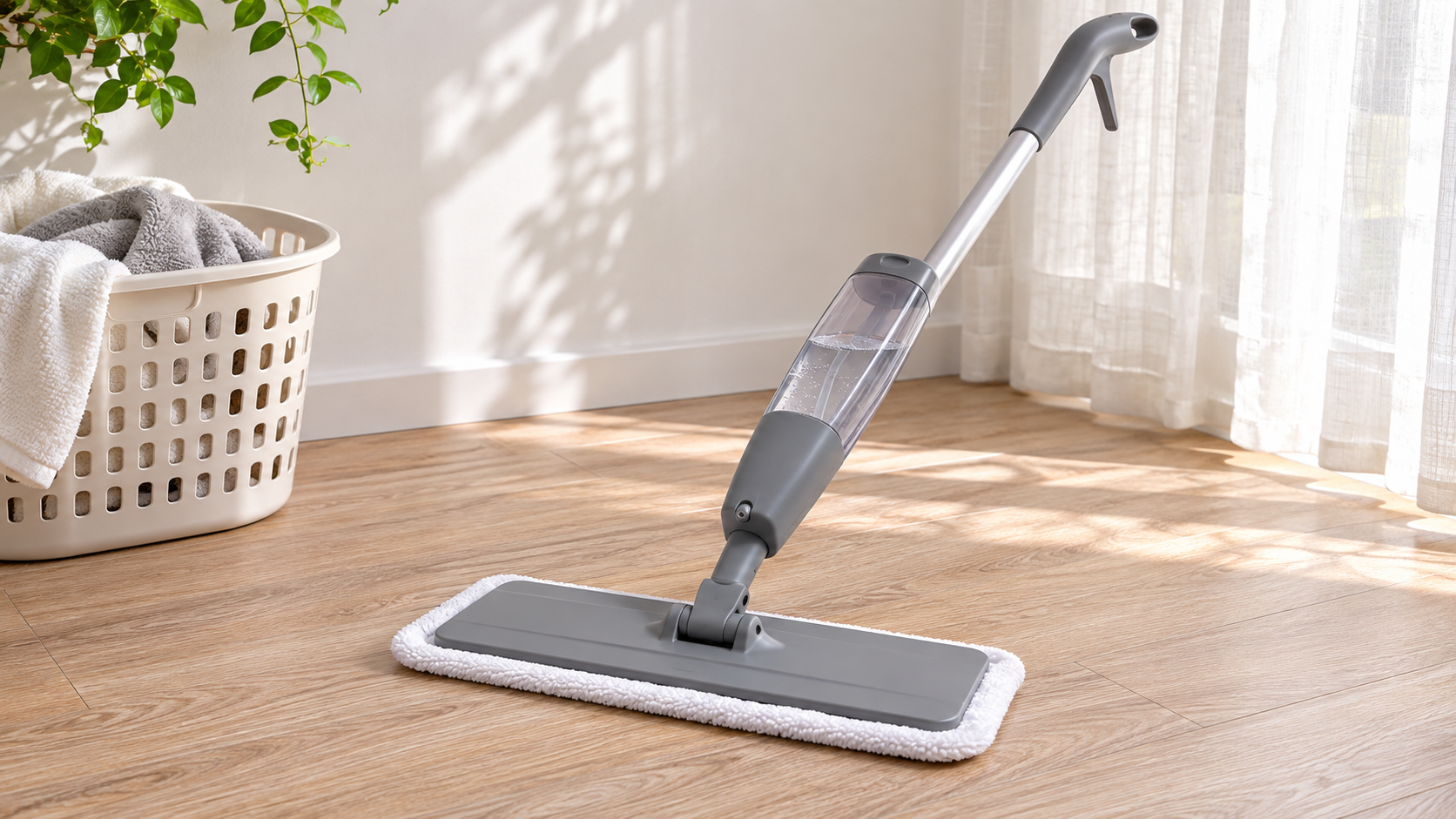
Spray mop pad washing instructions is a model-specific maintenance task. Spray mop pad washing instructions for microfiber refills: wash, dry, inspect the attachment, and decide when a replacement pad is needed.
Remove a washable microfiber refill from its frame and shake loose debris into the trash. For a Bona pad that becomes dirty during a job, Bona says to rinse it in warm water, wring it until slightly damp, reattach it, and continue. Disposable sheets and pads without a washable-care instruction should not go into the washer.
Start with the pad’s own care label
Remove the pad after the cleaning session rather than leaving soil and moisture folded against the mop frame. Shake loose debris into a trash can first. Bona’s U.S. FAQ says its microfiber pads can be machine washed with mild detergent on a warm, gentle cycle and says not to use bleach or fabric softener. It also advises keeping lint-shedding laundry out of the same load. Those instructions are useful only for Bona pads: another brand may specify a different cycle or drying method.
Look at the backing before it goes into the washer. Hook-and-loop strips, elastic pockets, and sewn tabs need to remain intact to keep the pad flat against the mop. If an edge is curling, the backing separates, or the attachment no longer holds securely, laundering will not restore the fit. Set that pad aside and locate the model-specific refill.
| Decision | Check | Do next |
|---|---|---|
| Before washing | Check the pad label and the mop manual | Separate the pad from the frame only as directed. |
| Detergent choice | Use the maker-approved mild detergent | Keep bleach and fabric softener out unless the exact label says otherwise. |
| Drying | Choose the stated air or low-heat option | Let the washed pad dry fully before storage. Bona’s mid-job rinse directions separately allow slightly damp reattachment. |
| Replacement | Inspect pile, edges, backing, and attachment | Buy the refill made for the exact mop system. |
Choose a wash load that protects microfiber
A pad that comes out covered in lint will not be ready for a floor. Wash it with similar low-lint microfiber items, not cotton towels, fleece, or heavily shedding fabrics. Use the detergent amount appropriate for the load and avoid adding product simply because the pad looks dirty. Fabric softener can leave a coating on microfiber, while bleach may damage the material. Both Bona and O-Cedar specifically caution against them for their microfiber pads.
Do not assume every removable pad may be machine washed. Some mop systems use disposable sheets; some refill constructions have different care directions. If the label is missing, use the manufacturer’s support page or the package for the exact replacement instead of guessing from another pad’s instructions.
Dry a laundered pad before storage, not mid-job
Drying is a storage decision as much as a laundry step. Bona permits air drying or low tumble drying for its pads; O-Cedar’s replacement guidance says to lay its mop heads flat or hang them to air dry and to avoid high heat. Follow your pad’s instruction, then check that the absorbent surface and the backing are dry before attaching it. A laundered pad belongs fully dry before it is put away. This storage step is different from Bona’s mid-job rinse-and-wring instruction for a pad that is only slightly damp before reattachment.
Keep a second compatible pad if your routine requires a same-day second floor. That avoids rushing the drying step and makes it easier to wash one pad separately from lint-heavy laundry.
Replace the pad for condition, not a calendar promise
Replacement is not one universal interval. Bona says its microfiber pads can be washed up to 500 times, but that statement belongs to its pads and does not guarantee the same life for another brand or a pad exposed to a different routine. Replace a pad when its fastener, stitching, shape, or pickup performance is no longer dependable, or when the manufacturer gives a model-specific replacement instruction. Purchase by mop model or refill part number, not by approximate width alone.
For a broader floor routine, pair this task with a cleaning-supply refill list. If storage is the barrier, the next useful decision is how to organize cleaning supplies under the sink.
Keep the spray mechanism out of the laundry decision
The pad and the bottle or reservoir are different maintenance tasks. Remove only the textile refill that the maker says is removable. Do not put a mop frame, spray trigger, reservoir, or an attached disposable sheet into the washer. If the frame has visible residue, consult its care instructions for a wipe-down method. This boundary matters in a small home because a compact item can look washable as one piece even when its parts have different limits.
Before the next use, attach the dry pad on a clear floor and check all four edges. A pad that is centered but not fully fastened can bunch, drag, or leave an untreated strip at the edge of a pass. If it cannot sit flat, inspect the pad attachment and frame rather than adding more cleaner. Replacing a worn refill is usually the more direct next step than trying to compensate with a heavier spray.
Make a small pad rotation instead of stretching one refill
Labeling is unnecessary, but separation is helpful: keep clean, dry pads together and move used pads to a breathable laundry spot until wash day. Do not store a used damp pad in a sealed plastic bag. If a cleaning session covers kitchens and bathrooms, change pads when soil transfer would defeat the purpose of cleaning. The exact point is a judgment call, not a published universal number.
When shopping for a spare, compare the mop model, attachment style, and stated compatible refill. A generic pad with an approximate fit may be cheaper but can interfere with spray-mop contact or come loose. Save the model number in your household supply list so a replacement can be checked before the old pad fails.
Match the cleaning liquid to the pad and floor
Do not use pad washing to solve a product-compatibility problem. The pad collects the soil and cleaning liquid used on the floor; the floor manufacturer may limit which cleaners or amounts are appropriate. Read both the floor-care direction and the mop-pad direction. If the pad feels stiff or leaves visible residue after washing, do not assume a hotter cycle is the answer. Recheck whether softener, bleach, excess detergent, or lint-producing laundry entered the wash.
Keep a small staging spot for a just-used pad: a ventilated basket or drying rack is more useful than placing it on a finished floor or sealing it in a bin. If you must transport it to a shared laundry room, carry it in a washable open bag and wash it promptly. This keeps the decision focused on textile care rather than adding unverified claims about sanitation.
Frequently asked questions
Can I wash a spray mop pad with towels?
Avoid towels or other lint-shedding items when the pad maker gives that warning; lint can transfer to microfiber.
Can I use fabric softener on a Bona pad?
No. Bona’s U.S. FAQ says to avoid fabric softener and bleach.
May I put the pad back on while it is damp?
For storage after laundering, wait until it is fully dry. During a Bona cleaning job, its FAQ allows a warm-rinsed pad to be wrung slightly damp and reattached.
Are all spray-mop pads interchangeable?
No. Match the refill to the mop’s attachment design and model.
Sources and fact-checking
Checked against the official sources below on November 27, 2026. This is research-based guidance, not a claim of hands-on product testing.


댓글 0
첫 댓글을 남겨보세요.