How to Create a Refill List for Cleaning and Paper Supplies
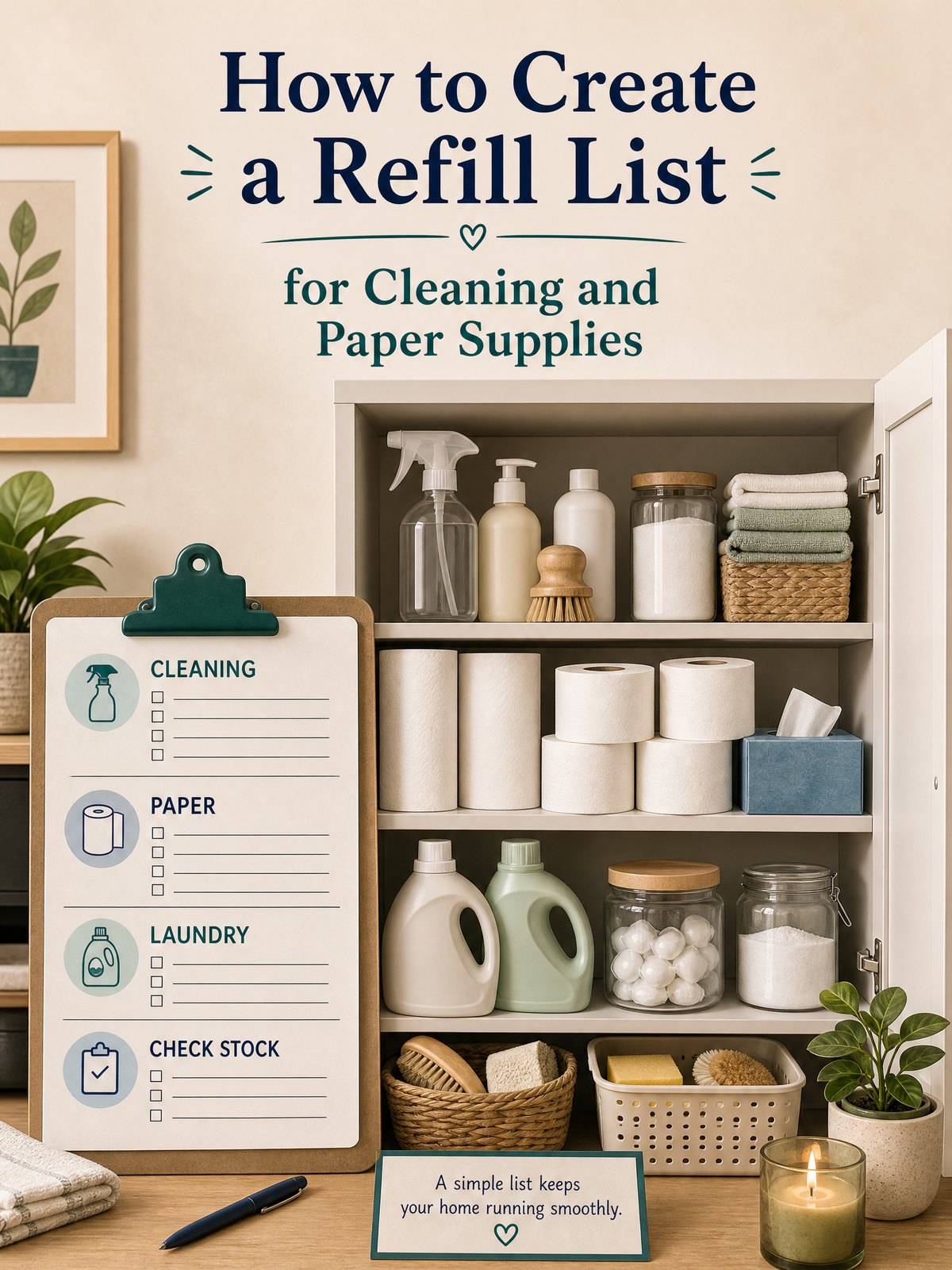
Small-space renters often keep too many cleaning products or run out of paper supplies at the worst moment. The problem is usually not knowing what’s low until you need it, then buying duplicates as a quick fix.
This article shows a compact refill-list system you can see at a glance so low-stock signals are meaningful and you stop accumulating products you don’t use. It focuses on visible signals, simple rules for when to reorder, and how to avoid buying extras that crowd a closet.
Start with the real constraint
Space is the real constraint in apartments and tiny homes: shelving, a closet, or under-sink areas are limited, and anything that sits unused is wasted space. Treat storage capacity as the fixed resource you must protect.
Also recognize friction: how often you can realistically shop or accept deliveries is likely limited by time, budget, or building access. Use that constraint to set reorder timing and minimums that match your actual shopping rhythm rather than an idealized schedule.
At-a-glance plan
| Item group | Visible low-stock signal | When to reorder (practical option) | How many to keep |
|---|---|---|---|
| Multi-surface cleaner | Small bottle (<25% left) on front shelf | Reorder when bottle reaches signal or 1 week before planned run-out | Keep 1 full plus 1 open |
| Paper towels | Last roll stored visibly on counter or hook | Reorder at 1 visible spare roll if you shop weekly; 2 if less frequent | Keep 2–3 rolls depending on use |
| Dish soap | Companion small pump bottle on sink as indicator | Reorder when pump bottle needs refill or at 2–3 days’ supply left | Keep 1 open container and 1 backup |
| Trash bags & liners | One visible box on top shelf with last box marked | Reorder when you can see only half the roll or 1 box left | Keep 1 box open plus 1 backup box |
Build the system step by step
- Choose a small, visible staging area: a top shelf, a clear tote, or a magnetic bin on the inside of a cabinet door. Keep only refill-state items there.
- Decide one clear low-stock signal for each category: a nearly empty bottle at the front, the last roll on a counter, or a labeled index card.
- Create a short refill list: four to eight categories maximum (cleaners, dish soap, laundry, paper towels, toilet paper, trash bags, sponges, specialty products).
- Set a realistic reorder rule for each category as a practical option — for example, “reorder at 25% left” or “reorder when one spare remains” — based on how often you shop or accept deliveries.
- Use a single place to record orders: a sticky note on the fridge, a shared note app, or a small whiteboard. Mark who will buy next and the planned pickup or delivery window.
After you complete these steps, practice them for a month and adjust. If you find you keep buying extra because you forget the list, tighten the visible signal (make the low-stock item even more obvious) or move the staging area to a higher-traffic spot.
Trade-offs to consider
There is no single perfect setup — each choice trades space, risk of running out, and shopping frequency. Choose the balance that fits your living space and schedule.
- Keep fewer spares to save space but accept slightly higher risk of running out between shopping opportunities.
- Keep more spares to reduce shopping frequency but plan for the space those extras occupy and the likelihood of unused items.
- Use bulk or multipacks only if you have the storage and a plan to use them before they degrade or require special disposal; verify local rules if disposal could be required.
Keep it workable
Maintenance is a weekly five-minute check: glance at the staging area and the visible signals, update the single refill note, and remove any product you never used in the past three months. If an item consistently goes unused, stop buying it and free the space. Always follow product labels and manufacturer instructions for use, storage, and disposal, and follow your lease or local authority guidance when storage or disposal rules apply.
FAQ
How do I avoid duplicates bought by different household members?
Use a single shared list in a visible spot and assign one person per shopping run or set a simple rule: if it’s on the refill note, do not buy unless the note is checked off. If you use a shared phone note, add a timestamp and initials when items are purchased.
What if I sometimes can’t go shopping for several weeks?
Make that longer gap a planning input: set higher minimums as a practical option (for example, keep two spares instead of one for paper goods) and mark nonperishable backups clearly so they don’t get used accidentally.
How should I handle cleaners or chemicals I rarely use?
If a product is used less than a few times a year, consider borrowing, sharing, or renting it, or mark it as “seasonal” and store it separately; when disposal is required, follow the product label and local guidance—EPA notes that products such as paints, cleaners, oils, batteries, and pesticides can need special disposal care, and advises following labels and local collection guidance.
Next step: pick your staging area today and list four categories you use weekly. Try the system for one month, then adjust reorder signals and quantities based on what actually fits and gets used.
Sources and fact-checking
This guide provides practical editorial guidance. Requirements and safe choices can depend on the product, lease, local rules, and individual situation.
- U.S. Environmental Protection Agency — Household Hazardous Waste — EPA notes that products such as paints, cleaners, oils, batteries, and pesticides can need special disposal care, and advises following labels and local collection guidance.
Fact-checked against the linked official resources on August 27, 2026.