
Paper Shredder Safety Checklist for a Small Apartment
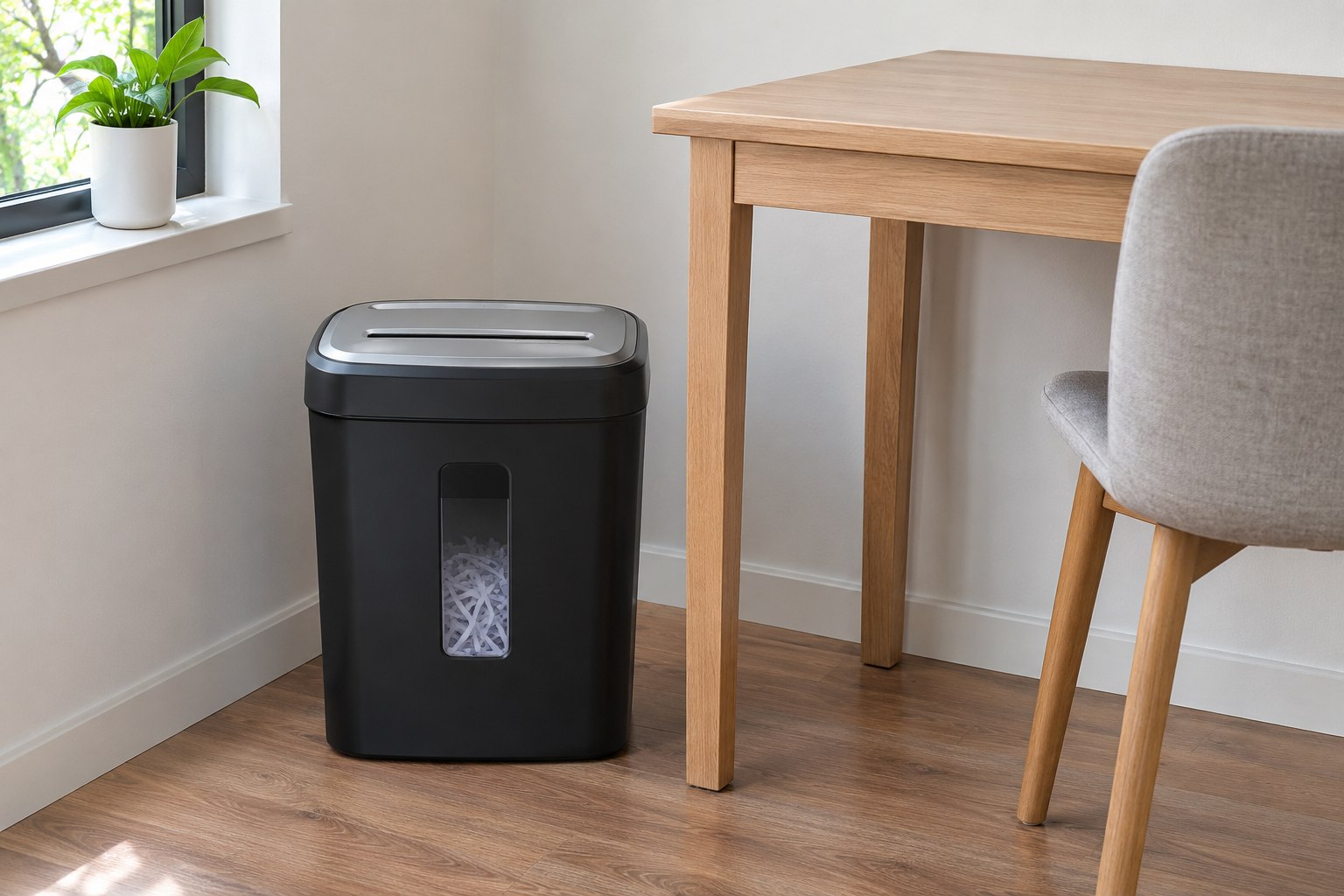
Start your paper shredder safety checklist with three questions: Can an adult use it away from children and pets, unplug it easily, and empty the bin without touching the cutters? If the answer to any is no, change the location, choose another bin design, or skip the appliance and use a community shred day. The number of sheets on the box matters less than whether you can safely handle the last step in your apartment.
Decide which paper needs a machine
Make a small pile of the items you actually plan to discard. Separate material you can discard normally, sensitive documents ready to shred, and originals you still need. The Federal Trade Commission gives credit offers and ATM receipts as examples to shred, but lists birth certificates and Social Security cards among records to keep locked up. Don’t turn a kitchen-table cleanup into a reason to destroy originals or active lease records.
If the sensitive pile is mostly old folders from a move, that is a backlog, not necessarily a normal month’s workload. The FTC suggests looking for a local shred day if you don’t own a machine. Check what the organizer accepts, quantities, dates and how you’ll keep the waiting papers secure. Buying a small shredder makes more sense when sensitive papers arrive regularly and there’s a suitable place for both the machine and the next batch.
Measure the bin coming out, not just the bin standing still
Lay out the machine’s specified width and depth where you expect to use it. Leave space for the operator to face the entry without reaching across a chair or letting clothing hang over the slot. Check the clearance above the entry with a full sheet held straight. A machine that fits below the lowest shelf may still have to come out every time you feed it.
Next find the emptying diagram. For a lift-off head, is there a stable nearby place to set the head as instructed, away from people and pets? For a pull-out basket, trace its full path toward you and include the space where you will stand. Use an empty box of similar size to rehearse taking the bin to its destination. Don’t rely on balancing a cutter head on a chair or pulling a full basket past an open door.
| What to test | Look for before buying | Reason to pass |
|---|---|---|
| Power and position | An appropriate reachable outlet, clear feed path and stable operating spot. | The plug would be behind a bookcase or the cord across a walkway. |
| Bin removal | Head lift height or full drawer travel, plus somewhere to handle the contents. | You would have to reach under the cutting head or tip the machine. |
| Material acceptance | Exact manual lists the paper, fasteners or plastic you intend to feed. | A sales photo is your only basis for putting a card in. |
| Workload | Sheet limit, allowed paper weight, continuous run time and cooling period. | A backlog would require repeated long runs outside the instructions. |
| Between sessions | Adult-controlled storage for the machine and unshredded papers. | Children or pets have access to the feed slot or exposed head. |
Identify the model before you feed an envelope
A decision to destroy a document is not permission to feed every part of it to your machine. Open mail and separate sheets from binder clips, adhesive labels, folders and inserts. If you can’t identify a material or the manual doesn’t allow it, keep it out. “Shreds cards” isn’t permission to feed a metal payment card. Ask the issuer for its disposal or return method.
Take the Fellowes Powershred 60Cs as a model-specific example. Its U.S. manual lists paper, credit cards, staples and small paper clips as accepted and excludes large clips, adhesive labels, cardboard and discs, among other items. It warns against greeting cards with sound chips or batteries. Its maximum sheet count is based on specified letter-size, 20-pound paper, and it limits cards to one per pass. Those details don’t transfer to a similar-looking shredder, and permission to shred a plastic card doesn’t extend to other plastics.
The 60Cs also specifies a nearby, accessible grounded wall outlet rated for the appliance and says not to use an extension cord. If that’s the model you want, the outlet is a buying condition, not a problem to solve later with a longer cord. Check your own unit’s label and instructions, especially if you’re buying used.
Make the feed area an adult-only workspace
Before switching on, move children and pets away, tie back hair and secure dangling sleeves, jewelry and lanyards. Keep fingers away from the entry; don’t guide a short scrap with fingertips or push a stalled stack with a pen. If you can’t present the material as instructed without approaching the cutters, set it aside for another disposal method. A sensor or locking switch doesn’t take the place of separation.
Feed only the permitted batch and release it as directed. Stop if the machine jams or signals overheating. Use the exact model’s jam procedure and cooling interval. Don’t defeat the sensor, reach into the slot with tools or disassemble the head. The 60Cs manual also rules out canned air, aerosol products and petroleum-based lubricants. A can that belongs by a computer keyboard does not belong in the shredder maintenance kit.
Your paper shredder safety checklist for emptying the bin
Turn the shredder off and unplug it before emptying the bin. Keep hands away from the exposed cutters under a removable head, even with the plug out. Follow the bin-removal sequence; never compact shreds with a hand under the cutting mechanism. If the head is uncomfortable for you to lift, select a different bin design rather than planning to wrestle with it after each session.
Find out whether your local program accepts shredded paper and how it should be contained; do not assume that loose shreds or mixed card fragments belong in curbside recycling. Replace the bin correctly, store the unplugged machine out of children’s and pets’ reach, and put unfinished papers back into secure storage. Follow the model’s maintenance schedule and use only the lubricant it specifies.
For papers still awaiting a decision, a paperwork station without a home office gives them a route other than the shred pile. If the unresolved question is where to keep important originals, compare the limits of a document storage bag rather than feeding them to the machine. A useful paper shredder safety checklist ends with two outcomes: sensitive waste dealt with, and records you still need left intact.
FAQ
Can I keep a shredder under my desk?
Only if the model can operate there as directed, an adult can access the plug, and feet, children and pets stay clear. Check feed height and bin travel with the desk chair in place.
Can a child help by feeding the paper while I supervise?
No. Keep children away from the shredder. Have an adult handle feeding, jams and bin removal.
Is a cross-cut label evidence that a machine can shred staples?
No. Cross-cut describes the cut, not the list of materials accepted. Read the capabilities section for your exact model.
What if a secure shred event is months away?
Check whether another local event or document destruction service accepts your material sooner. Until then, keep the waiting papers in a secure place separate from regular recycling.
Sources and fact-checking
Sources checked November 19, 2026. This is a research-based guide, not a hands-on product test.
- Federal Trade Commission: Which documents to keep and which to shred: Distinguishes sensitive documents ready for disposal from records to retain and identifies community shred days as an alternative.
- Fellowes: U.S. Powershred 60Cs manual (PDF): Pages 2 and 3 identify material limits, electrical requirements, cutter and child/pet warnings, cooling and maintenance procedures for this model.


댓글 0
첫 댓글을 남겨보세요.