Back-to-School Organization for Small Homes: Create a Simple Launch Pad
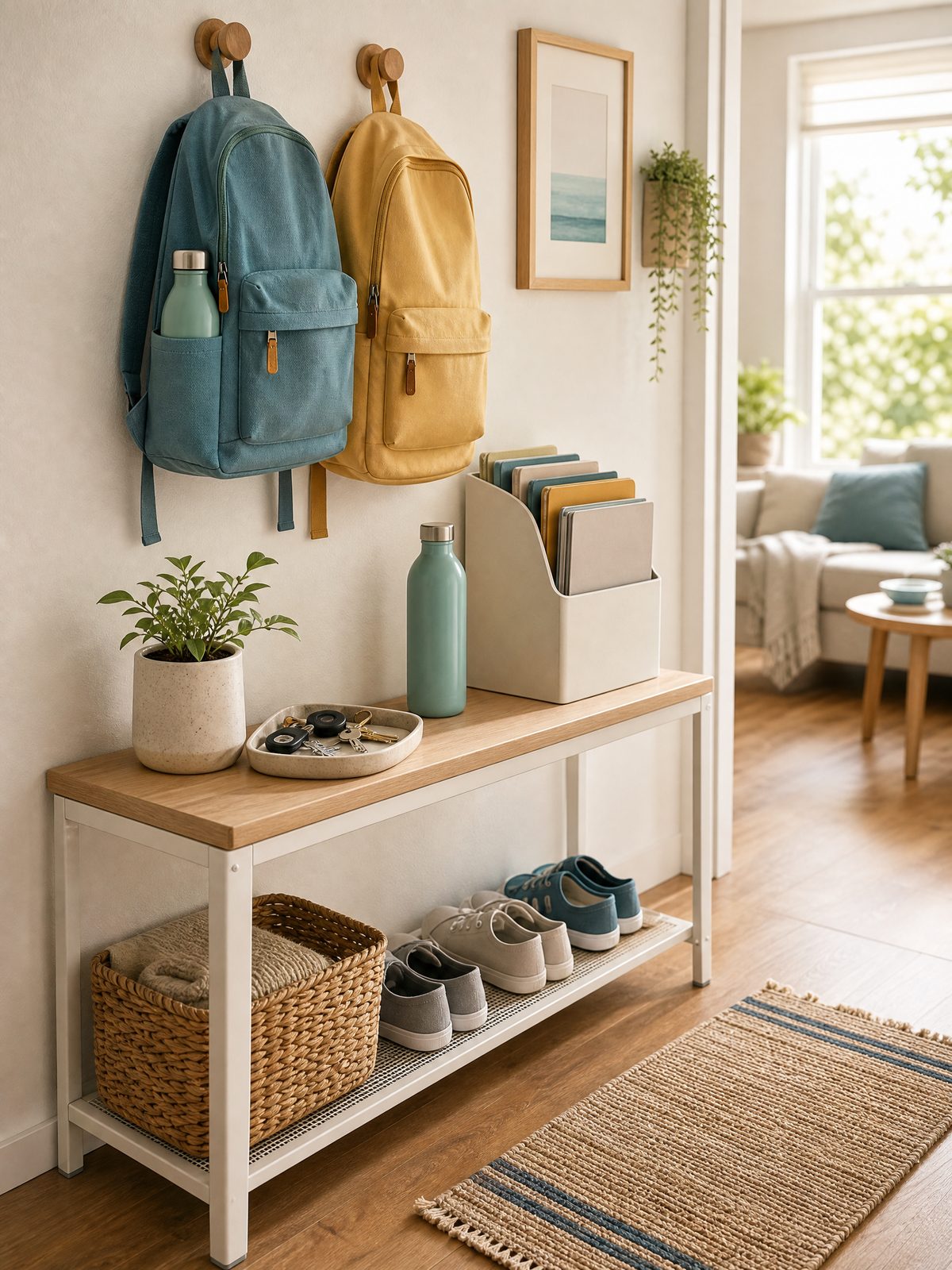
Mornings feel impossible when backpacks, permission slips, lunch items and outfit choices are scattered around a tiny home. A single, simple launch pad — a compact area where each school-related item gets a predictable spot — cuts decision-making and delays, so exits happen on time instead of in panic.
This plan shows how to create a launch-pad system for paper, bag, lunch, clothing, and a weekly-prep routine that fits tight spaces and renter limitations. The goal is visible, repeatable habits and low-cost, nonpermanent solutions so every family member knows where to go five minutes before the bus.
Choose one visible, near-the-exit zone
Pick a spot close to the door you use in the morning: a wall near the entry, the side of a kitchen cabinet, the back of a bedroom door, or a narrow shelf. Visibility matters more than size. When everything is clustered near the exit, it’s easy to run final checks and grab essentials in one sweep.
Assign a clear spot for each item
Give the launch pad five specific places: paper, bag, lunch, clothing, and weekly prep. Use labeled containers, hooks, a shallow tray, and a small basket. Keep the footprint small — a single shelf plus vertical hooks or a narrow wall grid is often enough.
Paper system: short-term triage
Paper is the most transient back-to-school item. Create three visible slots: Action (needs attention today), Keep (important to file), and Archive (items to scan or recycle later). Empty the Action slot each night so nothing unexpected appears in the morning.
Bag and lunch: ready-to-grab routines
Keep backpacks on a hook or in a shallow cubby so straps aren’t tangled and the zipper faces outward for quick access. For lunches, store an insulated bag or cooler on the same shelf and a small basket for non-perishables (napkins, utensils, snack bars). If refrigeration is needed, place a labeled lunch box in the fridge after assembly so it’s impossible to forget.
Clothing: outfit selection that saves time
Designate a hanger or shelf for next-day outfits. For families with younger kids, prepare two choices (weather-dependent) and let the child pick the night before. For older kids, a photo or label on the hanger helps remove decision friction. Folded clothes on a single narrow shelf work when hooks aren’t an option.
Weekly prep: a five-minute Sunday routine
Weekly prep keeps the launch pad predictable. Spend a short block of time each weekend restocking snacks, scanning or filing school papers, setting out school clothes for the first two school days, and checking the calendar for special items like sports gear or permission slips. The weekly reset prevents the launch pad from becoming a catch-all catchment area.
Quick Sunday checklist
- Clear the Action paper slot.
- Pack non-perishable lunches into the basket.
- Select and hang outfits for Monday and Tuesday.
- Label or reposition backpacks and chargers.
Small-space storage ideas and trade-offs
Trade-offs are part of small-home systems. You can prioritize aesthetics with matching baskets and hidden storage, but that may reduce visibility and the system’s effectiveness. Conversely, leaving items visible on a simple shelf improves compliance but may look messy. Choose what you value more: strict visual order or functional speed. Removable wall solutions, over-the-door organizers, narrow shelves, and stackable bins offer ways to add capacity without permanent changes.
At-a-glance reference
| Item | Best spot | Compact solution |
|---|---|---|
| Paper (forms, notes) | Wall-mounted three-slot organizer | Shallow mail slots or labeled magazine holders |
| Backpack | Hook near the door | Single peg or hanging pocket |
| Lunch | Shelf near prep area / fridge | Small basket for dry items; fridge space for perishables |
| Clothing | Hook or hanger on a door or shelf | One hanger or folded cue on a narrow ledge |
Related guide: How to Create a Drop Zone in a Small Entryway
Making the system stick: family habits and simple rules
Teach everyone the one-minute rule: put things in their launch-pad spot as soon as you enter. Use consistent nightly habits — check the Action slot, zip backpacks, pack perishables — and keep the launch pad uncluttered by clearing non-school items weekly. For shared spaces, use colors or small name labels so each person can find their own things without confusion.
Related guide: A 20-Minute Sunday Reset for a Small Home
Trade-offs to expect and plan for
Expect occasional slips: a forgotten item, a late permission slip, or a full slot. The system reduces frequency of morning problems but won’t eliminate them entirely. If you need more security for important items, add a nightly alarm or checklist to your calendar app; if you prefer a lower-tech approach, a whiteboard note at the launch pad works well. Decide whether you want a highly curated aesthetic or maximum visibility and lean into that choice.
Next step: set up in 20 minutes
Clear a 2–3 foot space near your exit, place a shallow shelf or tray, add one hook, and put out three labeled paper slots. Spend 20 minutes tonight filling the system: move backpacks, place the lunch basket, and drape tomorrow’s outfit. Test it tomorrow morning and tweak placement — the best system is the one your household actually uses.
FAQ
How much space do I really need for a launch pad?
A small launch pad can fit in a 2–3 foot horizontal area plus a vertical hook or two. The key is visibility and consistency; even a narrow ledge and a hook can handle papers, a backpack and an outfit if items are kept intentional and minimal.
What if kids don’t follow the system?
Start with small, enforceable steps: backpacks on the hook before breakfast, and lunches packed into the basket the night before. Make the system easier than the alternative — if the launch pad is quicker and routine, compliance increases. Praise small wins and troubleshoot specific friction points together.
Can this work in a studio or very tiny apartment?
Yes. Use vertical solutions, like a wall-mounted organizer, and combine roles: a single shelf can hold lunches and outfit cues, while a hook handles bags. Prioritize what causes the most morning stress and make that the launch pad’s main job; expand later if space allows.
With a single visible zone and five clear spots, mornings become smoother. Start small, pick one evening to set the system up, and make the nightly check a non-negotiable habit. That one change often saves more time and frustration than it seems.
Sources and fact-checking
This article provides practical editorial guidance. Safety, cleaning, disposal, rental, and product decisions can depend on the item, its instructions, and local requirements.
- U.S. Consumer Product Safety Commission — Anchor It! — For furniture, TV, or elevated-storage safety, follow product instructions and secure top-heavy furniture where appropriate.
Fact-checked against the linked official resources on August 27, 2026.