
Folding Step Stool Safety Checklist for a Small Apartment
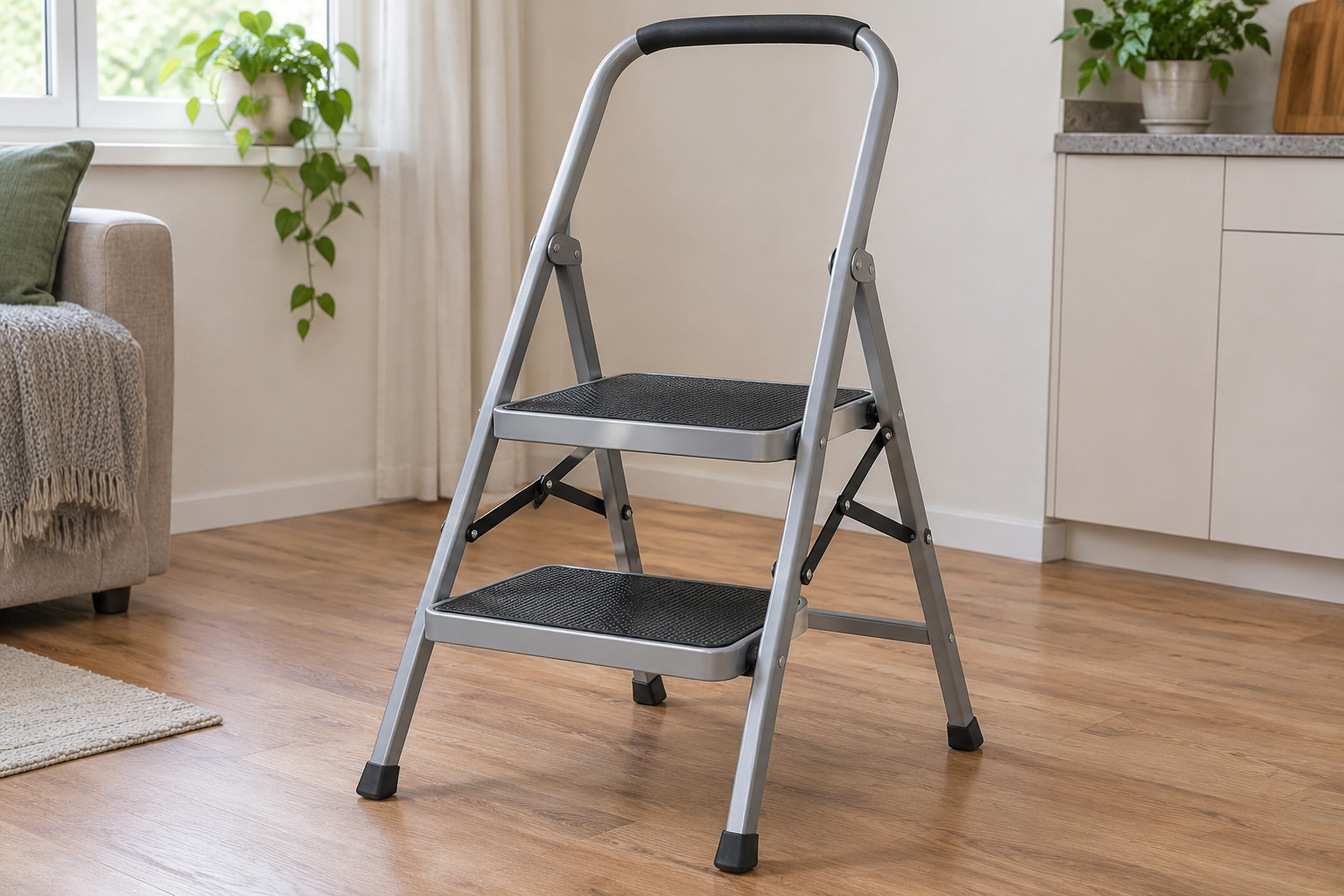
Use this folding step stool safety checklist to compare an adult-rated stool’s open footprint, labeled load rating, locking parts, and storage access. It should support the intended user and carried items within its rating and open into the exact locked position described in its instructions. Folded thickness matters for storage, but it should not be the first buying filter.
In a small apartment, a stool often gets used between a counter, a chair and a cabinet door. If the only available position leaves a foot partly on a rug or forces you to lean sideways, a compact design has not solved the reach problem.
Start with the shelf task, not the tallest stool
Write down what you actually need to reach. Taking down a lightweight serving bowl is different from lifting a full storage bin or working overhead for an extended period. The task determines whether a low step is useful, whether a support handle would help, or whether the item should be relocated instead.
Measure the shelf height and consider the position in which you would use the stool. Do not choose by an advertised reach height alone; that figure may be based on a different user. Check the actual step height, intended standing surface and instructions about where not to stand.
If the job requires stretching across a counter, turning with a bulky object, or reaching behind a heavy box, reorganizing may be the better first purchase. The shelf-riser fit guide can help improve access within an existing cabinet without making every daily item an overhead task.
Measure two footprints and the route between them
For the open footprint, note the width and depth at the feet, not just the top platform. Mark that rectangle on the floor temporarily without creating a trip hazard. Open the surrounding cabinet and appliance doors and look for conflicts. The stool needs a usable position, not a theoretical square on a floor plan.
For storage, measure folded height, width and thickness. Include protruding handles, hinge covers and feet. Check that retrieving it will not require moving a pile of cleaning supplies or reaching into a narrow gap where fingers can be trapped.
Then consider carrying it. A stool that is comfortable to store but awkward to grasp may be left open in the kitchen. Choose a storage location that keeps walking routes and exits clear and that matches any instructions for folding and securing the product.
| Design to compare | Potential reason to consider it | Decision before buying |
|---|---|---|
| Low single-step folding stool | A modest increase for a reachable shelf | Verify the adult rating, platform size and folding lock |
| Two-step stool with handle | An elevated step and a designated handhold | Check full open depth, permitted standing step and locking instructions |
| Wider-platform step stool | A task where foot placement needs more room | Compare the platform dimensions with the entire floor footprint |
| Taller ladder-style product | A task beyond a low stool’s intended reach | Read its separate use rules; do not improvise by stacking a stool |
Read the rating as a limit, not a quality score
Find the manufacturer’s actual load rating and its explanation of included load. Account for the person, clothing, tools and anything being carried. Do not compare your body weight alone with a marketing headline and assume there is room for a heavy box.
A high rating is not permission to use the product on stairs, sit on a handle, or use an undesignated top surface. Nor does a rating establish that a used item is undamaged. If the seller cannot provide the model number, label information and instructions, choose a better-documented listing.
For an adult folding stool, inspect the steps, feet, hinges, braces and locking parts described in the manual. Ask how the lock is confirmed and whether replacement feet or other approved parts are available. A vague photograph of an open stool is not a substitute for understanding its mechanism.
Use the model label to screen recall notices
Brand familiarity does not replace a recall check. Search the exact model and compare identifying labels, not just the color or a marketplace title. Keep a photo of the label and your purchase record where you can find them later.
A useful example is the CPSC recall of specified Cosco 2-Step Kitchen Steppers, dated July 31, 2025. The notice describes a safety bar that can detach or break. It identifies affected model numbers and says the model information is on a label on an arm of the stepper.
The notice gives specific instructions about stopping use of the safety bar, keeping the stepper away from children until repaired, and obtaining the manufacturer’s repair kit. That is not a recall of every folding stool or every product from the brand. If a model matches a notice, follow that exact remedy rather than attempting a homemade repair or assuming a different model’s fix applies.
Finish the folding step stool safety checklist before climbing
Read the instructions with the stool on the floor. Open it as directed and identify how the locking parts engage. Check for shipping damage, missing feet, uneven contact or unexpected movement. If something does not match the manual, stop and contact the seller or manufacturer while the return options are still clear.
Use only the floor conditions and applications allowed by the manufacturer. Do not compensate for a rocking foot with cardboard, place the stool on furniture, or defeat a locking part to make it fit in a tighter space. Keep fingers clear of the folding mechanism and children away while opening or closing it.
Before each use, clear the intended area and check the condition of the stool. Keep the task within reach without sideways stretching. If the object requires both hands and blocks your view, reconsider how to bring it down rather than treating the stool as the entire safety plan.
Keep frequently used dishes lower and reserve upper shelves for appropriate, less-used items. The renter cabinet organization plan is useful when a stool is becoming part of every meal instead of an occasional tool.
FAQ
Is a child’s folding stool suitable for an adult?
Do not assume so. Check the exact product’s intended user, load label and instructions. Appearance and material alone do not establish adult suitability.
Can I use a folding stool on a thick kitchen mat?
Follow the permitted surface instructions. If the mat prevents stable, even foot contact, move the task to an appropriate surface instead of adjusting the stool with improvised shims.
Does a higher price mean the locking mechanism is safer?
Price does not verify a mechanism, condition or recall status. Compare documentation, intended use, labels and the actual product you receive.
Should I buy a used stool with no model label?
A missing label makes it harder to verify the rating, instructions and recall status. Prefer a product whose exact identity and condition can be checked.
Sources and fact-checking
Reviewed November 19, 2026. The CPSC Cosco recall notice supports only the identified model-specific hazard and remedy example. The measurement and purchase checklist is editorial guidance, not a safety certification or a replacement for manufacturer instructions. No stool was load-tested for this article.




댓글 0
첫 댓글을 남겨보세요.