How to Do a Summer Cleaning Reset in a Small Home
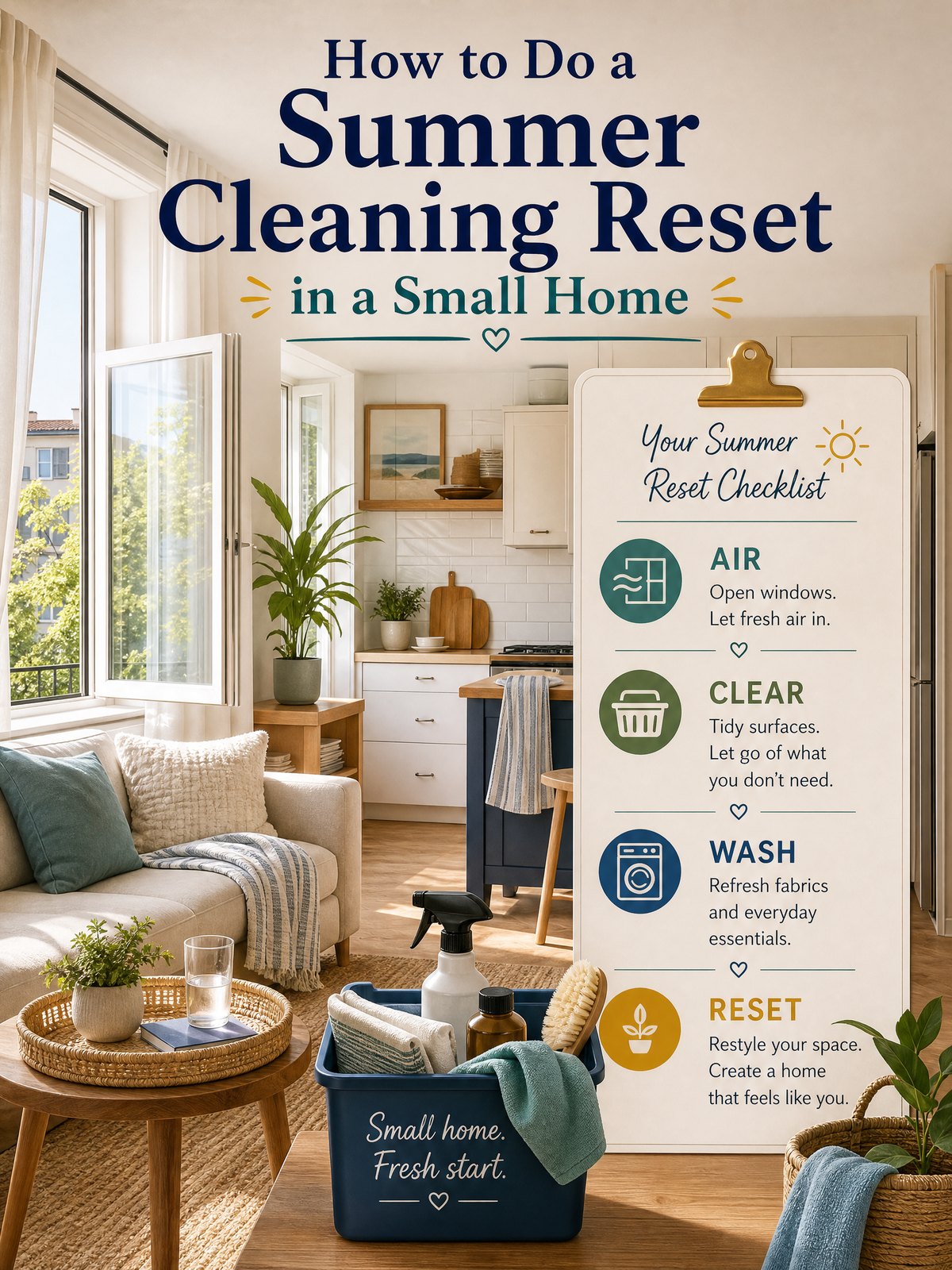
Living in a small home makes summer cleaning feel both urgent and constraining: you want fresh, lighter living spaces without using up days or crowded storage for supplies. The most useful reset focuses on cleaning ordinary surfaces first and keeping disinfectant use purposeful.
This guide gives a compact, repeatable plan you can finish in segments over a weekend or a few weeknights. It shows what to clean, how long to expect each task to take in a compact dwelling, and when to treat an area with disinfectant versus soap-and-water cleaning.
Start with the real constraint
Space and time are the real constraints in a small home. Narrow counters, limited closet space, and compact bathrooms mean you can’t stage a whole-house deep clean the way a larger home can. Treat this as a reset that reduces daily friction rather than a one-time overhaul that requires vanloads of supplies.
Another practical constraint is what you should actually use: cleaning with soap and water removes dirt and most surface grime; disinfecting is a separate step with its own products and instructions. The U.S. Centers for Disease Control and Prevention distinguishes cleaning with soap and water from disinfecting, and says cleaning alone is sufficient in most situations unless illness-related circumstances make disinfection appropriate. Follow product labels, manufacturer instructions, and any lease or local authority rules when handling chemicals, disposal, or shared-space protocols.
At-a-glance plan
| Area | Primary action | Time estimate (small home) | When to consider disinfecting |
|---|---|---|---|
| Kitchen counters & food prep | Clear clutter, wipe with dish soap and warm water; dry with a clean cloth | 15–30 minutes | If someone is ill or raw meat contamination is suspected (practical option to disinfect per label) |
| High-touch electronics & remotes | Dust, then gently clean with a slightly damp microfiber and appropriate cleaner for screens | 10–20 minutes | After known illness exposure or shared-heavy-use events (personal planning approach) |
| Bathroom sink, faucet handles, and toilet surfaces | Clean soap scum and grime with regular cleaner; focus on handles and edges | 20–40 minutes | Consider disinfecting if there are illness-related concerns or after guests who were sick (practical option) |
| Living surfaces and fabrics | Vacuum or shake out rugs, wipe tables, launder cushion covers if possible | 30–60 minutes | Disinfecting is usually unnecessary; follow fabric care labels instead |
Build the system step by step
- Declutter first: remove expired food, one-season items, and obvious piles that block surfaces. Set a 20–30 minute timer per zone to keep momentum.
- Work top to bottom: ceiling fans, light fixtures, shelves, then counters and furniture. Dust falls downward, so this saves re-cleaning.
- Clean ordinary surfaces with soap and water or multipurpose cleaner: counters, tables, bathroom sinks, doorknobs. Use microfiber cloths and warm water where appropriate.
- Tackle fabrics: launder removable cushion covers, mop or vacuum rugs, and air mattresses or duvets outside if possible. Check care labels before machine washing.
- Decide on disinfecting only when needed: if someone has been ill, if raw food contamination happened, or if a household member requests it. When you disinfect, follow the product label for dwell time and safe use.
These steps form a sequence that fits small spaces: clear the surface, remove dust, clean with soap-and-water approaches, then evaluate whether a disinfectant is genuinely needed. Labeling disinfectant use as an optional, situational step keeps the routine faster and reduces unnecessary chemical exposure. Always read and follow product labels and manufacturer instructions, and check lease or local rules for any shared-space guidance.
Trade-offs to consider
Every small-home cleaning approach balances speed, chemical exposure, and thoroughness. Choose the balance that matches your household priorities.
- Speed vs. depth: Faster cleaning (wipe-and-go) keeps living areas usable quickly but misses dirt in cracks; slow, focused cleaning gets deeper but takes time.
- Chemical use vs. simplicity: Using disinfectants frequently can add protection but increases chemical handling and storage needs; cleaning with soap and water is simpler and sufficient in most situations per CDC guidance.
- Storage vs. preparedness: Storing multiple specialty cleaners gives options but consumes limited space; select a few versatile products to save room (personal planning approach).
Keep it workable
Set a repeating micro-schedule that fits your lifestyle: 15–30 minutes twice a week for high-traffic surfaces and one longer 60–90 minute reset every four to six weeks. Use baskets or collapsible bins to collect clutter during cleaning, then decide immediately whether to keep, donate, or trash items. Maintain a small cleaning caddy with basic supplies so you avoid hauling full bottles around a small home. If you’re a renter, follow your lease about shared-space cleaning responsibilities and disposal requirements.
FAQ
Do I need to use a disinfectant after normal daily use?
No—per the CDC, cleaning with soap and water is sufficient in most situations unless illness-related circumstances make disinfection appropriate. Choosing disinfectant for routine cleaning is a personal planning approach, not a required step.
How often should I launder cushions and throws in a small home?
Wash removable cushion covers and throws as your household needs dictate: higher-traffic or sweaty-season use suggests every 1–2 weeks, while lightly used items can go longer. Always check fabric care labels before laundering to avoid damage.
What if someone in my household is sick—do I need to change my whole routine?
If someone is ill, consider increasing cleaning frequency for high-touch surfaces and optionally using a disinfectant following the product label; this is a practical option. Also follow any additional guidance from your healthcare provider or local public-health authorities and the manufacturer’s instructions for the disinfectant you choose.
Start by adopting the top-to-bottom, declutter-first sequence this weekend and pick a micro-schedule that fits your week. Keep a compact cleaning caddy and a short checklist to make the reset repeatable.
Sources and fact-checking
This guide provides practical editorial guidance. Requirements and safe choices can depend on the product, lease, local rules, and individual situation.
- U.S. Centers for Disease Control and Prevention — Cleaning and Disinfecting — CDC distinguishes cleaning with soap and water from disinfecting, and says cleaning alone is sufficient in most situations unless illness-related circumstances make disinfection appropriate.
Fact-checked against the linked official resources on August 27, 2026.