What to Ask Before You Use Adhesive Storage in a Rental
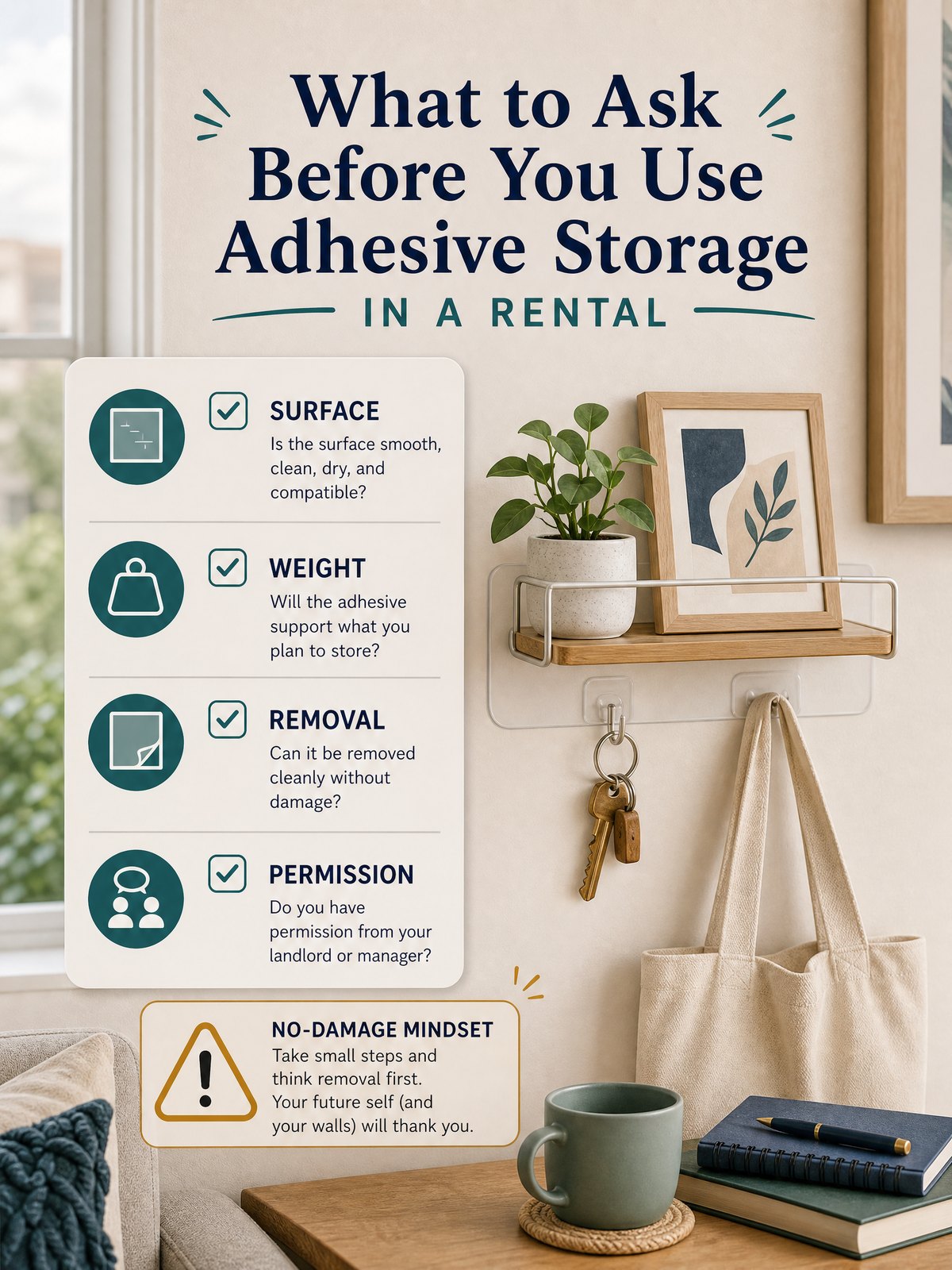
Adhesive hooks, strips, and racks look like a simple solution for renters who need storage without drilling. The hard part is deciding whether a product will actually be allowed by your lease and removable without damage.
This article explains a practical checklist you can use before you stick anything to walls, trim, doors, or cabinets. It treats your lease and the product manufacturer directions as the source of truth and gives options you can test safely.
Start with the real constraint
When you rent, the binding constraint is often your lease. Landlords may prohibit permanent alterations and some specify which kinds of fasteners are allowed. Before you buy adhesive storage, read your lease for any clauses about wall treatments, patching paint, or deposits, and follow any permission process it requires.
Also treat the product label and manufacturer directions as the technical constraint. The U.S. Consumer Product Safety Commission advises following manufacturer instructions, securing TVs and top-heavy furniture where appropriate, and keeping climb-attracting items away from the top of furniture. Use both your lease and the manufacturer directions to decide whether a given adhesive product is appropriate for the surface and the load you need.
At-a-glance plan
| Decision point | Action | Timing / decision signal |
|---|---|---|
| Lease permissions | Check lease text or ask landlord in writing about adhesives and patching rules | Before purchase; if written permission required, wait for reply |
| Surface compatibility | Compare manufacturer surface list to your wall material and finish | If surface is not listed, treat as not approved unless landlord permits |
| Load and use | Match the product’s rated weight and intended use (e.g., hanging vs. shelving) | If weight exceeds rating, do not use adhesive for that application |
| Removal plan | Plan how to remove and restore; keep labels and instructions for landlord review | Before installation; if removal risks damage, choose a different solution |
Build the system step by step
- Read your lease and note any rules about adhesives, patching, or deposits. If it says to get permission, ask in writing and save the reply. This step treats the lease as a primary source of truth.
- Read the product label and manufacturer instructions fully. Confirm the product lists your surface type and the maximum weight for the intended use; if the instructions contradict your lease, defer to the lease unless you have written landlord approval.
- Do a small, reversible test on an inconspicuous spot as a practical option: apply a single adhesive element, wait the manufacturer’s recommended set time, then remove following the instructions to confirm appearance and ease of removal.
- Install only when both lease permissions and manufacturer conditions align. Use hands and recommended tools to press adhesives evenly; keep receipts and packaging with the product directions for the landlord or for troubleshooting later.
- Document condition and keep a removal plan. Photograph the installation area before and after, keep the original instructions, and plan a conservative timeline for removal that gives the adhesive manufacturer’s recommended dwell time but minimizes risk to the finish.
These steps prioritize a clear record and conservative testing so you can demonstrate you followed both lease requirements and manufacturer directions. Where the lease and instructions diverge, treat the lease as controlling unless you obtain documented permission.
Trade-offs to consider
Choosing adhesive storage involves small trade-offs between convenience, wall protection, and flexibility.
- Ease versus permanence: stronger adhesives can hold heavier loads but may increase the risk of paint or drywall damage at removal; this is a practical option trade-off to weigh against deposit risk.
- Surface safety versus universal fit: adhesives rated for many surfaces may still fail on textured or painted drywall; you may need to accept a different storage approach if your walls are not listed.
- Record-keeping time versus speed of setup: photographing, saving instructions, and asking permission takes time but provides evidence if there’s a dispute about damage or deposit deductions.
Keep it workable
Maintain any adhesive storage by checking adherence monthly and avoiding overloading. If something loosens, remove and re-evaluate rather than repeatedly re-sticking in the same spot. Keep the original installation instructions and removal steps accessible, and store spare adhesive elements and the original packaging for a quick, documented repair if the landlord asks.
FAQ
What if my lease bans “permanent” fixtures but doesn’t mention adhesives?
Treat this as a question to verify locally: ask your landlord for clarification in writing. If you get permission, keep the message; if you don’t, use only options explicitly allowed by the lease or choose freestanding storage.
Can I safely remove adhesive strips without damaging paint?
That depends on the product and your finish; follow the manufacturer removal instructions exactly and consider a small test as a practical option to confirm results. If the product includes a recommended removal method, save that information and follow it.
Should I secure top-heavy furniture with adhesives in a rental?
Follow landlord rules and manufacturer instructions; the U.S. Consumer Product Safety Commission advises following manufacturer instructions, securing TVs and top-heavy furniture where appropriate, and keeping climb-attracting items away from the top of furniture. If the lease or the maker requires hard anchors, treat that requirement as controlling unless you negotiate otherwise.
Next, decide which wall areas you are willing to test and prepare a written note to your landlord if the lease requires permission. Keep receipts and instructions with your move-out records so you can document that you followed both lease and manufacturer directions.
Sources and fact-checking
This guide provides practical editorial guidance. Requirements and safe choices can depend on the product, lease, local rules, and individual situation.
- U.S. Consumer Product Safety Commission — Anchor It! — CPSC advises following manufacturer instructions, securing TVs and top-heavy furniture where appropriate, and keeping climb-attracting items away from the top of furniture.
Fact-checked against the linked official resources on August 27, 2026.