A Renter-Friendly Way to Organize Cleaning Supplies in a Small Home
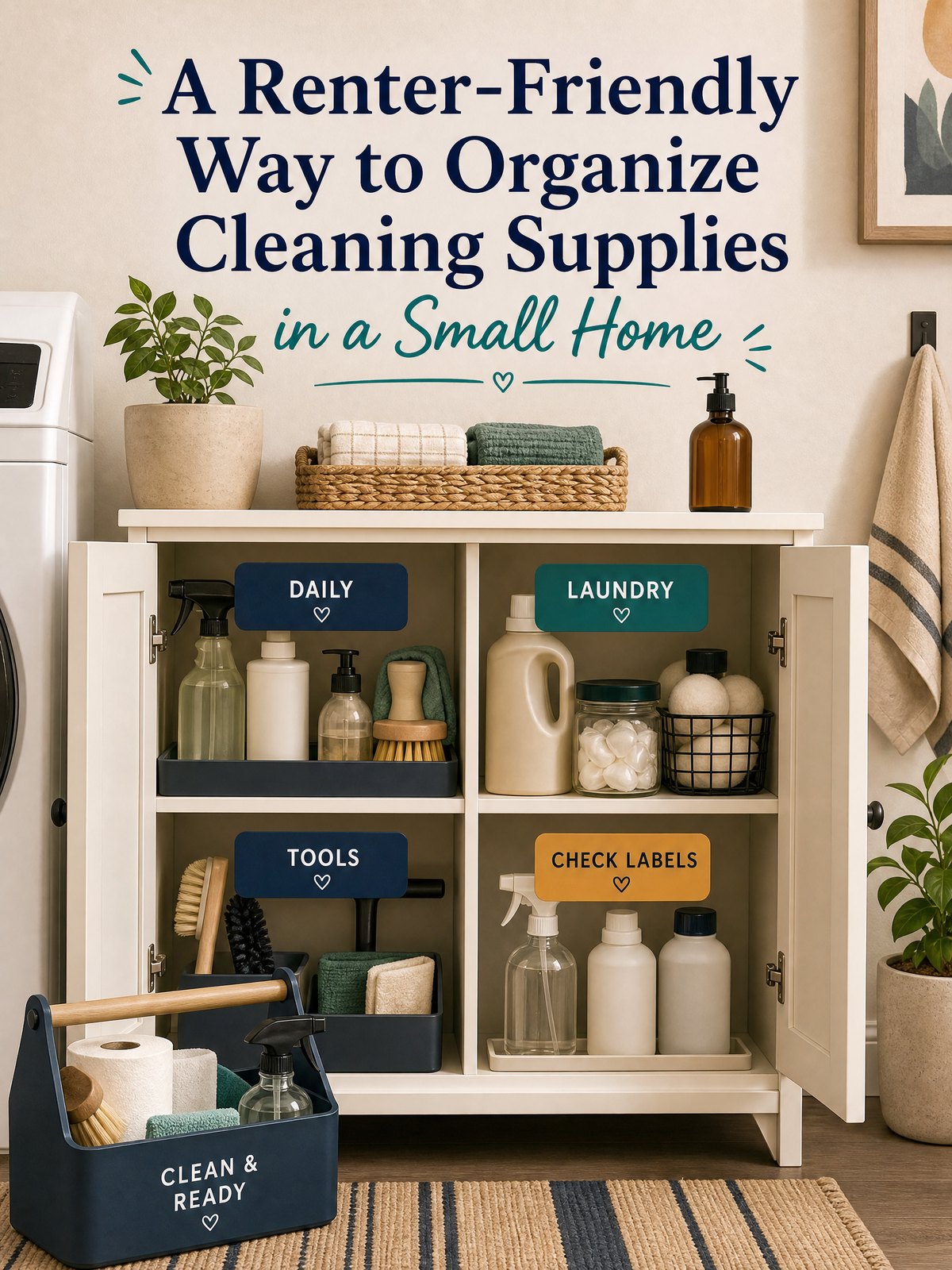
Small homes and rentals leave little room for bulky cleaning supplies. The common temptation is to decant liquids into unlabeled bottles or tuck hazardous products wherever there is space; that makes supplies harder to find and increases the chance of a mistake.
This article shows a renter-friendly approach that keeps products in their original labeled containers, reduces confusion, and respects lease restrictions only when they actually govern where you store things. You’ll get a compact, repeatable system you can set up in a weekend.
Start with the real constraint
The most important constraint in a small rental is space: surface area and accessible storage are scarce, so every container needs a clear purpose. In addition, many building rules or leases include clauses about storing flammable or hazardous materials in specific places; check your lease only when it governs storage locations, and follow any clause it contains.
Another constraint is safety: keeping products in their original labeled containers preserves manufacturer instructions, warning icons, and ingredients lists. For disposal decisions, refer to official guidance—EPA notes that products such as paints, cleaners, oils, batteries, and pesticides can need special disposal care, and advises following labels and local collection guidance.
At-a-glance plan
| Action | Where to do it | When to act |
|---|---|---|
| Gather all cleaning products into one place and keep them in original labeled containers | One consolidated bin, shelf, or cabinet near the cleaning zone | One afternoon to set up; keep originals every time you replace a product |
| Designate short-term daily supplies in a lightweight caddy (practical option) | Portable caddy kept under the sink or in a closet for daily use | Refill weekly or when you run low |
| Place hazardous or bulky items in the single allowed location per lease or local rules | Where your lease permits, e.g., a balcony, basement storage unit, or outdoor shed (verify locally) | On acquisition and again when you change products |
| Label any secondary containers only when unavoidable and include original-label notes | Use clear sticker labels on pumps or spray tops if you must decant (personal planning approach) | At the moment of decanting and when replacing contents |
Build the system step by step
- Collect and inventory: Pull every cleaning product out of cabinets, under sinks, and closets. Keep only what you use or need; note items that require special disposal.
- Sort by use and hazard: Group everyday cleaners (soap, multi-surface sprays) separately from stronger chemicals, paint, solvents, and batteries that may need special handling per local guidance.
- Choose storage zones: Pick one main storage spot in the living area for daily items and one lease-compliant spot for hazardous or bulky items. If your lease restricts storage locations, follow those rules for items it covers.
- Use original containers and add secondary labels if necessary: Keep manufacturer labels intact. If you must decant a product, attach a label that includes product name, active ingredient, and a date (personal planning approach).
- Create a grab-and-go kit for routine cleaning: Fill a small caddy with a few essentials and keep it accessible; restock weekly to avoid dragging out multiple bottles.
Following these steps creates a clear home for each product: original labels stay with the product, hazardous items are separated in the place your lease allows, and a portable kit provides easy access for quick jobs. When disposal is required, follow product labels and local collection guidance rather than guessing.
Trade-offs to consider
No system is perfect for every small home; choose the combination of access and safety that fits your space and the rules that apply to you.
- Accessibility vs. safety: Keeping everything within reach makes cleaning faster but may expose children or pets—consider locked or higher storage if that’s a concern (practical option).
- Original containers vs. space savings: Retaining original bottles preserves instructions but takes more room than transferring to a single bottle—decanting is a personal planning approach that requires careful labeling.
- Centralization vs. convenience: One central bin reduces duplication but may mean carrying the caddy to different rooms—decide whether you prefer multiple small kits or one central supply.
Keep it workable
Set a 10-minute weekly check: look for leaks, toss empty containers, and restock the grab-and-go kit. Reconcile new purchases with your inventory immediately to avoid duplicate bottles and misplaced products. If an item is used rarely and requires special disposal, plan to store it only in the location your lease allows or arrange for local collection per product label and municipal guidance.
FAQ
Why keep products in original containers?
Original containers show manufacturer instructions, hazard warnings, and ingredient lists that are needed for safe use and proper disposal; keeping them intact reduces guesswork and helps you follow labels and local collection guidance when disposing of items that may be hazardous.
Can I decant cleaners into smaller bottles?
You can as a practical option, but always attach a label with the product name, active ingredient, and date, and keep the original container until you are certain the decanted amount will be used; follow manufacturer instructions and local rules where they apply.
Do I need to check my lease about storage?
Check your lease only when it governs storage locations; many leases include specific rules about storing flammables or hazardous materials in units, hallways, balconies, or common areas, so follow any lease clause that applies and verify unclear points with your landlord or building management.
Set a simple weekend to implement the setup: gather supplies, choose your storage zones, and label anything you decant. After that, maintain the system with a short weekly check to keep it easy, safe, and renter-friendly.
Sources and fact-checking
This guide provides practical editorial guidance. Requirements and safe choices can depend on the product, lease, local rules, and individual situation.
- U.S. Environmental Protection Agency — Household Hazardous Waste — EPA notes that products such as paints, cleaners, oils, batteries, and pesticides can need special disposal care, and advises following labels and local collection guidance.
- U.S. Centers for Disease Control and Prevention — Cleaning and Disinfecting — CDC distinguishes cleaning with soap and water from disinfecting, and says cleaning alone is sufficient in most situations unless illness-related circumstances make disinfection appropriate.
Fact-checked against the linked official resources on August 27, 2026.