How to Set Up a One-Bin Entryway Reset in a Small Apartment
Your entryway is tiny, but the clutter that arrives with coats, bags, mail, and keys can still make the whole apartment feel chaotic. You want a system that fits a narrow hall or a single shelf and actually gets used every day.
This article shows a minimalist arrival-and-departure routine built around one container, one surface, and a short weekly reset so you return to a clear landing zone without big daily chores.
Start with the real constraint
In small apartments the real constraint is not storage variety but attention: you have space for one container and one flat surface near the door, and you’ll need to accept that every item that lives there must be purposeful. Treat the container as the active inbox where items land, not a long-term stash.
Place the surface at a consistent height you can reach while standing—this keeps the motion for dropping and picking up items efficient. If you add any freestanding furniture or wall fixtures to hold that surface or container, follow your lease and the manufacturer instructions for installation; if a piece is top-heavy, follow safety guidance from the U.S. Consumer Product Safety Commission and secure it where appropriate.
At-a-glance plan
| Step | Container action | Surface action | Decision signal |
|---|---|---|---|
| Arrival | Drop wallet, keys, sunglasses in the container | Place bag on surface and hang coat if possible | If bag sits on surface more than a day, it needs a task (empty or relocate) |
| Short unpack | Remove obvious trash, receipts, and perishables from container | Put frequently used small items (mask, transit card) on surface edge | If container holds 10+ items, clear duplicates or relocate to home storage |
| Pre-departure check | Grab container items you need or move container to door | Place outward-facing items (keys, phone, transit card) where you notice them | If phone or wallet not found in container, do a quick 30-second sweep |
| Weekly reset | Empty container into designated long-term homes (purse, dresser, charger) | Wipe surface, discard accumulated trash, and rearrange for the week | If you avoid the reset three weeks in a row, reduce what can live there |
Build the system step by step
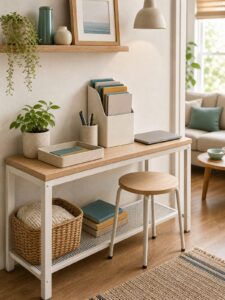
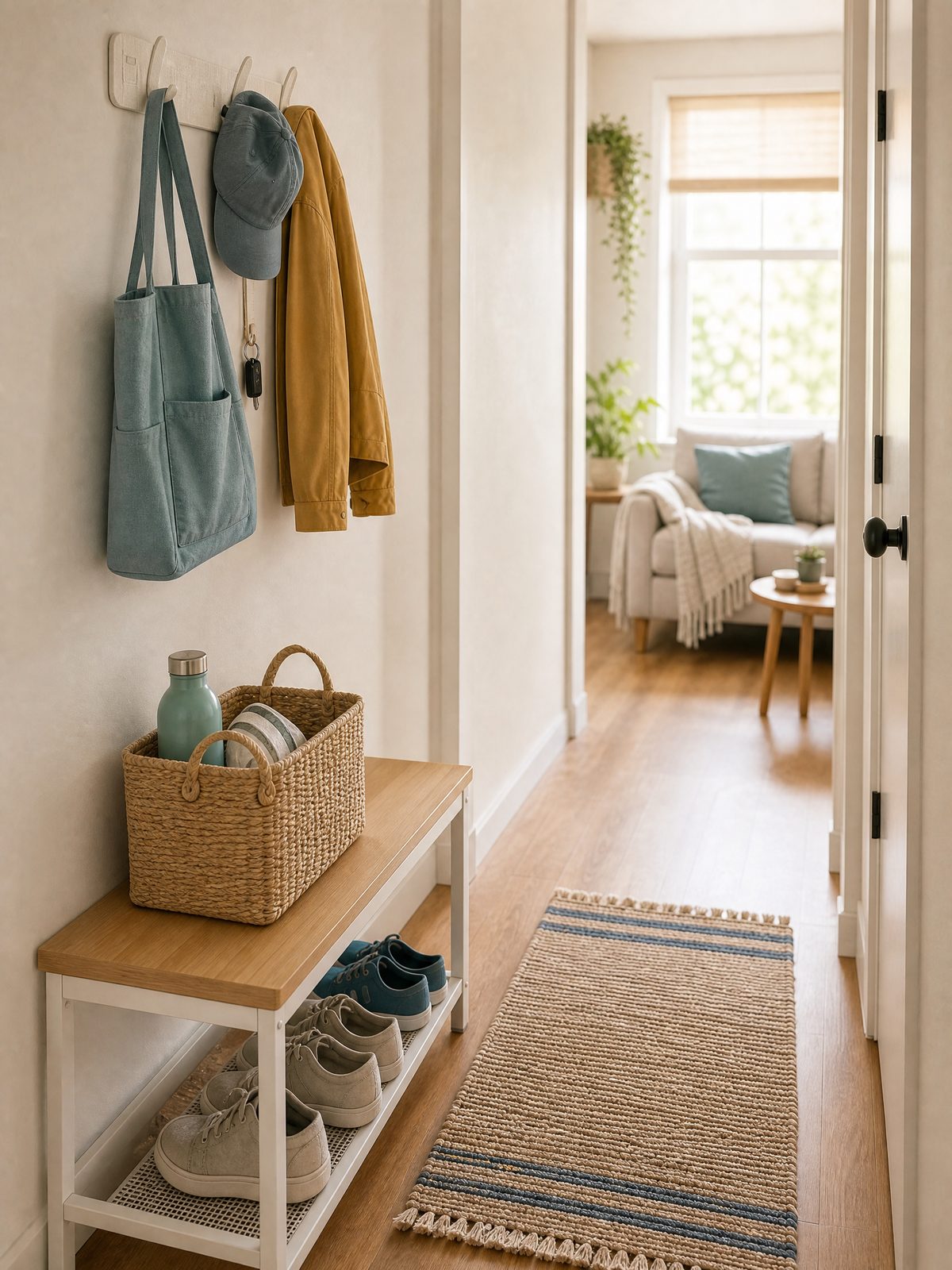
- Choose one visible, reachable container: a shallow tray, a small tote, or a divided basket that fits your entry surface. Make it the only place small loose items go.
- Designate the surface directly above or next to the container for bags and outgoing items; keep it clear enough to set down a bag without knocking things into the container.
- Define three item types that can live in the container: daily essentials (keys, wallet), near-daily items (sunglasses, transit card), and short-term outgoing items (returnable library books). Everything else should have a different, named home.
- Create a simple pre-departure check: glance at the surface and run a finger through the container before walking out. Keep the check under 15 seconds and tied to a motion you already do, like putting on shoes.
- Set a weekly reset appointment with yourself: ten minutes on the same day each week to empty the container into long-term homes, clean the surface, and decide if anything needs a new permanent spot.
Those five moves establish predictable behavior: everything that needs to travel with you goes into the container or onto the surface, and the weekly reset prevents accumulation. If you prefer fewer steps, treat step three and step four as a single personal planning approach.
Trade-offs to consider
No single-bin system is perfect for every routine; here are trade-offs renters commonly face.
- Less visible storage keeps a space tidy but can hide items you forget to retrieve; a compromise is a translucent container so contents remain evident.
- Limiting the container to one type of item speeds checks but can force you to carry more items each day; you can allow one flexible slot for occasional needs.
- Doing a weekly reset saves daily friction but creates a slightly larger weekly chore; if weekly feels long, try a twice-weekly five-minute refresh instead as a personal planning option.
Keep it workable
Maintenance is primarily behavioral: the container must be the default landing place, and the surface must remain intentionally limited. Anchor the routine to existing habits (put keys in after you hang your coat, reset during laundry folding) and use a calendar reminder for the weekly reset until it becomes automatic. If you alter a fixture or add furniture to support the surface, check your lease and follow manufacturer instructions for installation.
FAQ
What size container should I buy for a narrow hall?
Choose a container that fits the available depth so it doesn’t block passage—shallow trays or narrow baskets work well. Size is a functional choice; pick one that forces you to be selective rather than one that becomes a catch-all.
Can I keep shoes on the surface too?
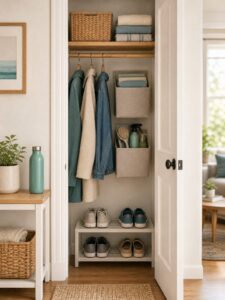
Keeping shoes on the surface is a practical option if space is very tight, but it reduces available space for bags and outgoing items. Consider a slim shoe tray on the floor instead or rotate a single pair on the surface when actively wearing them.
How do I handle packages and bulky deliveries with only one surface?
Use the surface as a temporary staging area and prioritize moving packages to a floor corner or inside a closet soon after arrival. If you need to secure larger items to a wall or floor fixture, verify with your lease and follow manufacturer instructions for any installation; local rules may apply.
Next, pick the container and surface spot today and try the three-step arrival routine for a week. After one weekly reset you’ll see whether the system genuinely reduces friction or needs small tweaks.
Sources and fact-checking
This guide provides practical editorial guidance. Requirements and safe choices can depend on the product, lease, local rules, and individual situation.
- U.S. Consumer Product Safety Commission — Anchor It! — CPSC advises following manufacturer instructions, securing TVs and top-heavy furniture where appropriate, and keeping climb-attracting items away from the top of furniture.
Fact-checked against the linked official resources on August 27, 2026.