How to Store Holiday Decorations in a Small Home Without Creating a January Mess
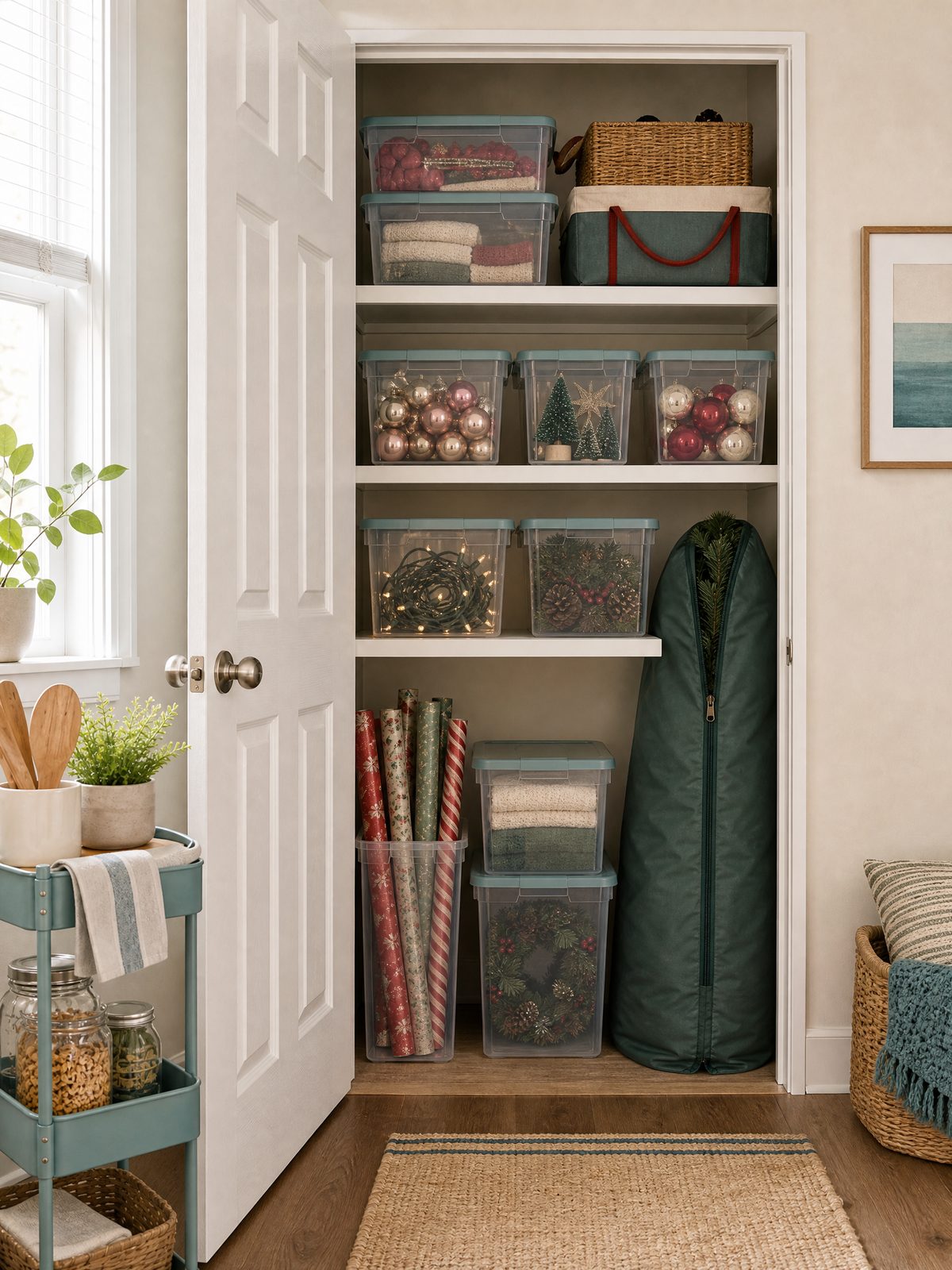
If you live in a small home or rent an apartment, the January clutter that follows holiday decorating is usually avoidable. The quickest fix is a short, repeatable plan: decide a maximum amount you’ll keep, sort items into clear categories, and pack with labels so unpacking next year is fast.
This article walks through a realistic process for small spaces: set a capacity limit you can live with, pick containers that match the items and your storage spots, create category packing labels, and assemble a “next‑year setup” box so you’re not starting from scratch the following season. Expect trade‑offs; convenience sometimes costs a little space, and extreme minimalism means letting go of sentimental pieces.
Make a plan and set a capacity limit
Before you pull out bins, choose one visible boundary for holiday gear. That could be one closet shelf, two clear tote bins, an under‑bed drawer, or a single labeled cubby on a shelf. The exact choice depends on your home, but the key is the limit—if a new ornament can’t fit, it doesn’t make the keep pile.
Trade‑offs: a strict limit reduces clutter but forces decisions you may second‑guess; a looser limit keeps more items but makes retrieval harder. Pick a rule you’ll actually follow and write it down on the shelf or bin so everyone in the household knows the cap.
Sort by category and create packing labels
Sorting by category makes packing and unpacking faster and keeps fragile or frequently used items easy to find. Core categories to consider: ornaments, lights, garlands/greenery, tabletop decor, wrapping supplies, and tree hardware.
Create simple category packing labels. On each label include: category name, room or intended use, and a short contents list (e.g., “Ornaments — living room — glass (10), felt (6)”). Use a bright color or sticker for fragile boxes. Label both lid and long side so you can read it on a shelf. Practical label tools: durable shipping labels, masking tape + marker, or color‑coded dot stickers.
Choose containers and protect fragile items
Rigid, clear totes keep stacks stable and make contents visible; soft bags or vacuum bags save space for bulky textiles. For fragile ornaments, consider a divided insert or use inexpensive egg crates, acid‑free tissue, or fabric scraps for padding. Lights do best loosely coiled and secured with twist ties or straps to avoid tangles.
Quick fragile wrap
Wrap breakables in tissue or bubble wrap and put them in a container labeled FRAGILE. Fill gaps with socks or towels to prevent shifting.
Where to store in a small home
- Under‑bed storage: good for flat boxes and textiles; keep moisture in mind.
- Top shelf of a closet: visible and out of the way; limit weight and keep fragile items accessible.
- Behind furniture or the back of a hall closet: useful for larger bins you access only seasonally.
- Hooks or ceiling space: ideal for wreaths or lightweight garlands if your rental allows.
Related guide: Under-Bed Storage: What to Store, What to Avoid, and How to Keep It Useful
At-a-glance reference
| Category | Suggested Container | Quick Packing Tip |
|---|---|---|
| Ornaments | Small rigid tote with divider or cardboard cells | Label quantities and mark fragile; fill gaps with soft items |
| Lights | Medium tote or labeled spool bag | Wrap around a piece of cardboard or use straps to prevent tangles |
| Garlands & Wreaths | Large shallow tote or hanging garment bag | Avoid crushing; hang if possible, or loosely coil |
| Wrapping Supplies | Small tote or magazine box | Keep tape, scissors, and tags together; store rolls upright |
Assemble a next‑year setup box
A single “next‑year setup” box saves hours. Put essentials that get used immediately into one small container: spare light bulbs, extra hooks, a roll of ribbon, a pair of gloves for outdoor work, adhesive hooks, and a printed inventory list of what’s in other bins. Label it NEXT YEAR SETUP and keep it on top of your storage stack or in an easy‑reach closet.
Trade‑offs: that extra box uses space, but it pays back in convenience—faster decorating and fewer trips to the store when something breaks or goes missing.
Related guide: A Fall Apartment Reset Checklist Before the Busy Season
Maintenance, turnover, and the clear next step
After you pack, set a calendar reminder for a short review next December. Toss or donate items you didn’t use the past two years and update labels. The single best next step is immediate: gather all holiday items, pick your capacity limit, and assemble the next‑year setup box now. That focused 60–90 minute session prevents the sort of January scatter that becomes a repeating chore.
FAQ
How do I store string lights without tangles?
Wrap lights around a piece of cardboard, a plastic spool, or use a garden hose reel sized for cords. Secure loops with twist ties or Velcro straps and place in a labeled tote to avoid crushing.
Can I store wreaths or greenery in a small apartment?
Yes—hang them on the back of a closet door or keep them flat in a shallow tote to avoid crushing. If using a high shelf or under‑bed space, protect them from dust with a breathable bag and avoid heavy stacking.
What’s the easiest way to remember what’s in each box?
Use short, consistent labels: category, room, and a brief content note. Keep a single printed inventory for the next‑year setup box listing each bin and its label. A photo of the open box on your phone is a quick visual reference when unpacking.
Following these steps—limit, label, and set up a next‑year box—keeps a small home organized and makes decorating next season easier. The process is repeatable and forgiving: adjust the capacity limit or label system until it fits your space and habits.
Sources and fact-checking
This article provides practical editorial guidance. Safety, cleaning, disposal, rental, and product decisions can depend on the item, its instructions, and local requirements.
- U.S. Consumer Product Safety Commission — Anchor It! — For furniture, TV, or elevated-storage safety, follow product instructions and secure top-heavy furniture where appropriate.
Fact-checked against the linked official resources on August 27, 2026.