How to Deep Clean a Small Apartment: A Room-by-Room Checklist
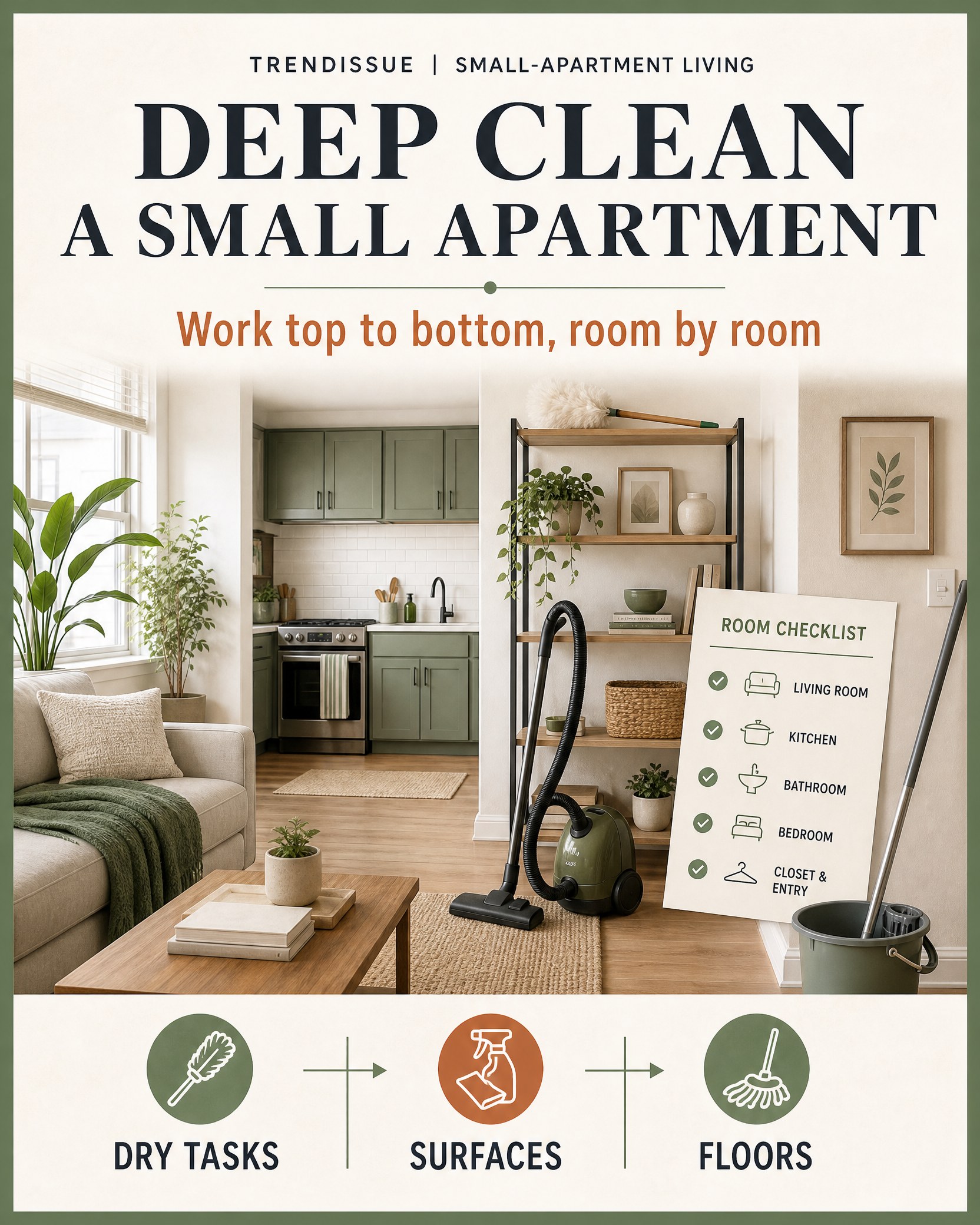
If your small apartment needs a thorough refresh, the fastest reliable method is to tackle one room at a time using a dry-to-wet, top-to-bottom order. That means remove clutter and dust first, then finish with wet cleaning so you don’t re-soil surfaces. Working this way saves time and keeps clean areas clean.
This article gives a practical room-by-room checklist you can apply immediately. For each space you’ll see the recommended sequence, a short list of must-do tasks, common trade-offs (what you can skip when short on time), and a clear next step to maintain the result.
Before you start: supplies and setup
Quick supply checklist
- Microfiber cloths, dusters, mop, broom, vacuum (with attachments)
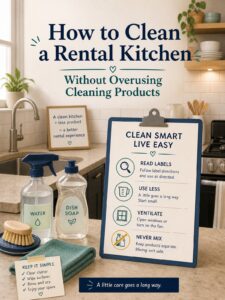
- All-purpose cleaner, glass cleaner, bathroom cleaner, degreaser or dish soap
- Trash bags, laundry basket, gloves, small scrub brush
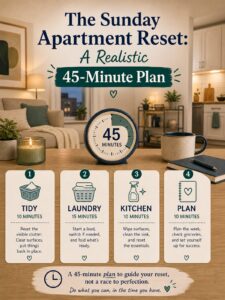
- Timer or phone to set rounds (25–45 minutes per room works well)
Gather supplies in a caddy you can carry from room to room. Open windows where possible for ventilation and set a timer so you focus on tasks rather than perfection.
General rule: dry-to-wet, top-to-bottom
Start at the highest point in the room (ceiling fans, light fixtures, upper shelves) and work downward. Do all dry cleaning first—dusting, vacuuming, sweeping—then finish with wet tasks—wiping, mopping, scrubbing sinks and counters. This prevents dust and crumbs from settling onto already-cleaned surfaces and shortens total effort.
Living room: quick checklist
- Remove clutter and put items in a laundry basket or bins to sort later.
- Dust light fixtures, shelves, and electronics, working top to bottom.
- Vacuum upholstery and cushions; remove cushions and vacuum crevices.
- Sweep or vacuum floors, then mop hard floors. Spot-clean marks on baseboards last.
Trade-off: If short on time, skip deep-cleaning upholstery and focus on vacuuming and surface wipes. Save cushion shampooing for a later session.
Kitchen: priority zones and order
- Clear countertops of clutter; remove dishes and load the dishwasher or hand-wash them.
- Dust or wipe high shelves, then clean cabinet fronts and appliance exteriors top to bottom.
- Degrease the stove area and backsplash (dry wipe first, then wet scrub), then clean sink and countertops.
- Sweep and finish by mopping the floor, moving small rugs as needed.
Trade-off: Deep-cleaning the oven can wait if you’re pressed for time; a quick wipe and stove-top focus will make the kitchen usable immediately.
Bathroom: a compact, effective flow
- Remove toiletries and towels; toss trash.
- Dust vents and high shelves, then wipe mirrors and light fixtures.
- Apply cleaners to tub, shower, toilet, and sink so they can soak while you handle other tasks.
- Scrub fixtures and rinse; finish by mopping the floor from back to door.
Trade-off: If grout scrubbing or descaling is needed, consider it a focused add-on rather than part of every deep clean unless it’s visible or causing problems.
Bedroom: fast deep clean
- Strip bedding and start a laundry load. Put dirty clothes in a basket.
- Dust ceiling corners, light fixtures, and headboard, working down through dressers and surfaces.
- Vacuum or sweep floors and under the bed if accessible; use attachments for edges.
- Replace bedding and finish with a quick surface wipe and floor mop if needed.
Trade-off: If linens are clean enough for another day, skip a full change and focus on dusting and floor work to save time.
Entry, closets, and small extras
- Clear shoes, mail, and outerwear; sort immediately into bins.
- Dust shelves, wipe door handles, sweep or vacuum entry floor, then mop.
Small spaces add up. If you’re doing a quick deep clean, prioritize the entry and closet faces that guests see and schedule a separate closet-organizing session later.
Quick task matrix
At-a-glance reference
| Room | Dry tasks | Wet tasks |
|---|---|---|
| Living room | Declutter, dust shelves, vacuum upholstery | Wipe surfaces, mop floors, spot-clean marks |
| Kitchen | Declutter, dust tops of cabinets, sweep | Degrease stove, wipe counters, mop floors |
| Bathroom | Remove items, dust vents, dry-scrub fixtures | Apply cleaner, scrub tub/toilet/sink, mop |
| Bedroom | Strip bedding, dust, vacuum edges | Wash bedding, wipe surfaces, mop if needed |
Related guide: Apartment Move-Out Cleaning Checklist: What to Clean Before You Hand Back the Keys
Finishing steps and realistic trade-offs
Wrap up by emptying trash, replacing liners, and returning items you set aside to sort later. Decide what can wait: deep upholstery cleaning, oven degreasing, or detailed grout work can be scheduled for a later session. If you have limited time, prioritize high-touch and high-visibility areas: kitchen counters, bathroom fixtures, and entryway.
Related guide: A Weekly Cleaning Schedule for a Small Apartment That You Can Keep
Next step: keep it simple
After the deep clean, pick one manageable follow-up—set a weekly 30-minute maintenance round, or schedule a single extra task each week (like upholstery or oven). The most realistic next step for most renters is a quick, repeatable routine that protects your deep-clean investment without consuming a whole day.
FAQ
How often should I deep clean my small apartment?
Frequency depends on your lifestyle. For many people, a thorough deep clean every few months plus light weekly maintenance keeps a small space comfortable. If you cook heavily, have pets, or host frequently, you may want to deep clean more often.
Can I skip the dry step and just clean with wet products?
Skipping dry cleaning usually means you’ll redistribute dust and crumbs, which can make wet cleaning less effective. A quick dry pass (dust + sweep) before wet work is time well spent and prevents re-soiling.
What’s the best way to tackle a very messy apartment in limited time?
Set a timer and work in 30–45 minute sprints focused on high-impact areas: kitchen counters, bathroom surfaces, and the entry. Use a laundry basket to gather clutter quickly, then vacuum and wipe. Save detailed tasks for a follow-up session.
Sources and fact-checking
This article provides practical editorial guidance. Safety, cleaning, disposal, rental, and product decisions can depend on the item, its instructions, and local requirements.
- U.S. Centers for Disease Control and Prevention — Cleaning and Disinfecting — For everyday home cleaning, use product-label directions; disinfecting may be appropriate when illness circumstances call for it.
Fact-checked against the linked official resources on August 27, 2026.