A Weekly Cleaning Schedule for a Small Apartment That You Can Keep
Living in a small apartment doesn’t mean you have to spend your weekends scrubbing for hours. A realistic cleaning schedule slices larger chores into short daily habits and a focused weekly rotation so nothing piles up into a marathon session.
This plan sets priorities for what truly matters in a small space—surfaces, floors, laundry, and clutter—and shows how to trade a little time most days for a lot less work later. Read through, pick one tweak, and try it for a week.
How the plan is structured
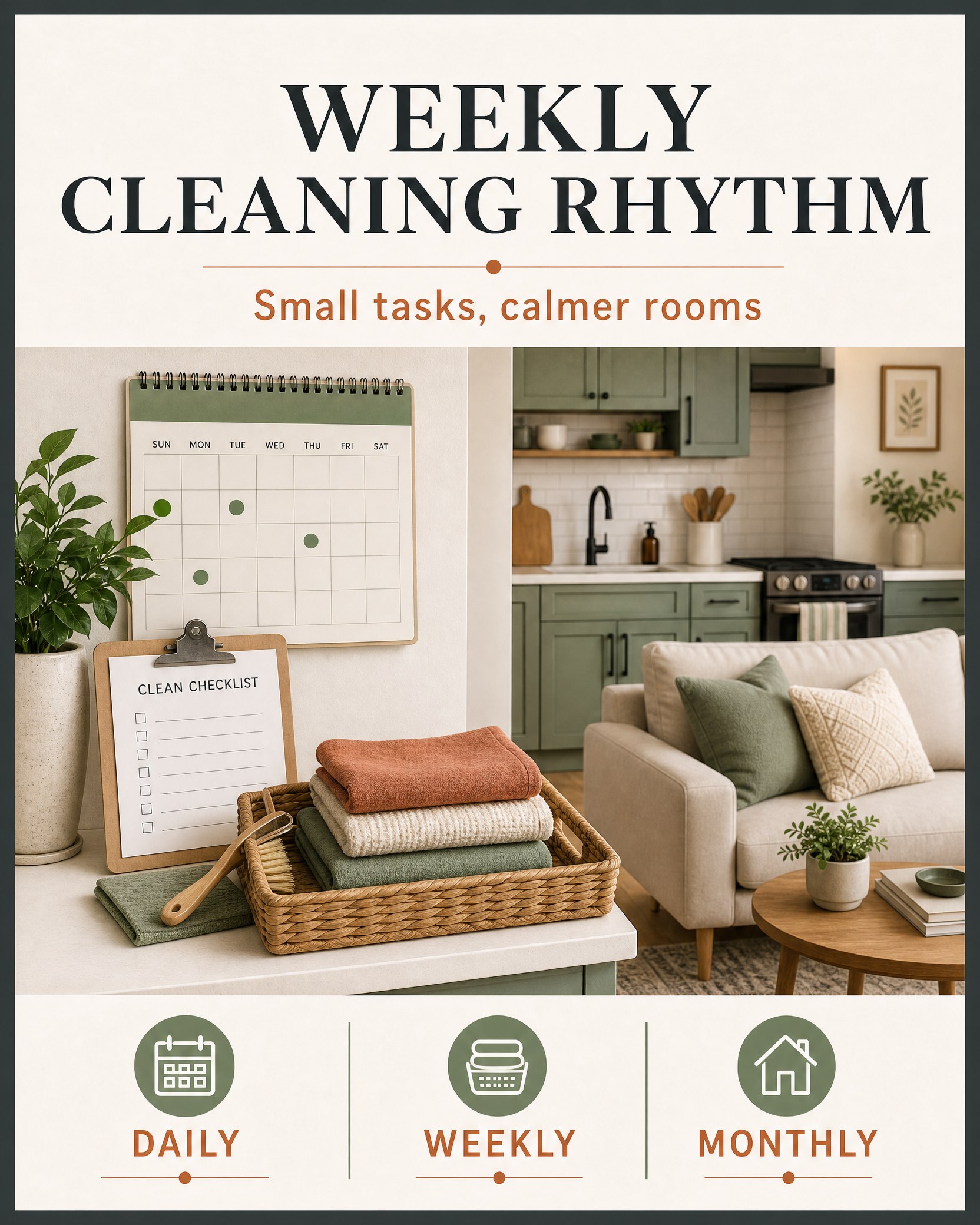
The idea is simple: bite-sized daily actions keep the place usable, the weekly rotation tackles higher-effort tasks one at a time, and a short monthly list handles deeper jobs you can’t do every week. This balances visible tidiness with realistic effort for renters and small-home residents.
Daily checklist (10–20 minutes)
Daily habits are the backbone. Aim for 10–20 minutes spread through the day or concentrated in the evening. Consistency beats intensity—doing a little each day avoids the dread of large, infrequent cleanups.
- Wash dishes or load dishwasher after meals; wipe counters.
- Quick sweep or vacuum of high-traffic areas (entry, kitchen).
- Sort mail and discard trash that accumulates.
- Wipe bathroom surfaces and squeegee shower after using it when possible.
Weekly rotation (30–60 minutes per session)
Pick one or two focused tasks per day so no single day becomes a marathon. Rotate through rooms and tasks so everything gets attention each week. If you share the apartment, assign days to roommates or split tasks by location.
- Monday: kitchen deep wipe (appliances, counters, cabinet faces).
- Tuesday: bathroom thorough clean (toilet, sink, mirror, shower tiles).
- Wednesday: dust surfaces, electronics, and blinds.
- Thursday: vacuum and mop floors including under furniture where possible.
- Friday: change bedding and wash towels; tidy closets or entryway.
- Saturday: catch-up day or small projects (plants, recycling run).
Short weekend reset
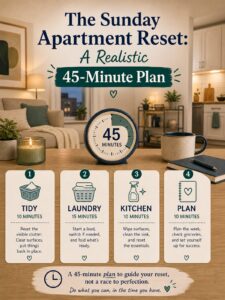
Reserve 20–30 minutes on Sunday to reset: empty trash, quick wipe of surfaces, and put things back in place. That small investment keeps Monday easy.
Monthly deep tasks
Monthly chores take longer but don’t need weekly attention. Schedule one or two of these each month so they don’t pile up. They’re the trade-off for keeping weekly tasks short: spend more time occasionally to avoid constant, low-level mess.
At-a-glance reference
| Task | Frequency | Time estimate |
|---|---|---|
| Oven/stovetop deep clean | Monthly or as needed | 30–60 minutes |
| Windows and blinds | Monthly | 20–40 minutes |
| Declutter shelves and drawers | Monthly | 30–45 minutes |
| Deep vacuuming (sofa, under bed) | Monthly | 30–45 minutes |
Tools and supplies that make short sessions effective
Keep a small caddy with multipurpose cleaner, microfiber cloths, a scrub brush, and disinfecting wipes. A lightweight cordless vacuum or a good broom and dustpan are worth the space. Supplies make it realistic to handle a task in one short block instead of stretching it into an ordeal.
Realistic trade-offs
There are two main trade-offs to consider. First, frequency versus depth: doing short cleanups often keeps surfaces tidy but will still require monthly deep work. Second, time versus convenience: investing small daily time reduces overall effort but does mean a little routine maintenance.
If you need less frequent tidying, accept that each session will take longer. If you prefer minimal weekly work, choose two or three daily habits to preserve comfort while letting other tasks fall into the monthly list.
Related guide: A 20-Minute Sunday Reset for a Small Home
Making the plan fit your life
Customize the schedule around your natural routines. If you cook heavily, you might need more kitchen touch-ups; if you work weekends, move your reset to a midweek evening. The key is predictable, bite-sized actions you can do without spoiling your free time.
Related guide: How to Deep Clean a Small Apartment: A Room-by-Room Checklist
Clear next step
Pick one daily habit—dishes after dinner or a five-minute evening sweep—and commit to it for seven days. Set a timer, add it to your calendar, or tie it to another habit like brushing your teeth. After a week, add one more habit or swap a daily item into the weekly rotation. Small, consistent changes compound quickly.
FAQ
How long will this actually take each week?
Plan on 10–20 minutes daily plus one or two 30–60 minute weekly sessions and a monthly deep clean. Total time varies by lifestyle, but spreading tasks keeps any single session short.
What if I fall behind one week?
Use the catch-up day or shift one weekly task to weekend reset. Missing a day isn’t failure—adjust the schedule so it works with your life and swap or combine tasks the next week.
Can a roommate help without arguments?
Agree on a simple rotation or split tasks by area. Keep responsibilities visible (a shared checklist or calendar) and pick one joint session each week to tidy communal spaces together.
Start small, keep it visible, and tweak as life changes. The reward is a home that feels clean without stealing your weekends.
Sources and fact-checking
This article provides practical editorial guidance. Safety, cleaning, disposal, rental, and product decisions can depend on the item, its instructions, and local requirements.
- U.S. Centers for Disease Control and Prevention — Cleaning and Disinfecting — For everyday home cleaning, use product-label directions; disinfecting may be appropriate when illness circumstances call for it.
Fact-checked against the linked official resources on August 27, 2026.