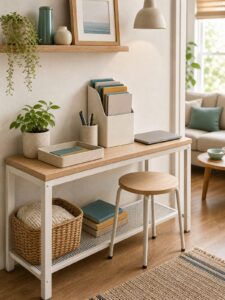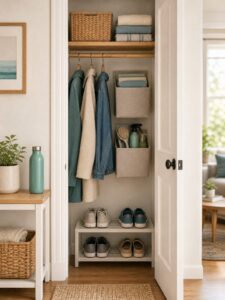
How to Create a Drop Zone in a Small Entryway
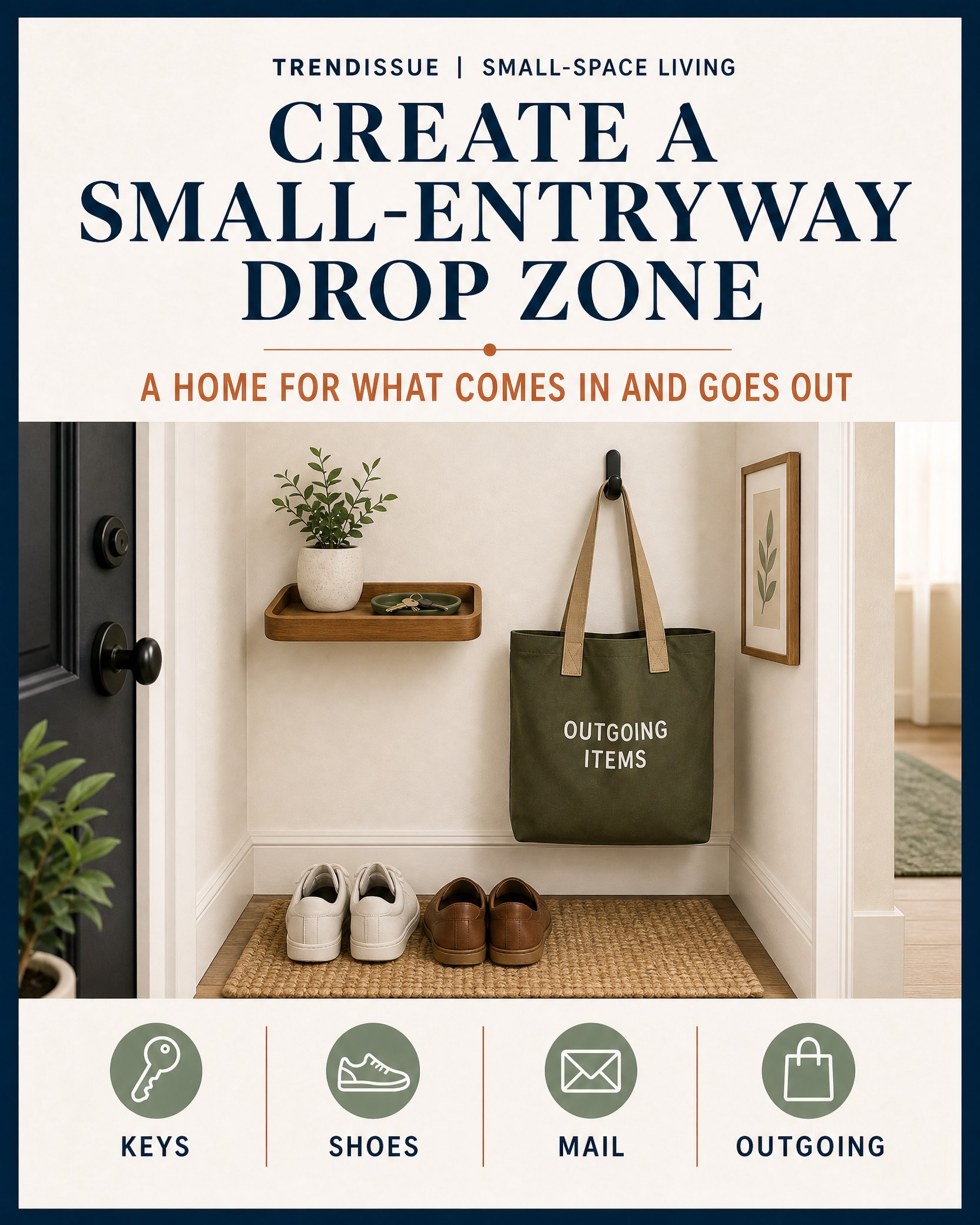
Keys on the kitchen counter, shoes in the living room, mail on a chair, and bags on the floor often look like separate clutter problems. In a small home, they usually have the same cause: there is no clear place to land when you walk in the door.
A drop zone is a compact system for daily arrivals and departures. It can fit beside a front door, inside a small foyer, or on one shelf near the entrance. The best version is not decorative or expensive. It is easy to use with one hand while you are carrying groceries, a bag, or a tired child.
Build the drop zone around the five things that cause the most “Where did I put it?” moments.
Begin With Your Actual Arrival Routine
Before buying hooks or baskets, observe what enters with you on an ordinary day. A typical list includes keys, wallet, bag, shoes, mail, jacket, pet gear, and a work badge. Your household may also need a place for transit cards, lunch bags, chargers, umbrellas, or kids’ backpacks.
Write down only the items you handle within the first minute of coming home. Those are the items that need an immediate home. Seasonal items and rarely used bags can live elsewhere.
At-a-glance reference
| Daily item | A compact drop-zone solution | Simple rule |
|---|---|---|
| Keys / wallet | Small tray, bowl, or wall-mounted key holder | Put down before removing shoes |
| Bag / backpack | Sturdy hook or designated chair-back space | One assigned location per person |
| Shoes | Mat, shallow tray, or a limited basket | Keep only current pairs at the door |
| Vertical sorter or one paper tray | Sort within 24 hours | |
| Outgoing items | Small bin or tote near the exit | Return items there as soon as you remember |
The table is a starting point, not a shopping list. Use containers already in your home for one week before deciding whether a permanent solution is needed.
Choose a Boundary for Shoes
Shoes spread because the entry has no stopping point. A small mat, shallow tray, or basket tells everyone where shoes end. Choose a size that fits the floor without narrowing a walking path or making the door difficult to open.
Keep only the pairs currently in use near the door. Store off-season shoes or occasional-use footwear in a closet, under-bed container, or other designated location. If the boundary fills, rotate shoes rather than extending the pile into the room.
For wet shoes, use a tray that can be wiped out easily. Let shoes dry according to their material needs; a closed container is not always the right choice for damp footwear.
Give Keys a Home That Is Hard to Miss
Keys need a home that is visible, simple, and close to the door. A small dish on a console, a hook at an appropriate height, or a labeled pocket in a wall organizer can all work. The best option is the one you will use before you walk farther into the apartment.
Avoid putting keys on a high stack of mail or inside a deep drawer. Those solutions require an extra decision, so they fail on busy days. If more than one person uses the space, give each person a named hook or tray section.
Create a Mail Rule, Not Just a Mail Basket
A basket catches paper; it does not solve paper. Create three fast choices for incoming mail: recycle, act, or file. Recycling happens immediately. Items that require a response go to a small action tray. Documents that must be retained go to a secure filing location, not the entryway.
Choose a weekly paper time to empty the action tray. The exact day matters less than consistency. If the tray remains full, shrink it. A smaller boundary reveals when the system needs attention before papers spread to the kitchen.
Make One Place for “Leaving Soon” Items
A good drop zone supports departures as well as arrivals. Put returns, library books, packages to mail, reusable bags, and other outgoing items in one small tote or basket near the door. Whenever you remember an errand, place the item there instead of leaving it on the kitchen counter.
Review the outgoing spot each time you leave. This small habit reduces the number of repeat trips and keeps important items visible without cluttering your living space.
Use Vertical Space Conservatively
A small entryway may benefit from hooks, a narrow wall organizer, or a slim freestanding unit. Choose only what the space can safely support and what your lease allows. Do not install hardware without confirming the wall type, required anchors, and rules for your rental.
Avoid overloading hooks or racks. A crowded entry looks less organized, and a heavy object falling near the door creates a hazard. If you add a tall freestanding organizer, follow the manufacturer’s assembly and safety instructions. Where children are present, take extra care with furniture stability and keep heavy or tempting items from creating a climbing risk.
Build a Five-Minute Sunday Reset
Once each week, return stray items to their homes, put away unused shoes, empty the mail tray, and check the outgoing basket. This takes far less time than a monthly entryway overhaul.
If a category keeps escaping, revise the system. For example, if reusable bags always end up in the kitchen, the entry may need a larger hook or more visible tote. If coats land on the sofa, the current hook may be blocked or inconvenient. Systems should fit behavior, not demand perfect behavior.
Frequently Asked Questions
How big should a small entryway drop zone be?
It should be only as big as the daily items you need to land. Begin with a tray, shoe boundary, one hook, and one outgoing bin. Expand only if the routine proves you need another function.
What if my apartment has no entryway at all?
Use the first practical point inside the door: a narrow wall-adjacent area, the side of a cabinet, or a small section of the living room. The location matters less than keeping it near the arrival path.
How do I keep a drop zone from becoming a clutter pile?
Give every container a single job, keep the boundary small, and reset it weekly. A drop zone works when it handles daily transitions—not when it becomes storage for everything that lacks a home.
Your Next Step
Tonight, place a tray for keys, a boundary for shoes, and a bag for outgoing items near your entrance. Then use The Weekend Apartment Reset: A Room-by-Room Plan for Less Clutter to connect that small system to a calmer home routine.
Sources and fact-checking
This article provides practical editorial guidance. Safety, cleaning, disposal, rental, and product decisions can depend on the item, its instructions, and local requirements.
- U.S. Consumer Product Safety Commission — Anchor It! — For furniture, TV, or elevated-storage safety, follow product instructions and secure top-heavy furniture where appropriate.
Fact-checked against the linked official resources on August 27, 2026.