
Vacuum Brush Roll Hair Removal: Isolate Power First
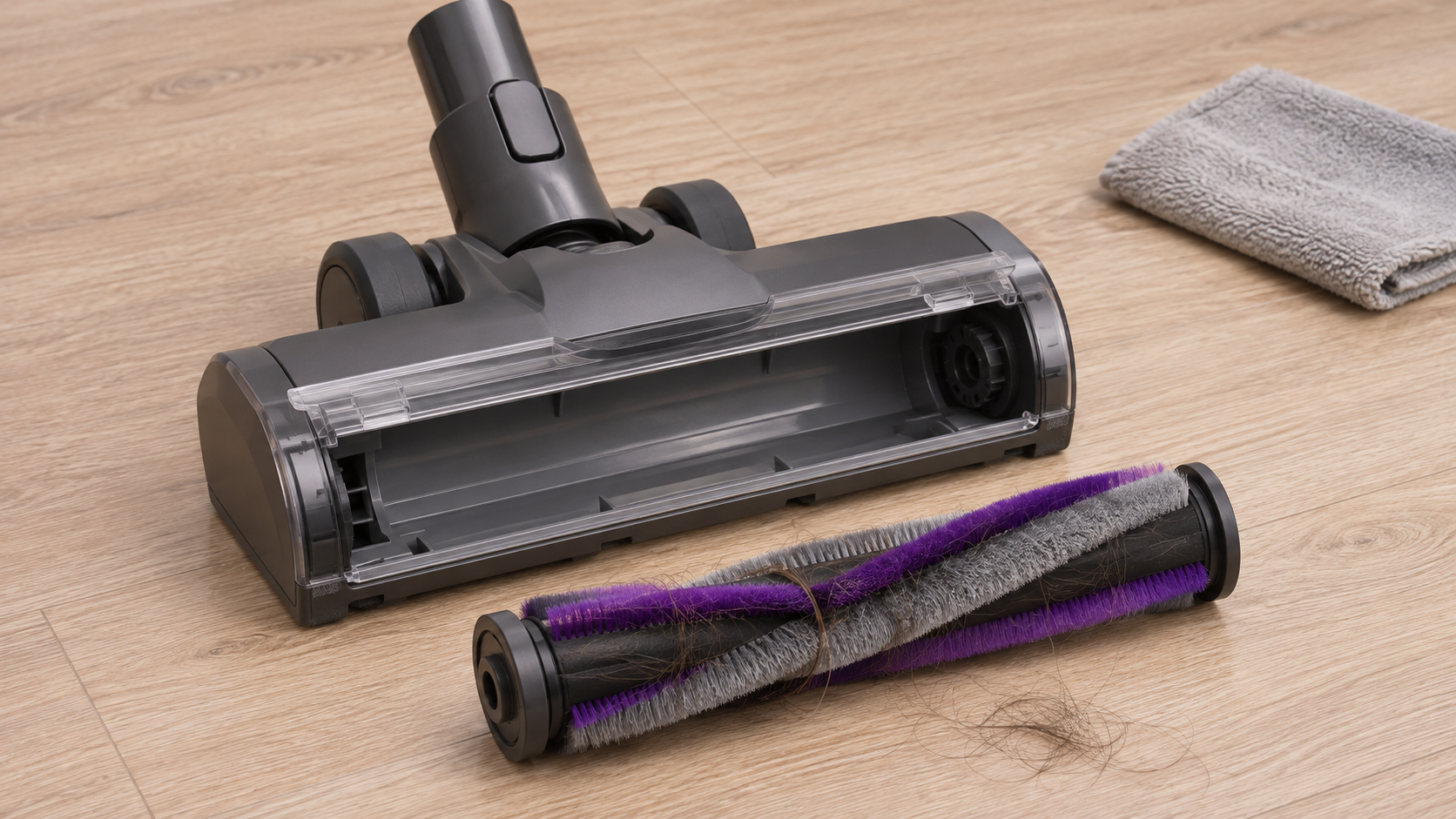
Vacuum roller brush removal is a model-specific maintenance task. Vacuum roller brush removal depends on the exact nozzle. Isolate power, use the specified release or cover, and reinstall it securely.
Start with the model number. A standard roll may sit behind a cover, a removable roll may slide out, and a self-cleaning roll may need a different response. Power isolation comes first: corded vacuums are switched off and unplugged; on the Shark IY140 cordless model, switch off and remove the battery before cleaning or maintenance, then detach the nozzle.
Isolate power before opening the nozzle
Hair removal is maintenance, not a reason to reach near a live brushroll. For a corded model, turn it off and unplug it before inspecting the floor nozzle. For a cordless model, on IY140, turn it off and remove the battery; other cordless models need their own manual’s isolation step. Do not assume the same isolation step applies to every battery system.
Put the vacuum on a stable surface with the nozzle visible. Do not hold the trigger or press a power pedal while opening the nozzle. If hair is tightly wound, work slowly with a tool only where the model’s instructions permit, keeping fingers clear of the brushroll and belt area.
| Decision | Check | Do next |
|---|---|---|
| Identify the nozzle | Find the model number and brushroll type | Use the matching manual or support article. |
| Isolate power | Turn off; unplug corded models | For cordless models, follow the specified model steps. |
| Access the roll | Use only the listed latch, lock, or release | Do not pry open a sealed nozzle. |
| Clear and reinstall | Remove hair and debris, then close every latch | Confirm the cover or roll clicks/locks in place. |
Decide whether your brushroll is standard, removable, or self-cleaning
“Self-cleaning” is not the same as “never inspect.” For a normally spinning HZ250 brushroll, Shark specifies running setting II (Carpets) on a bare floor to allow its self-cleaning action to remove wrapped hair. This does not apply to a jammed or nonspinning roller: switch off and unplug the corded unit before inspection. If hair remains, follow the model’s cover-removal and reassembly instructions with power disconnected. By contrast, its IZ162H cordless guidance tells owners of the standard brushroll to turn off the vacuum, unlock the cover with a coin, clear blockages, and remove wrapped hair or fibers; then it specifies how to replace and lock the cover.
Some models release the entire roll. After the IY140 is switched off and its battery removed, Shark directs owners to detach the nozzle, use the brushroll release, slide the roll out, clear debris, and reinstall it until it clicks. That is not a universal disassembly pattern. If your nozzle lacks that named release, stop and find the exact support page.
Clear hair without damaging the nozzle
Remove loose hair, string, carpet fibers, and debris from the roll and the airway. Shark’s IZ162H instructions permit scissors to help loosen debris from a standard brushroll. Use care not to cut bristles, belts, seals, wiring, or any part other than the wrapped material. Do not wash components unless the manual specifically says they are washable and provides drying instructions.
Once clear, reinstall the roll or cover exactly as the manual describes. A cover that is not fully seated can affect operation, so check that its inserts, locks, and audible click are engaged where applicable. If the nozzle makes an unfamiliar noise, does not spin, is damaged, or will not close, do not continue operating it; use the manufacturer’s troubleshooting or service path.
Make inspection part of the vacuum routine
There is no universal calendar for every household. Shark’s cordless Pet Vacuum guide advises pet owners to inspect after every few uses because pet hair can wrap quickly. Change the frequency to suit long hair, rugs, and visible buildup, but do not turn that model-specific tip into an absolute rule for all vacuums. Emptying the dust cup and looking for blockages when suction changes are practical companion tasks.
This is distinct from choosing a stick vacuum or battery type. If that is your next decision, read cordless vs. corded stick vacuums. For keeping a cleaning routine manageable, pair it with a weekly small-apartment cleaning schedule.
Read the nozzle before choosing a tool
Look for a release latch, coin-lock symbols, a removable cover, or a model-specific access point. If you cannot identify one, the correct action is not to pry. Search the manufacturer support site using the model number printed on the vacuum, not the retailer listing or a photo of a similar cleaner. A brushed roller, soft roller, belt-driven roller, and self-cleaning roller can have different access rules.
Use good light and remove only visible wrapped material. A seam ripper, knife, or scissors can damage bristles or the nozzle if used carelessly. The cited Shark support instructions mention scissors for the standard IZ162H brushroll; that does not authorize cutting every roller. Stop if the wrap reaches an area you cannot access safely.
Check the airway while the cover is already open
Hair around the roller may be only part of a suction problem. With power isolated, look for the blockages your manufacturer tells you to check in the nozzle and accessible airway. Do not push objects deeper into the machine or use liquid to flush a nozzle unless the manual instructs it. Refit every component before restoring power.
After reassembly, test the vacuum on an open section of floor, not over a cord or a loose rug edge. If the brushroll does not spin or the sound changes, switch it off again and use the official troubleshooting steps. Continuing to run a jammed nozzle can turn a small maintenance task into a service issue.
Use replacement parts that match the model
If the brushroll is cracked, bristles are missing, or an end cap will not turn freely, do not assume a similar roller will fit. Record the model number and consult the manufacturer’s parts or support page. A roller that looks alike may differ in length, end caps, drive interface, or nozzle compatibility. Reinstalling the original roll after hair removal should feel secure under the method the manual describes, not depend on tape, pressure, or an improvised spacer.
Keep the nozzle facing away from people while testing after reassembly. If the cover does not latch, do not power it on to “see if it works.” Switch off again and confirm every lock, insert, and release point. Professional service or manufacturer support is the next step when the approved access procedure does not solve the problem.
Record the model before discarding the manual
A photo of the model label and the official support URL can make the next hair-removal task safer, especially for shared homes. Keep that record with cleaning instructions rather than relying on a generic video.
Frequently asked questions
Do I always need to unplug first?
For corded vacuums, turn off and unplug before nozzle maintenance. Follow the exact model’s procedure for cordless machines.
Can I cut hair off a brushroll?
Only when your manual permits it, and cut wrapped hair or fibers without cutting bristles, belts, or seals.
Why is hair still on a self-cleaning brushroll?
Some self-cleaning models may need continued use or careful removal of remaining hair as their support guidance states.
Can I remove every brushroll?
No. Access and removal vary by model; do not force a nozzle that lacks the specified release.
Sources and fact-checking
Checked against the official sources below on November 27, 2026. This is research-based guidance, not a claim of hands-on product testing.


댓글 0
첫 댓글을 남겨보세요.