
How to Clean an Immersion Blender Shaft Without Soaking the Motor
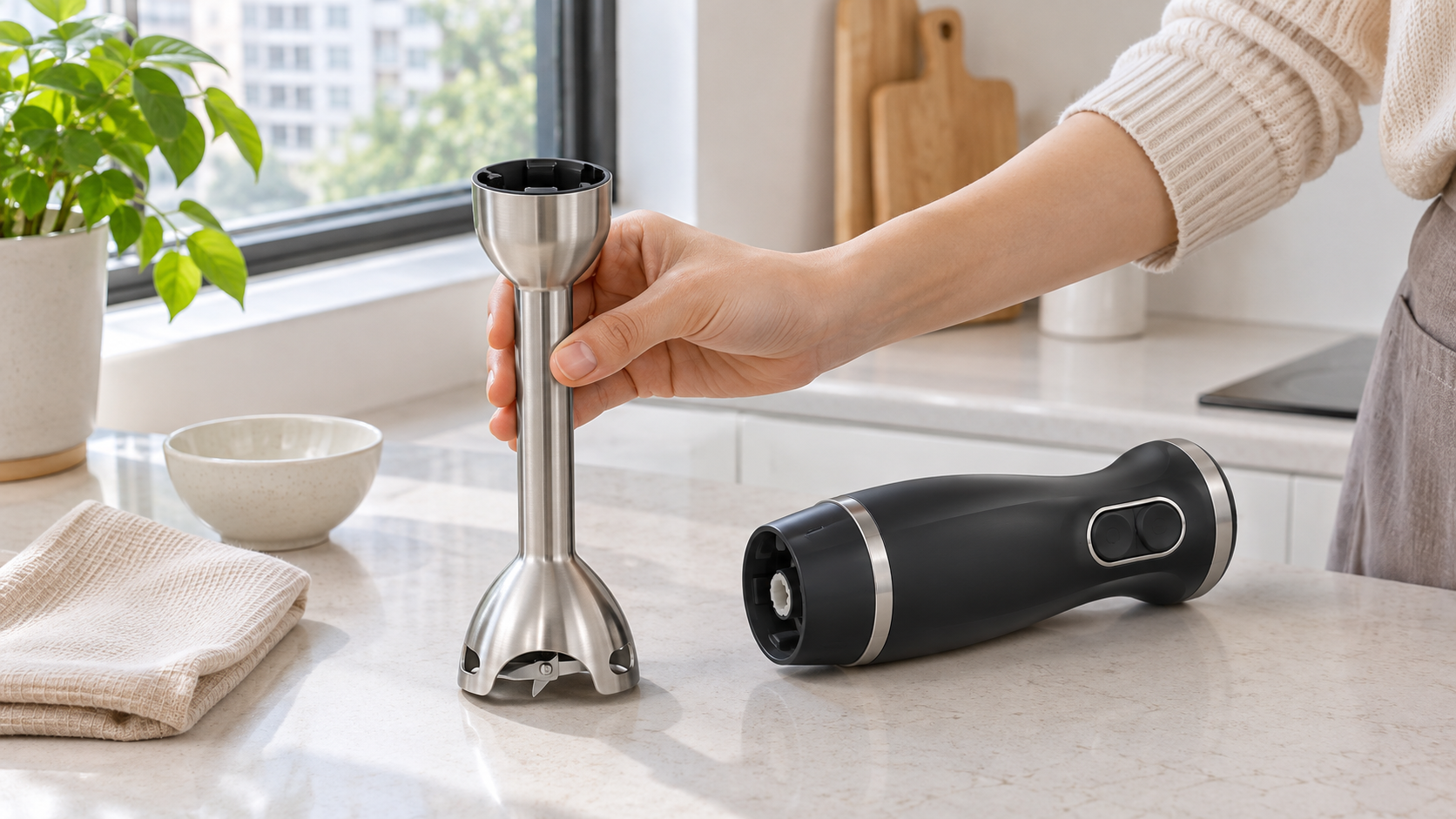
Immersion blender shaft cleaning should begin with the appliance unplugged and the shaft separated from the motor body, if your model is designed to detach. Wash only the component your manual permits, then dry its inside and outside before reconnecting it. Do not treat a handheld immersion blender like a countertop blender: the relevant decision is whether the shaft comes off, not whether a blade assembly can be taken apart.
That distinction matters in a small kitchen, where quick rinsing at a crowded sink is tempting. A manufacturer manual is the tie-breaker. Vitamix’s household immersion-blender manual directs owners to remove the blending shaft, wash it in warm soapy water, rinse and dry it thoroughly, and ensure that no water remains inside the shaft before reattaching. If your own manual differs, use its instructions instead.
Start with the connection, not the blade
Turn the appliance off, unplug it, and wait for all movement to stop. Look for the release method in the manual rather than twisting a shaft that was not designed to twist. Once separated, set the motor body well away from the sink. The shaft contains the guarded blade and is the food-contact piece; the motor body, cord, and controls need a wipe-only approach unless the manufacturer explicitly says otherwise. This sequence also keeps a wet shaft from being lifted over the motor connection.
Wash the shaft in the way your model allows
For a detachable Vitamix shaft, warm soapy water, a rinse, and thorough drying are the stated method. Use a soft cloth or a nonabrasive brush only where you can see residue, and keep fingers out of the blade guard. A rinse may remove fresh food, but it is not a substitute for washing. Conversely, prolonged soaking is not a universal shortcut: the Vitamix manual says not to let its blending wand soak for long periods. Avoid dishwasher assumptions, too. That manual says its immersion blender is not dishwasher safe.
Make drying a functional check
Hold the cleaned shaft so water can drain from the opening, then dry the exterior and allow time for the interior to dry before attachment. The goal is not a promised lifespan benefit; it is to follow the manufacturer’s warning that retained water can run into the motor body when the shaft is reattached. Inspect the coupling area for food film or moisture, and wipe it dry. If residue cannot be reached safely, stop rather than inserting a sharp tool into the guard.
Set up a sink routine that fits a small kitchen
Create a simple landing zone: keep the unplugged motor body and cord on a dry surface well away from the sink, with a wash area and dry towel or rack reserved for the shaft. That keeps the cord and motor out of splash range and prevents the sharp end from disappearing into dishwater. Use a small-space dishwashing routine that keeps the sink usable when counter space is tight. Clean soon after use so residue is easier to see, but let hot cookware cool and move it away from heat before blending or cleaning. For countertop jar and blade questions, use our countertop blender blade-assembly cleaning guide. Store only after every component is dry and assembled exactly as the manual describes. Immersion blender shaft cleaning is easier to repeat when the dry rack and motor landing spot stay separate.
Know when the task is not ordinary cleaning
Do not pry the blade, open a sealed motor housing, or use an unapproved solvent to solve a performance problem. If the dry shaft still fits loosely or vibrates, turn the blender off and unplug it, check the assembly, and seek service if a connection or part appears damaged. Cleaning cannot correct a damaged coupling or electrical fault. A small-space routine works best when it has a stop point: wash permitted parts, dry them, inspect the connection, and seek service for problems beyond that scope.
| Part or storage decision | Manual check | Small-kitchen action |
|---|---|---|
| Motor body | The manual says wipe only | Keep it on a dry towel away from the sink |
| Detachable shaft | The manual permits hand washing | Wash, rinse, and dry before reconnecting |
| Blade guard residue | It is visible and reachable safely | Use a soft nonabrasive tool, never fingers |
Questions to settle before you put it away
Can I rinse the whole immersion blender under the faucet?
Not unless your model’s manual explicitly permits it. The cited Vitamix manual says not to immerse the motor body or cord.
Can the shaft go in the dishwasher?
Model instructions control. Vitamix says its immersion blender is not dishwasher safe.
Why dry inside the shaft?
Vitamix warns that water remaining inside can run into the motor body when the shaft is reattached.
Is this the same as cleaning a blender blade assembly?
No. This article concerns a detachable handheld shaft and motor connection, not a countertop blender’s removable blade assembly.
Plan the drying route before you begin
Reserve a clean towel or drying rack beside the sink for the detached shaft. Keep the unplugged motor body and cord on a separate dry counter away from the sink and splashes. After washing, set the shaft where its blade guard cannot be bumped, and let it drain and dry as the manual directs before reconnecting it.
Check the fit before the next use
Before blending again, inspect the shaft connection and make sure it seats without force. Check that the release mechanism is clear of food and that the cord has no damage. If the shaft will not seat, do not run the blender to test it. Re-read the model instructions or contact the manufacturer. A clean shaft and a correct connection are separate checks.
Sources and fact-checking
I read the linked U.S. Vitamix owner’s manual directly. The steps above are research-based guidance, not a claim of personal product use.
- Vitamix Immersion Blender Owner’s Manual: remove the shaft, wash it in warm soapy water, rinse and dry thoroughly; do not immerse the motor body or leave water in the shaft.


댓글 0
첫 댓글을 남겨보세요.