Entryway Organization for a Shared Small Home: A Daily System
Entryway organization in a shared small home is less about buying more furniture and more about giving every person, item, and daily action a clear place. When several people use the same few square feet, even a good-looking setup can fail if shoes block the door, bags cover the hooks, or keys migrate from one surface to another. A workable system should make the right action easier than dropping everything on the floor.
This guide focuses on the household routine behind an organized entryway. If you are still deciding what furniture or containers to buy, start with our entryway storage ideas for small apartments. If you already have basic hooks, a tray, and shoe space, use the process below to turn them into a shared system that stays usable.
Start with traffic flow, not storage capacity
Before assigning baskets or hooks, watch how people actually enter and leave. Open the front door fully. Notice where wet shoes land, which hand is holding keys, where a backpack naturally comes off, and whether anyone needs room for a stroller, cane, pet leash, or mobility aid. The most important space in an entryway is the path through it.
The U.S. Fire Administration recommends making sure doors and windows used in a home escape plan are not blocked. That is a useful baseline for everyday organization too: storage should not narrow the route to the door or make someone step around a pile during an emergency. Keep the door swing, locks, and primary walking lane clear.
Make a quick measurement map
- Measure the wall width and the depth available without crowding the walkway.
- Mark the door swing and any closet door, utility panel, thermostat, or outlet that needs access.
- Note the lowest comfortable hook height for every household member.
- Count the daily shoes and bags that truly need to live near the door.
- Leave seasonal and occasional items out of the first plan.
A simple phone photo and four measurements are usually enough. This prevents the common mistake of choosing a large organizer that technically fits the wall but interferes with movement.
Build five small landing zones
Effective entryway organization gives each type of daily item a destination that can be reached in one motion. In most shared homes, five zones cover the essentials.
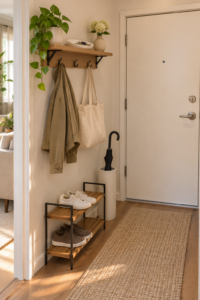
- Pocket zone: a shallow tray or small divided container for keys, wallets, transit cards, and earbuds.
- Hanging zone: hooks for the coats, bags, dog leashes, or umbrellas currently in use.
- Shoe zone: a tray, low shelf, or defined floor area with a firm capacity limit.
- Paper zone: one vertical file or slim inbox for mail that requires action.
- Exit zone: a small spot for the one item that must leave the home next, such as a return package or library book.
Do not make every zone large. A tight capacity is useful because it shows when the system is overloaded. A key tray should not become a general junk drawer, and the exit zone should not become long-term package storage.
Assign space by person, not by item alone
Shared systems break down when everyone knows where “the coats” go but nobody knows which hook is available. Give each person a repeatable vertical lane or a small set of locations: one hook, one shoe row, and one pocket compartment. Color, position, or basket texture can identify zones without adding visual clutter.
For roommates, define what is private, what is shared, and what is temporary. A personal hook can hold a daily coat and bag. A shared hook might hold a guest coat or reusable grocery bags. A temporary shelf can hold an outgoing item until the next trip. This is more specific than telling everyone to “keep the entryway clean.”
If visual labels help your household, see our guide to home organization labels for shared spaces. Use labels to clarify ownership or category, not to compensate for too many categories.
A two-minute daily reset and a ten-minute weekly reset
The system needs two maintenance speeds. The daily reset restores the walking path and returns the most-used items. The weekly reset removes overflow and catches small problems before they become permanent clutter.
| When | Task | Who does it | Stop point |
|---|---|---|---|
| On arrival | Keys in tray, bag on assigned hook, shoes in assigned row | Each person | Walking path is clear |
| Before bed | Move mail, packages, and dishes to their next destination | Last person through | No loose items on the floor |
| Once a week | Return extra shoes and coats to bedroom or closet storage | Rotate by household | Only current-use items remain |
| Monthly | Check hooks, shelves, anchors, trays, and door clearance | One assigned adult | Nothing is loose, leaning, or overloaded |
Attach the reset to an existing habit. For example, clear the shoe row when taking out trash, sort the paper zone on grocery day, or check hooks when changing the smoke-alarm reminder on your calendar. A routine that is linked to something you already do is easier to maintain than a separate cleaning project.
Use capacity limits that everyone can see
A shared entryway needs a visible definition of “full.” The shoe tray is full when every marked spot is occupied. The hooks are full when each person has used the assigned hook. The mail file is full when papers no longer stand upright. Once a zone reaches its limit, the next step is removal, not expansion.
Try these simple limits:
- One daily pair of shoes per person, plus one weather-specific pair if needed.
- One outer layer and one everyday bag per person.
- One active return or outgoing package at a time.
- Mail stays only until the household’s scheduled review day.
- Guest items leave the entryway when the guest leaves.
These are starting points, not universal rules. A household with children, multiple jobs, sports gear, or accessibility equipment may need different limits. The goal is a rule that the actual space can support.
Plan for wet weather and seasonal overflow
A dry-weather entryway can fail on the first rainy or snowy day. Decide in advance where wet umbrellas, boots, and coats can drip without damaging the floor or blocking the door. A washable tray or mat can define the wet zone. Let items dry before returning them to closed storage, and follow care instructions for flooring, rugs, and garments.
Keep off-season coats, occasional bags, and extra shoes somewhere else. Our seasonal clothes storage system explains how to rotate clothing without turning the entryway into a long-term closet.
Safety checks for a small shared entryway
Organization should improve safety, not just appearance. The CPSC home-safety checklist identifies objects on walking surfaces as potential tripping hazards. Keep cords, boxes, loose footwear, and unstable furniture out of the path, especially near the door where people may be carrying bags or moving quickly.
If the setup includes a tall shelving unit, narrow cabinet, or other top-heavy furniture, follow the manufacturer’s instructions and current CPSC Anchor It! guidance. The CPSC advises securing top-heavy furniture and storing heavier items lower. Renters should review the lease and ask the landlord before drilling or modifying walls. If the wall type or installation method is uncertain, use a qualified installer rather than guessing.
Also review the U.S. Fire Administration’s home fire escape plan guidance with everyone in the household. An attractive basket, bench, or shoe rack is in the wrong place if it blocks the planned route out.
Buy only after the system shows a real gap
Run the entryway organization system for one week using what you already own. Notice the failure point. If bags still land on the floor, you may need an additional properly installed hook. If shoes spread beyond the tray, the problem may be the number of shoes kept there rather than the tray size. If keys disappear, move the tray closer to the door instead of buying a more complicated organizer.
When a purchase is justified, measure the exact location, read the load limits and installation requirements, and choose the smallest item that solves the observed problem. This keeps the entryway from becoming a collection of organizers that compete for the same space.
A simple shared-home agreement
A short agreement prevents quiet frustration. Decide where personal overflow goes, who handles abandoned mail, how long an outgoing item may wait, and who reports a loose hook or unstable shelf. Keep the rules practical and visible for the first few weeks.
- Everyone returns daily essentials to their assigned zone.
- Nothing stays in the walking path.
- Overflow moves to personal storage the same day.
- Loose or unstable storage is unloaded until it is repaired.
- The household reviews the setup when seasons or routines change.
If the entire area needs a faster restart, our one-bin entryway reset offers a temporary containment method. Use it as a reset tool, not a permanent place to hide unsorted items.
Frequently asked questions
How do you organize an entryway used by several people?
Give each person a consistent hook, shoe position, and small-item compartment, then define shared zones for mail, guest items, and outgoing packages. The system works best when ownership and capacity are obvious at a glance.
What should stay in a small entryway?
Keep only current-use items near the door: daily shoes, one everyday bag, current outerwear, keys, and a limited amount of action-required mail. Store backups, off-season gear, and occasional items elsewhere.
How often should a shared entryway be reset?
Use a two-minute reset daily to clear the floor and return essentials. Add a ten-minute weekly reset to remove extra shoes, coats, papers, and packages. Reassess the whole system when weather or household routines change.
What if roommates do not follow the system?
Reduce the number of steps and make personal zones clearer. Agree on one nonnegotiable rule, such as keeping the exit path clear, before adding more detailed expectations. A system that takes one motion is more likely to be used than one requiring sorting, folding, and opening several containers.
Sources