A Holiday Decoration Storage Plan for Renters
Holiday décor accumulates fast and can create a real hazard in small rental homes: boxes stacked on dressers, fragile ornaments jostled in closets, and seasonal lights left tangled. Renters often have limited storage, strict weight limits on shelves, and rules in a lease that affect what can be attached to walls or furniture.
This article gives a compact, renter-friendly storage plan: how to decide what to keep, how to pack and store decorations safely without overloading furniture, and when to follow product instructions or your lease. By the end you will have a repeatable system to reduce clutter and minimize risks.
Start with the real constraint
The chief constraint for renters is space plus the need to avoid creating unstable or unsafe loads on furniture or against walls. Small apartments usually mean using multifunctional storage, vertical space, and sometimes temporary attachments that your lease or the product label may restrict. Always verify what your lease allows before drilling or permanently altering surfaces.
Another constraint is safety. The U.S. Consumer Product Safety Commission advises following manufacturer instructions, securing TVs and top-heavy furniture where appropriate, and keeping climb-attracting items away from the top of furniture. That guidance matters when you store ornaments, small lights, or anything that could tempt children or pets to climb.
At-a-glance plan
| When | Action | Where to store | Decision signal |
|---|---|---|---|
| Right after holidays | Sort into keep, donate, repair, toss | Label clear plastic bins by category | Broken, missing parts, or unused for 2+ years |
| Packing day | Wrap fragile items and group lights by outlet | Use small boxes inside larger bin for fragile layers | Not enough padding or tangles seen when testing |
| Short-term storage | Keep frequently used items accessible | Under-bed bins, closet top shelf, or a labeled tote | Items used most in next 6 months |
| Off-season long-term | Move bulky or seldom-used pieces out of living area | Rent external storage, garage, or stackable containers | Season ends and items are fragile or bulky |
Build the system step by step
- Clear a staging area: pick one table or floor space near an exit and set out three labeled receptacles: Keep, Repair/Replace, and Donate/Toss.
- Inventory visually: take quick photos and list decorations you use every year. If you can’t remember using an item in two seasons, move it to Donate/Toss unless it has strong sentimental value.
- Protect and group: wrap breakables in soft cloth or bubble wrap and group by theme (tree ornaments, tabletop ceramics, outdoor lights). Coil lights neatly and fasten to avoid tangles.
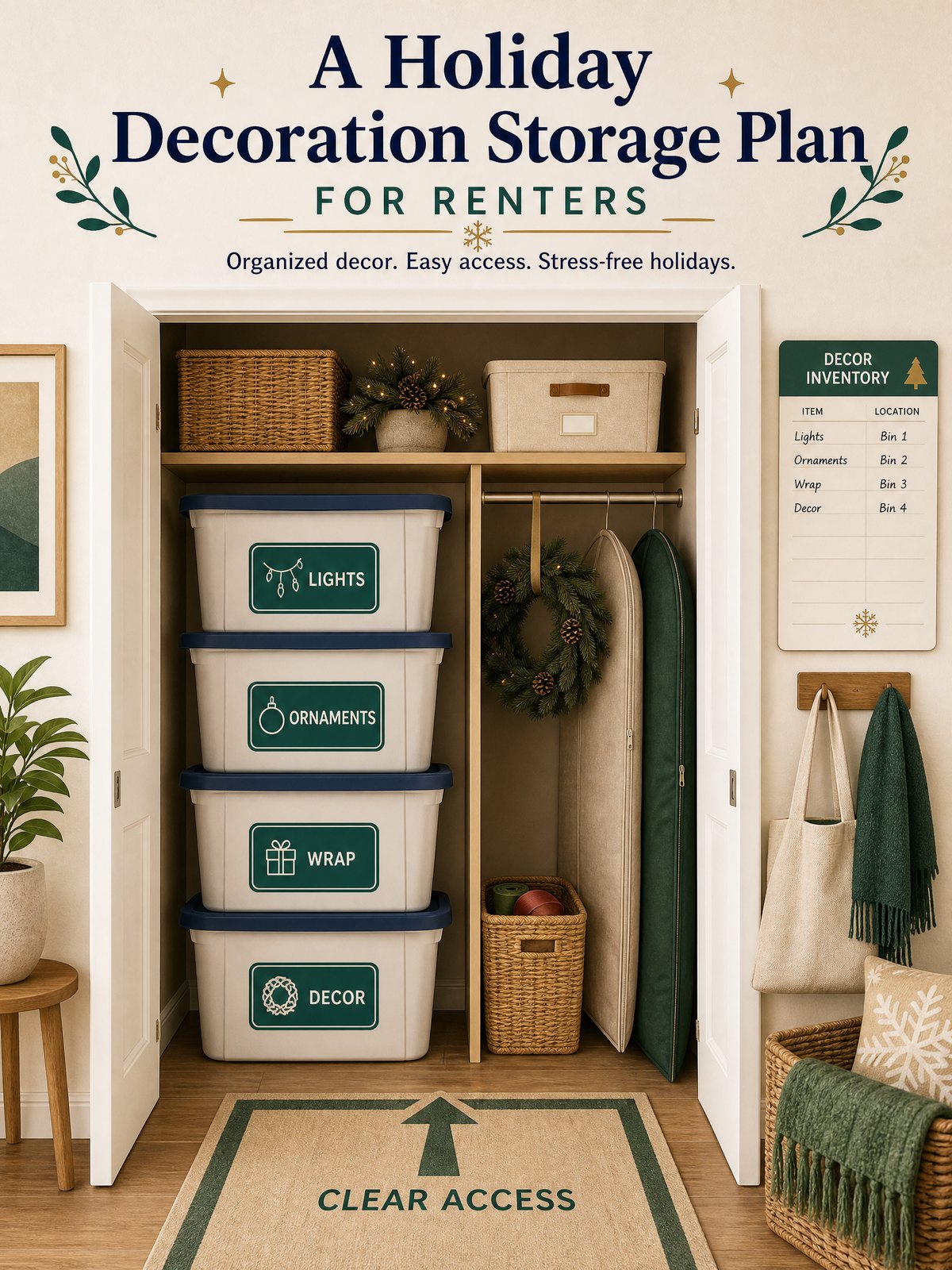
- Choose containers by role: clear stackable bins for visibility, small boxes for ornaments, and flat totes for wreaths or garlands. Reserve a labeled bin for frequently used items kept in easy reach.
- Store with stability in mind: put heavier bins on the floor or bottom of closets, and never create a tall unstable stack on dressers or lightweight shelving that could tip.
After these steps, run a quick safety check: shake each stacked area to test stability, ensure cords and lights are unplugged and inspected, and confirm nothing is stored on top of tall, lightweight furniture in a way that could encourage climbing. Follow product labels and manufacturer instructions for any item that requires special packing or storage temperatures.
Trade-offs to consider
Any storage choice involves compromises between accessibility, protection, and use of limited space.
- Accessibility vs. protection: open shelving is easy to reach but exposes items to dust and knocks; bins protect but take more space.
- Cost vs. durability: reusable rigid bins cost more up front but protect fragile items better than cheap boxes that crush.
- Space vs. frequency of use: storing in an off-site unit saves apartment space but makes seasonal setup slower and less convenient.
Keep it workable
Maintenance is simple: schedule one quick 20–30 minute check after holidays to purge and relabel, and a short mid-season check to inspect lights and cords. Each year, test strings of lights, replace burned-out sockets, and repair broken ornament hooks so the system doesn’t become a pile of forgotten boxes. If your lease limits hanging or adhesive options, adjust storage so you don’t rely on attachments you cannot legally use; always verify with your landlord if unsure.
FAQ
How do I avoid top-heavy furniture when storing boxes?
Place the heaviest boxes on the floor or lowest shelves, keep stacks low, and avoid piling boxes on lightweight dressers or narrow bookcases; if a furniture item is top-heavy consider moving storage to a lower, sturdier surface. If you plan to attach anchors or straps to secure furniture, follow manufacturer instructions and your lease restrictions.
Can I hang lights or wreaths on rental walls?
That depends on your lease and the type of hardware; lightweight adhesive hooks may be allowed in some rentals but can damage paint in others. Always check your lease and the product label for removability instructions, and consider noninvasive options like temporary over-the-door hangers or standing displays if in doubt.
What if I have very limited closet space?
Think vertically and under furniture: under-bed flat bins, vacuum storage bags for soft textiles, and slim rolling carts for seasonal items can expand capacity. As a practical option, consider rotating only the items you will use that season and donating or storing the rest off-site if local rules and your budget allow.
Start by doing one full purge and pack session immediately after the next holiday to set the system in motion. Keep one clearly labeled bin for anything you use every season so it’s ready to go for quick decorating.
Sources and fact-checking
This guide provides practical editorial guidance. Requirements and safe choices can depend on the product, lease, local rules, and individual situation.
- U.S. Consumer Product Safety Commission — Anchor It! — CPSC advises following manufacturer instructions, securing TVs and top-heavy furniture where appropriate, and keeping climb-attracting items away from the top of furniture.
Fact-checked against the linked official resources on August 27, 2026.