A Fall Kitchen Reset: Pantry, Freezer, and Weeknight Meal Zones
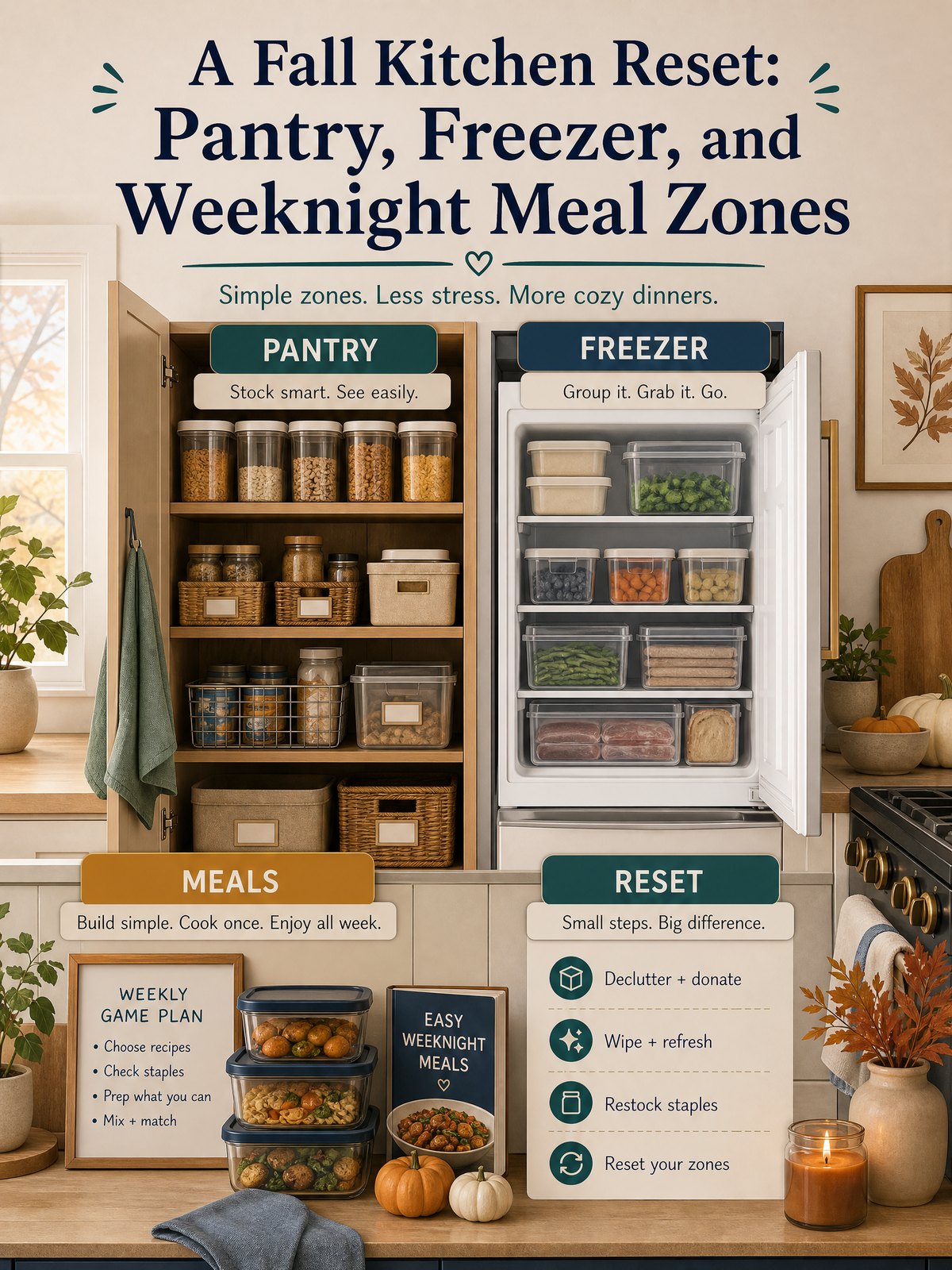
In small kitchens the real problem is not a lack of solutions but a lack of decisions: groceries, freezer bags, and dinner supplies pile up because there’s no simple, visible signal for what to use next. That leads to last-minute takeout, overlooked open jars, and food that gets pushed to the back and forgotten.
This reset shows how to set an “open-first” shelf for existing groceries, create clear pantry and freezer zones, and build a compact weeknight-meal station so you can see and use what you already own. The goal is less reorganization theater and more everyday friction removed.
Start with the real constraint
The first constraint for most renters and small-space dwellers is capacity: you don’t have unlimited shelving or a deep utility pantry to absorb overflow. That means any system must prioritize a small, visible area for items that need attention now, and accept that bulk or long-term items belong elsewhere.
Another constraint is that you are working with what’s already in the kitchen. Instead of suggesting a full shopping refresh, this method asks you to audit existing groceries, decide what can be used within a week, and place those items on an open-first shelf. For safety questions about how long items can stay in the fridge or freezer, consult the official FoodSafety.gov cold storage guidance and always follow product labels and manufacturer instructions.
At-a-glance plan
| Zone | What goes there | Decision signal / when to check | Time to create |
|---|---|---|---|
| Open-first shelf (eye level) | Ready-to-use perishables, half-used jars, items expiring soon | Check daily; anything older than 5–7 days since opening or nearing label date moves to top priority | 10–15 minutes to clear and arrange |
| Pantry bulk shelf (upper or lower) | Bulk staples, unopened stock, overflow snacks | Inspect weekly; move items to open-first shelf when meal plans call for them | 15–20 minutes to group and label |
| Freezer zones | Long-term frozen stock vs. 1–2 week use items (marked separately) | Quick scan each grocery day; use “first-in” signs or dated labels | 20–30 minutes to sort and date-stack |
| Weeknight meal station | Meal kits, sauces, spices, quick-grab carbs, and a small prep kit | Replenish after 2–3 weeknight uses; adjust by what was actually cooked | 15–25 minutes to assemble |
Build the system step by step
- Empty the candidate open-first shelf and clear a small counter space. Remove anything expired or clearly spoiled and set aside questionable items for closer inspection.
- Do a quick fridge/freezer/pantry audit: date or note when sealed items were opened if possible, and group like items. Keep in mind to follow product labels and manufacturer instructions for storage specifics.
- Designate and label the open-first shelf. Place the items you plan to eat in the next 3–7 days where they’re immediately visible—ready-to-eat foods, quickly perishable produce, and anything with a near date. Make this the default place you look before reaching into other areas.
- Create simple freezer zones: a shallow front row for the next 1–2 weeks of meals, and deeper back space for long-term storage. Date and label packages and use plain plastic bins if it helps keep things grouped.
- Assemble a compact weeknight meal station: one shelf or a small crate holding pantry essentials, a small spice kit, and two ready-to-use proteins or meal components from the open-first shelf.
After these steps, spend one evening cooking using only items from the open-first shelf and your weeknight station. That test shows how well your choices match real habits. If items sit unused, move them to the pantry or freezer for longer-term storage and replace with things you’ll actually eat within a few days. When in doubt about safe storage times, consult FoodSafety.gov and follow any product label instructions.
Trade-offs to consider
Every system balances visibility, speed, and shelf life. Your choices will depend on how much visible clutter you can tolerate, how often you cook, and whether you prefer strict rotation or more flexibility.
- Visibility vs. neatness: An open-first shelf increases use but may look cluttered; use shallow baskets to tidy while keeping items in sight.
- Freshness vs. convenience: Keeping more perishables on the open-first shelf speeds meals but raises the need for frequent checks; consider meal frequency before stocking heavily.
- Strict rotation vs. flexibility: Dating and rotating reduces waste but adds tasks; a simpler rule is “if it’s not used in two weekly cycles, move it.” This is a practical option for many households.
Keep it workable
Maintenance is smaller than overhaul: set one five- to ten-minute weekly check to move items, wipe spills, and note what you need. Use removable bins or a shallow tray on the open-first shelf so you can lift items to check underneath quickly. For shared kitchens, label bins with names or use color-coded markers to avoid mix-ups. Always follow any lease terms or building rules about shared storage and appliance use.
FAQ
How do I choose which items belong on the open-first shelf?
Prioritize items you will realistically use in the next 3–7 days: opened condiments, short-life produce, and ready-to-eat proteins. If you’re unsure about safety or storage duration, check the product label and consult FoodSafety.gov for cold storage guidance; when in doubt, plan to use or freeze sooner rather than later.
What’s the simplest way to avoid freezer burn and keep things usable?
Seal items tightly and label them with a date; use airtight containers or freezer bags and remove excess air when possible. For specific techniques or recommended timelines, follow manufacturer instructions and verify storage durations on official sources like FoodSafety.gov. As a personal planning approach, separate soon-to-use frozen meals to the front so they’re used before long-term items.
My kitchen is shared with roommates or the lease limits storage—how do I adapt this system?
Coordinate with roommates about the open-first shelf and weeknight station so everyone knows the expectations; label shared zones and agree on rotation rules. If your lease or building rules limit appliance or storage changes, follow those terms and discuss any required changes with your landlord or building manager before making adjustments.
Start tonight by clearing one small shelf and moving five things you’ll eat this week onto it. Reassess after a week and adjust zones based on what you actually cooked.
Sources and fact-checking
This guide provides practical editorial guidance. Requirements and safe choices can depend on the product, lease, local rules, and individual situation.
- FoodSafety.gov — Cold Food Storage Chart — FoodSafety.gov provides food-specific refrigerator and freezer storage guidance and directs readers to use the official chart for details.
Fact-checked against the linked official resources on August 27, 2026.