How to Make a Rental Bedroom Feel Organized Without Built-In Closets
Living in a rental bedroom without built-in closets makes basic tasks—finding what to wear, managing laundry, and rotating seasonal items—feel harder than they need to. This article shows a simple, non-permanent storage and workflow you can set up quickly so clothes and laundry stop piling up and you always know where daily items live.
You’ll get a clear system that separates seasonal storage, daily-use clothing, and laundry flow using freestanding solutions and small anchors only when allowed. The plan keeps changes temporary for a move and practical for everyday life.
Start with the real constraint
The real constraint in a rental bedroom without closets is twofold: limited vertical storage designed for clothes, and limits on permanent modifications. That means you need to convert plain wall and floor space into reliable clothing zones without ripping out drywall or installing fixed cabinetry. A good system recognizes both the physical limits of the room and any rules in your lease.
Another constraint is decision fatigue: when clothes are not easy to put away, they get dropped into a chair, on the floor, or in a basket. The simplest systems reduce decisions—clear daily-use spots, a distinct place for worn clothes awaiting washing, and a separate, compact seasonal cache. If you plan for these three flows, the room will feel organized without major installations.
At-a-glance plan
| Area | Purpose | Tools | When to act |
|---|---|---|---|
| Daily-use zone | Clothes you wear this week and accessories | Open wardrobe, hanging rail, 2-drawer dresser, shelf basket | Pick outfits each evening; return worn-but-clean items immediately |
| Laundry station | Dirty clothes waiting for wash; temporary air-dry spots | Two-compartment hamper, small drying rack, fold-down tray | Empty on laundry day; inspect every 3–7 days |
| Seasonal cache | Out-of-season clothing and bulk items | Clear plastic bins or vacuum bags under-bed or high shelf | Rotate at season change; audit twice annually |
| Overflow and small items | Shoes, undergarments, belts, and keepsakes | Shoe rack, small drawer unit, labeled bins | Quick tidy weekly; swap shoes by use rather than size |
Build the system step by step
- Survey and map the room: measure wall lengths, door swing, and under-bed clearance. Note electrical outlets and heating vents.
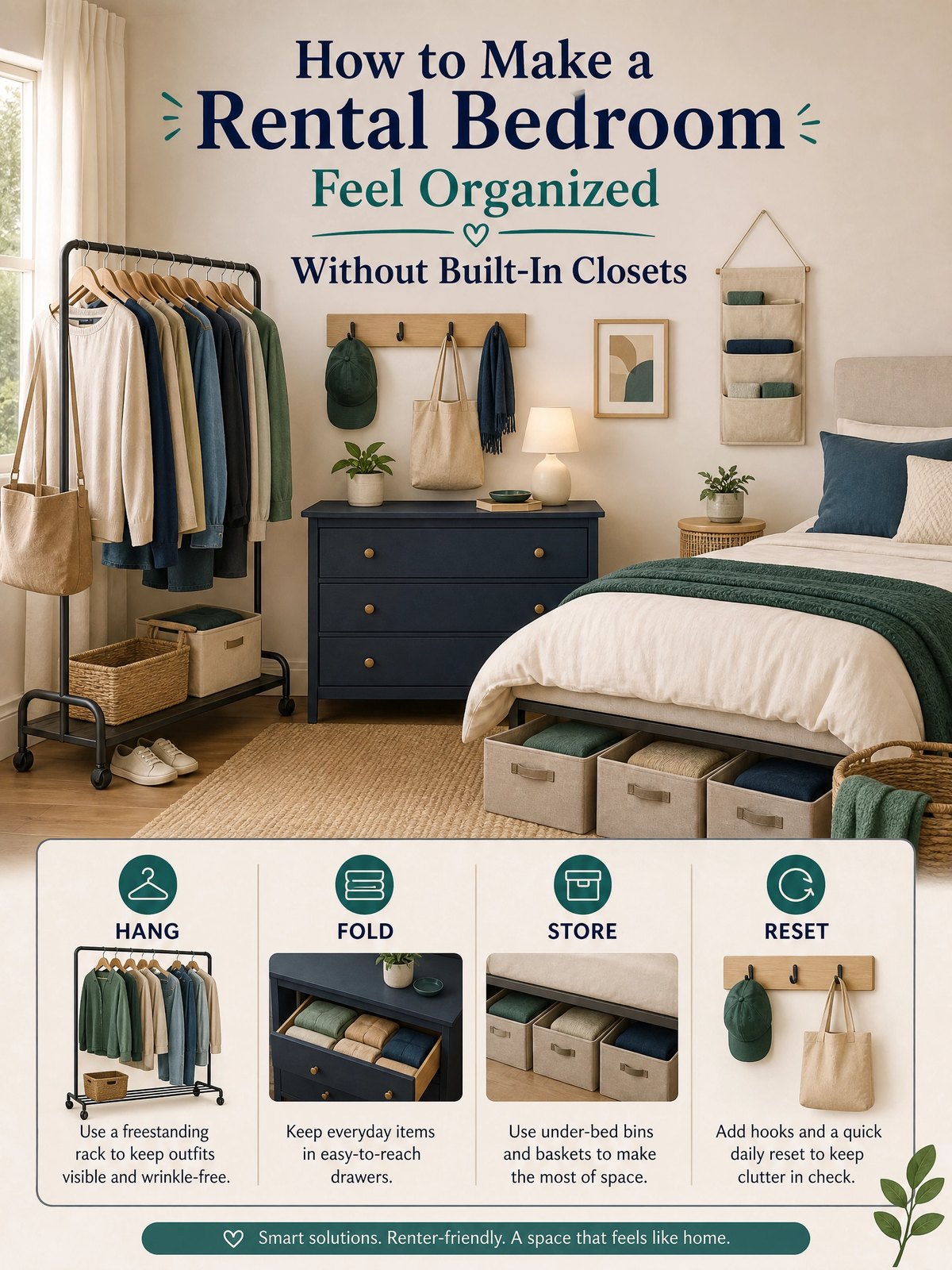
- Create your daily-use footprint: pick one wall or a corner for an open wardrobe or freestanding garment rack, place a small dresser or set of drawers nearby for folded items, and reserve a top-shelf or basket for accessories.
- Design a laundry loop: place a two-compartment hamper near the foot of the bed or in an unused corner, add a compact folding drying rack for delicates, and identify the route to your building’s laundry area so you collect full loads.
- Set up seasonal storage: select clear bins or vacuum bags sized to fit under the bed or on a high shelf; label each bin with contents and month range so you only open what you need.
- Secure tall pieces and test ergonomics: use freestanding anchors, tension rods, or manufacturer-recommended straps if allowed by your lease, and test that you can reach daily items without stretching or moving other furniture.
After these steps you’ll have a repeating cycle: use and return in the daily footprint, drop dirty items in the laundry station, and keep out-of-season items tucked away. The sequence limits spillover by making each action intentional—a clear place for everything and a short, repeatable trip for laundry.
Trade-offs to consider
No renter-friendly system is perfect for every small bedroom. Here are three trade-offs to weigh when choosing components.
- Space vs. visibility: open racks make outfit selection easy but display clutter; closed drawers hide mess but add steps to access items.
- Mobility vs. capacity: large freestanding wardrobes hold more but are heavier to move at lease end; modular shelves are lighter but may require more pieces.
- Immediate convenience vs. long-term tidiness: keeping a week’s outfits out reduces daily decisions but increases dust and visual load compared with returning everything to neat storage nightly.
Keep it workable
Choose storage you can live with for several months and set two small habits: a 3-minute nightly reset and a weekly laundry check. The nightly reset is a quick return of worn-but-clean items to the daily zone and a fast fold of one or two pieces. The weekly laundry check inspects the hamper, empties the dryer or drying rack, and moves anything that needs to return to the seasonal cache. These short routines prevent the slow creep of clutter without adding big chores to your schedule.
FAQ
Can I use anchors or wall hooks in a rental?
That depends on your lease terms; always check your rental agreement and get written permission from your landlord if required. When you do anchor furniture to reduce tip risk, follow the furniture manufacturer’s instructions or manufacturer-recommended straps, and use non-damaging options when possible.
Where should I put laundry if I don’t have space for a hamper?
Use a small two-compartment fabric bag or collapsible bin that fits under the bed or beside the dresser; the key is to separate worn-but-salvageable items from dirty clothes so you don’t mix loads. If floor space is scarce, a hook-mounted fabric sack behind a door is a practical option—verify your door hardware and lease allowance before installing.
How often should I rotate seasonal items in a small rental bedroom?
Plan two rotations per year at the start of the warm and cold seasons and add a short mid-season audit to catch items you missed. Keep seasonal bins labeled and accessible so rotation takes 30–60 minutes instead of an all-day task.
Ready to try this in your bedroom? Start by measuring your space and picking one freestanding solution for daily use this weekend. If you’re renting, review your lease about anchors and permanent modifications before making any changes.
Sources and fact-checking
This guide provides practical editorial guidance. Requirements and safe choices can depend on the product, lease, local rules, and individual situation.
- U.S. Consumer Product Safety Commission — Anchor It! — CPSC advises following manufacturer instructions, securing TVs and top-heavy furniture where appropriate, and keeping climb-attracting items away from the top of furniture.
Fact-checked against the linked official resources on August 27, 2026.