How to Set Up a Small Rental Kitchen Without Modifying Cabinets
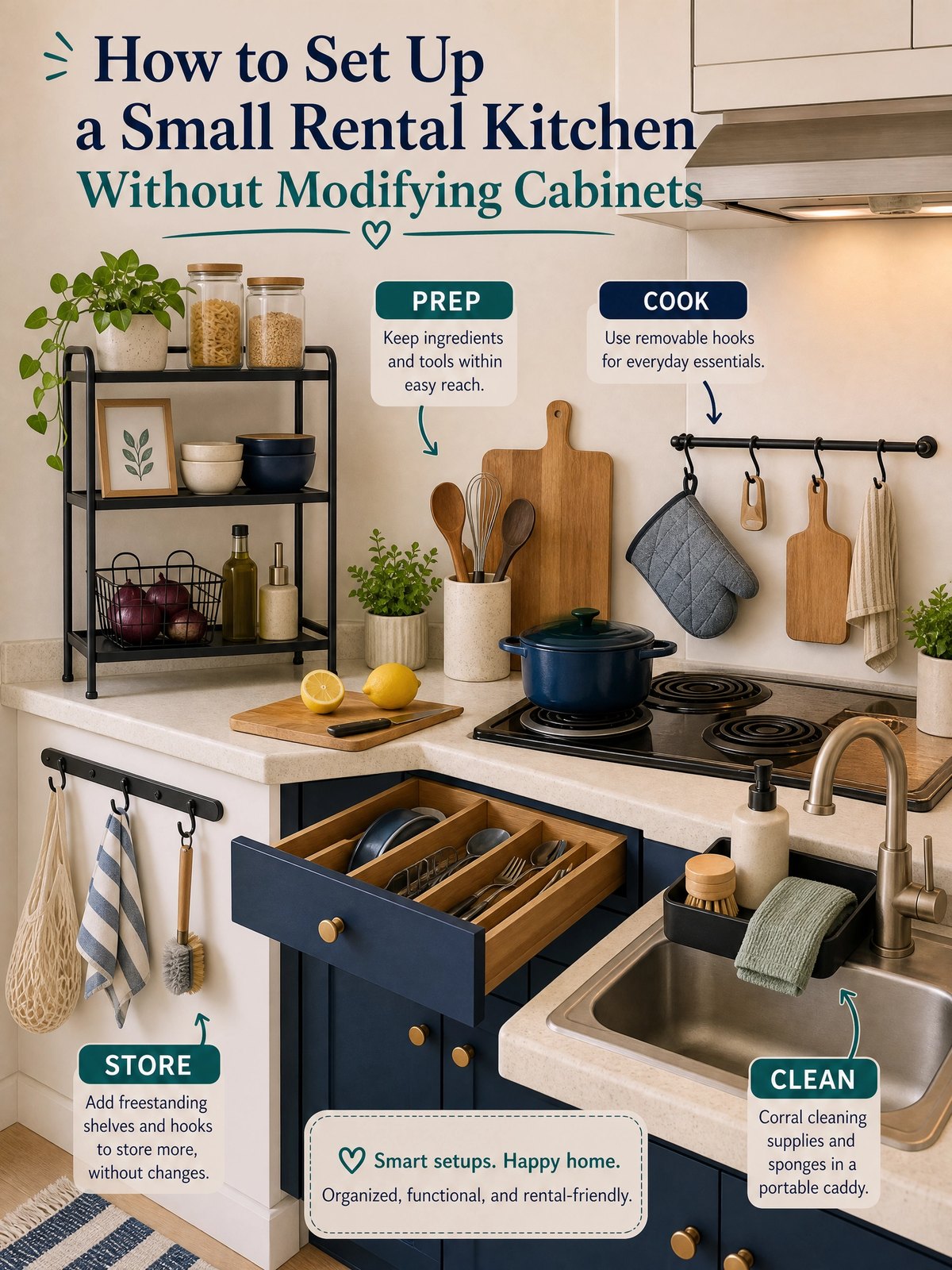
Many renters live with limited counter space, shallow drawers, and cabinets they cannot alter. The common problem: you need a clean, food-safe workflow without drilling, painting, or permanently changing cabinet interiors.
This article shows how to use moveable zones, washable containers, and food-safe storage logic to make cooking and cleanup faster and safer in a small rental kitchen. Follow lease terms and product labels where those apply; where I offer layout or sourcing ideas, treat them as practical options to adapt to your space.
Start with the real constraint
The real constraint in most rental kitchens is fixed finishes and limited usable flat surfaces: counters are small, cabinet interiors are unknown, and landlords generally prohibit drilling or permanent fittings. Recognize your starting point as a constraint to design around rather than a deficit to fix.
Accepting that constraint means choosing storage and prep methods that are removable, noninvasive, and easy to clean. Where safety or appliance installation is involved, always follow the manufacturer instructions and your lease; when in doubt, ask your landlord or local authority.
At-a-glance plan
| Step | What to do | Timing / decision signal |
|---|---|---|
| Zone mapping | Assign one counter for prep, one for staging/serving, and one shelf for dry storage | 10–20 minutes; choose reachable surfaces near stove or sink |
| Container swap | Move dry foods into labeled, cleanable containers and stack by use | 30–60 minutes; do a single pantry run to consolidate items |
| Mobile prep station | Use a rolling cart or large cutting board to widen work area and carry tools | Set up as needed for cooking sessions; tuck away afterward |
| Fridge logic | Group ready-to-eat items, raw proteins, and condiments separately in labeled bins | 10–20 minutes; refresh weekly or per FoodSafety.gov guidance |
Build the system step by step
- Map moveable zones: Walk your kitchen during a typical meal to note where you naturally reach, set hot pots, and wash dishes. Choose three small moveable zones: a prep surface, a staging surface, and a storage shelf.
- Choose cleanable containers: Replace open boxes and flimsy bags with airtight, washable containers for dry goods, snacks, and loose items. Pick stackable sizes that fit your shelves and are easy to wipe.
- Create a rolling or portable prep station: A small cart, sturdy tray on legs, or large cutting board placed over a sink section expands workspace without permanent changes. Store knives and frequently used tools on that cart between sessions (follow manufacturer care for knives and utensils).
- Adopt fridge grouping logic: Reserve one shelf for ready-to-eat foods, another for dairy/eggs, and a lower shelf or sealed bin for raw proteins. This is a practical option to limit cross-contamination; consult the official FoodSafety.gov refrigerator chart for specific storage times and details.
- Contain and label: Label containers with contents and an opened date where useful. Use washable labels or masking tape so you can remove them when you move out.
After these steps you’ll have a portable, clear system for cooking and cleanup that requires no cabinet modifications. Treat these choices as a personal planning approach you can refine: adjust container sizes, cart placement, and labeling until the layout flows with how you cook.
Trade-offs to consider
Designing without modifying cabinets trades permanence for flexibility. You gain portability and zero damage to the rental, but you accept some visual clutter and possibly less-than-perfect capacity.
- Space vs. visibility: Using clear, stackable containers saves space but can make shelves look busier; opaque bins hide clutter yet hide contents.
- Mobility vs. stability: A rolling cart adds prep area but needs a reliable parking spot to avoid shifting during use; secure heavy items low and stable.
- Cost vs. convenience: Investing in a few good containers and a cart pays off in daily convenience, but it is a practical option—start small and expand as needed.
Keep it workable
Make maintenance part of the habit. Wipe containers when you refill them, sweep and clear counters after each meal, and do a quick weekly check of refrigerated items. For temperature and safe storage timelines, use the FoodSafety.gov resources to confirm how long items can safely remain refrigerated or frozen. Also follow product labels and manufacturer instructions for cleaning appliances and containers.
FAQ
Can I use adhesive hooks or mounts inside cabinets?
Adhesive hooks and mounts are a practical option in many rentals but can affect the finish; always check your lease before applying them and follow manufacturer instructions for installation and removal to avoid damage.
How do I prevent pests when using open shelves or containers?
Use airtight containers for grains, flour, and pet food as a practical approach to deter pests; keep counters clean and quickly remove food waste. If pests are a local issue, verify control steps with your landlord or local health authority.
Do I need to anchor a rolling cart or other tall furniture?
Anchoring advice depends on the item. The U.S. Consumer Product Safety Commission advises following manufacturer instructions and securing TVs and top-heavy furniture where appropriate, and to keep climb-attracting items away from the top of furniture; apply this guidance as relevant to tall or heavy kitchen units in a shared home or with children.
Next steps: pick one countertop to keep clear and experiment with a single set of stackable containers for a week. Adjust the sizes and placement based on how you actually cook, and document any rules from your lease about fixture changes.
Sources and fact-checking
This guide provides practical editorial guidance. Requirements and safe choices can depend on the product, lease, local rules, and individual situation.
- FoodSafety.gov — Cold Food Storage Chart — FoodSafety.gov provides food-specific refrigerator and freezer storage guidance and directs readers to use the official chart for details.
- U.S. Consumer Product Safety Commission — Anchor It! — CPSC advises following manufacturer instructions, securing TVs and top-heavy furniture where appropriate, and keeping climb-attracting items away from the top of furniture.
Fact-checked against the linked official resources on August 27, 2026.