How to Keep a Small Bathroom Counter Clear Between Cleanings
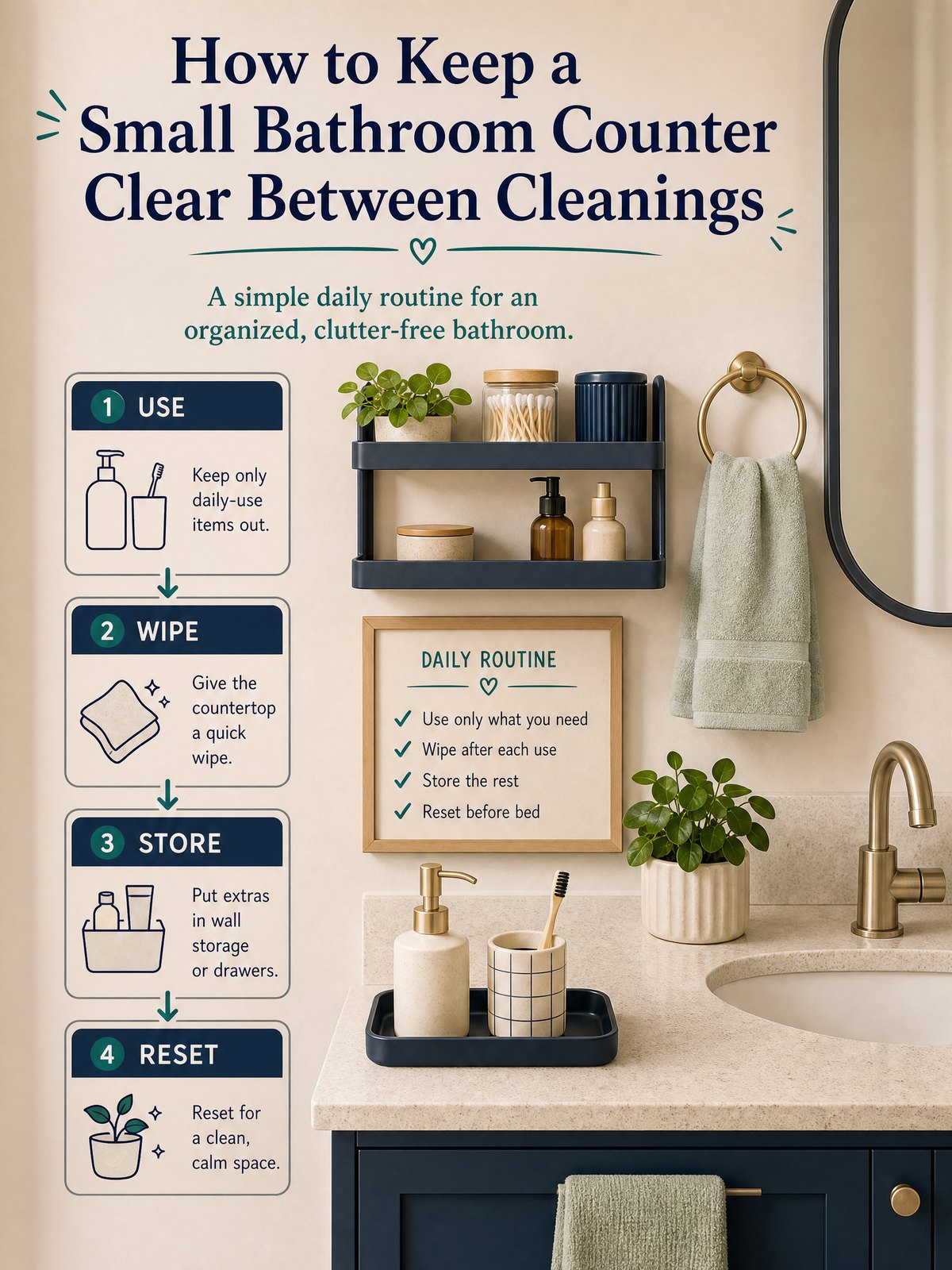
Small bathroom counters quickly become cluttered because everyday essentials land there and never make it back to storage. The result is a surface that needs wiping every day or a deep clean every few days.
This article shows a practical system to limit what sits on the counter and to create fast return storage zones so the surface stays clear between regular cleanings. The approach is renter-friendly and emphasizes small daily habits rather than permanent fixtures.
Start with the real constraint
The fundamental constraint in a small bathroom is limited horizontal space: counters fill up fast and vertical surfaces, drawers, and cabinets are often shallow or already in use. Instead of trying to fit everything on the counter, accept that the counter should hold a very small, rotating set of items you use several times a day.
Decide a realistic item limit — for example, three to seven objects — as a practical option, not a rule. Call this the daily-use limit. Choose return storage zones within arm’s reach: a drawer pouch, a small basket on a shelf, a wall-mounted caddy (if your lease allows), or a travel cup in a medicine cabinet. For any changes that affect your rental (drilling holes, adhesive mounts), follow your lease and landlord rules.
At-a-glance plan
| When | Typical items | Keep on counter? | Limit / Decision signal | Return zone |
|---|---|---|---|---|
| Morning routine | Toothbrush, face wash, moisturizer | Yes, briefly | Keep only items used every morning; others go away | Toothbrush holder or cabinet cup |
| Night routine | Night cream, floss, contact case | No, set out when needed | Out only during use; return immediately after | Drawer pouch or small shelf basket |
| Daily extras | Makeup, razor, hairbrush | Only one or two items max | If adding an item, remove one item first (one-in, one-out) | Hang hooks, magnetic strip, or cosmetic organizer (renter-safe) |
| After use / quick clears | Used cotton pad, soap, jewelry | No | Return immediately; if dirty, place in laundry or trash per label | Waste bin, jewelry tray, or laundry pouch |
Build the system step by step
- Define your daily-use limit. Pick a number that fits your counter and habits — this is a personal planning approach and may change with season or routine.
- Create three return zones: immediate (counter cup or tiny tray), short-term (drawer pouch or shelf basket), and long-term (cabinet or closet). Label them if that helps.
- Choose renter-safe storage solutions. Use tension rods, suction caddies, shallow trays, or removable adhesive hooks that comply with your lease; if in doubt, check with your landlord.
- Make returning an automatic step. After you use an item, put it back in its return zone before doing anything else — treat this like washing your hands after use.
- Set a single weekly clear-and-check time to move extras into long-term storage and wipe the counter. If illness or a household exposure occurs, consult product labels and official cleaning guidance; the CDC distinguishes cleaning with soap and water from disinfecting and says cleaning alone is sufficient in most situations unless illness-related circumstances make disinfection appropriate.
These steps work together: the item limit prevents accumulation, the return zones remove friction from tidying, renter-safe choices prevent lease issues, and a weekly check keeps the system honest. Labeling the zones and building the return habit are the parts most likely to stick in daily life.
Trade-offs to consider
Any system that reduces counter clutter involves choices about convenience, visibility, and permanence. Be clear about what you will accept and what you will not.
- Convenience vs. neatness: Keeping an item on the counter is faster, but it increases cleaning time; the one-in, one-out rule is a practical option to balance both.
- Visibility vs. storage: Visible storage like a small tray reminds you to put things back, but it still occupies space; hidden storage looks tidier but requires opening drawers.
- Renter-safe vs. permanent fixtures: Non-drilling solutions preserve your security deposit but may offer less heavy-duty capacity than permanent mounting—check your lease before altering walls.
Keep it workable
Focus on tiny, repeatable actions: remove one item when you add one, return used items immediately, and pick a single weekly slot for a quick sweep. If you travel, keep a dedicated travel pouch so pocket items don’t migrate to the counter. For cleaning and any use of chemicals, always follow the product label and manufacturer instructions and consult local authority guidance for disposal or specific safety rules.
FAQ
How many items should I allow on a small counter?
There isn’t a single correct number; choose a limit that leaves visible empty space so the surface looks clear. Three to seven items is a starting practical option — adjust by how often you actually use each item.
What if my lease forbids drilling or adhesive hooks?
If your lease restricts physical changes, use non-damaging solutions like tension rods, suction-based caddies rated for tile, small trays, or drawer organizers. When unsure, check your lease and talk with your landlord before installing anything.
Do I need to disinfect the counter every day?
Follow the CDC guidance: cleaning with soap and water removes dirt and most germs and is sufficient in most routine situations; disinfection is appropriate in illness-related circumstances. For specific disinfectants and how to use them, follow the product label and manufacturer instructions.
Start by picking your daily-use limit and three return zones tonight. Try the system for two weeks and tweak which items are “daily” vs. “short-term” until the counter feels consistently clear.
Sources and fact-checking
This guide provides practical editorial guidance. Requirements and safe choices can depend on the product, lease, local rules, and individual situation.
- U.S. Centers for Disease Control and Prevention — Cleaning and Disinfecting — CDC distinguishes cleaning with soap and water from disinfecting, and says cleaning alone is sufficient in most situations unless illness-related circumstances make disinfection appropriate.
Fact-checked against the linked official resources on August 27, 2026.