A Small Home Trash and Recycling Routine That Does Not Take Over the Kitchen
Trash and recycling can quickly dominate a small kitchen when bags pile up, bins multiply, or you spend evenings sorting what should have been tossed days ago. The goal here is a compact routine that uses collection days, simple container limits, and local recycling checks so refuse doesn’t become a daily chore.
This article gives a concrete, step-by-step system you can set up in a weekend: choose what stays in the kitchen, set limits that match pickup frequency, and verify tricky items with your local recycling rules or collection service.
Start with the real constraint
Space is the single biggest constraint for small-home trash systems. Countertop or under-sink room usually dictates container size, which in turn sets how often you’ll need to take waste out. A system that ignores your actual collection cadence will either overflow or demand constant attention.
Another constraint is local rules: many towns accept different materials at different frequencies, and some require separation or drop-off for certain kinds of waste. Verify those rules with your local authority; anything about hazardous materials or special drop-offs should follow the product label and local collection guidance.
At-a-glance plan
| When | Container & limit | Decision signal |
|---|---|---|
| Daily (food scraps for immediate odor control) | Small lidded countertop pail (1–2 qt) emptied into a sealed bin nightly — practical option | Any odor, visible liquids, or nightly meal prep indicates emptying |
| Weekly (trash pickup day) | One kitchen trash bin that fits your weekly bag allotment; no more than one bag per scheduled pickup | Bag reaches top third of bin or scheduled pickup day |
| Every-other-week or per local schedule (recycling) | One dedicated recycling bin sized to your pickup frequency; flatten and compress where possible | Bin half full or the night before recycling pickup |
| Occasional (hazardous or large items) | Separate storage box for things that need special handling; label contents and date | Paint, batteries, oils, or other items flagged to follow product label and local collection guidance |
Build the system step by step
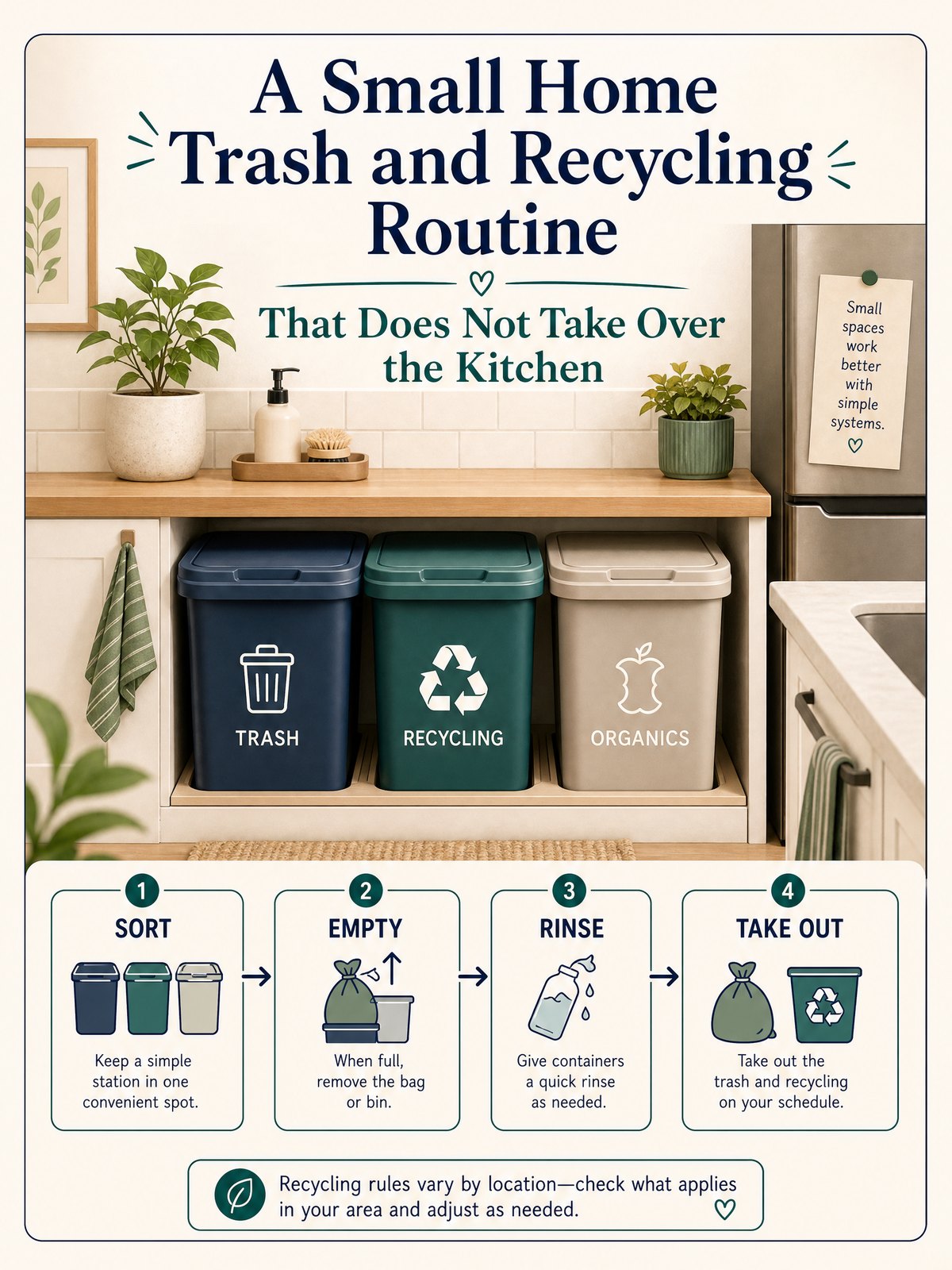
- Check collection days and rules: Note your trash and recycling pickup days, any limits on bag counts, and recycling lists from your local waste authority. Write them on a calendar or set a phone reminder to match your habits.
- Choose container limits that match frequency: Pick one kitchen trash bin sized for whatever your weekly pickup allows and one recycling bin that matches recycling frequency. Keeping a strict container limit forces realistic disposal habits.
- Designate a small countertop or under-sink pail for immediate organic or wet waste: Empty it nightly into the main trash or a sealed compost option if your area accepts organics. This reduces odors and makes the main bin last to pickup day.
- Create a labeled staging spot for nonregular items: Keep a small, ventilated box or tote for batteries, old paints, motor oil, and other items that need special disposal. Check local collection programs before disposing; this is important for safety and compliance.
- Establish a single weekly ritual: On a chosen weekday evening, do a 3–5 minute check—compress recyclables, tie the trash bag, swap liners, and move bins to the pickup spot. That ritual keeps small tasks from piling up into a weekend chore.
These steps are arranged so each decision cascades into the next: collection schedule informs container size, container limits determine daily handling, and a weekly ritual prevents last-minute overloaded bags. If you rent, confirm any building rules and follow your lease and local authority directions for communal areas or nonstandard disposals.
Trade-offs to consider
No single approach is perfect; pick the trade-offs that match your priorities—space, convenience, or minimizing trips out of the home.
- Fewer, larger bins reduce trips but require more space and can make odors or pests likelier unless you manage liners and cleaning.
- Smaller, more frequent emptying keeps things tidy but increases the number of disposal trips and time spent each week (a personal planning approach).
- Strict container limits save space but may force offsite drop-offs for overflow or seasonal waste spikes—ask your local authority about options to verify this.
Keep it workable
Maintenance is a short, consistent routine: wipe or spray the main bin monthly, keep a small stock of liners, and schedule one evening per week for the swap-and-check ritual. Label bins clearly so guests know where to put recyclables; if you share a building, follow any shared-area rules in your lease or building policy.
FAQ
How many bins should I keep in a tiny kitchen?
For most small homes, one kitchen trash bin plus one recycling bin is a practical option; add a tiny lidded pail for immediate wet or smelly waste if needed. Limits should be driven by your pickup frequency—confirm local pickup rules to size containers appropriately.
Can I keep compost or food scraps in the kitchen?
You can keep a small sealed countertop pail or compost container for food scraps as a personal planning approach; empty it regularly into the main trash or a municipal/third-party compost bin if available. Check local organics programs and any building rules before starting a compost system.
What do I do with batteries, paint, or chemicals?
Follow product labels and local collection guidance: the U.S. Environmental Protection Agency notes that products such as paints, cleaners, oils, batteries, and pesticides can need special disposal care, and advises following labels and local collection guidance. Keep these items in a separate labeled container until you can use an approved drop-off or collection event.
Start by matching bin size to your pickup schedule, then set a one-evening weekly routine to swap liners and check recycling. Verify any uncertain materials with your local waste authority before discarding.
Sources and fact-checking
This guide provides practical editorial guidance. Requirements and safe choices can depend on the product, lease, local rules, and individual situation.
- U.S. Environmental Protection Agency — Household Hazardous Waste — EPA notes that products such as paints, cleaners, oils, batteries, and pesticides can need special disposal care, and advises following labels and local collection guidance.
Fact-checked against the linked official resources on August 27, 2026.