How to Clean a Rental Kitchen Without Overusing Cleaning Products
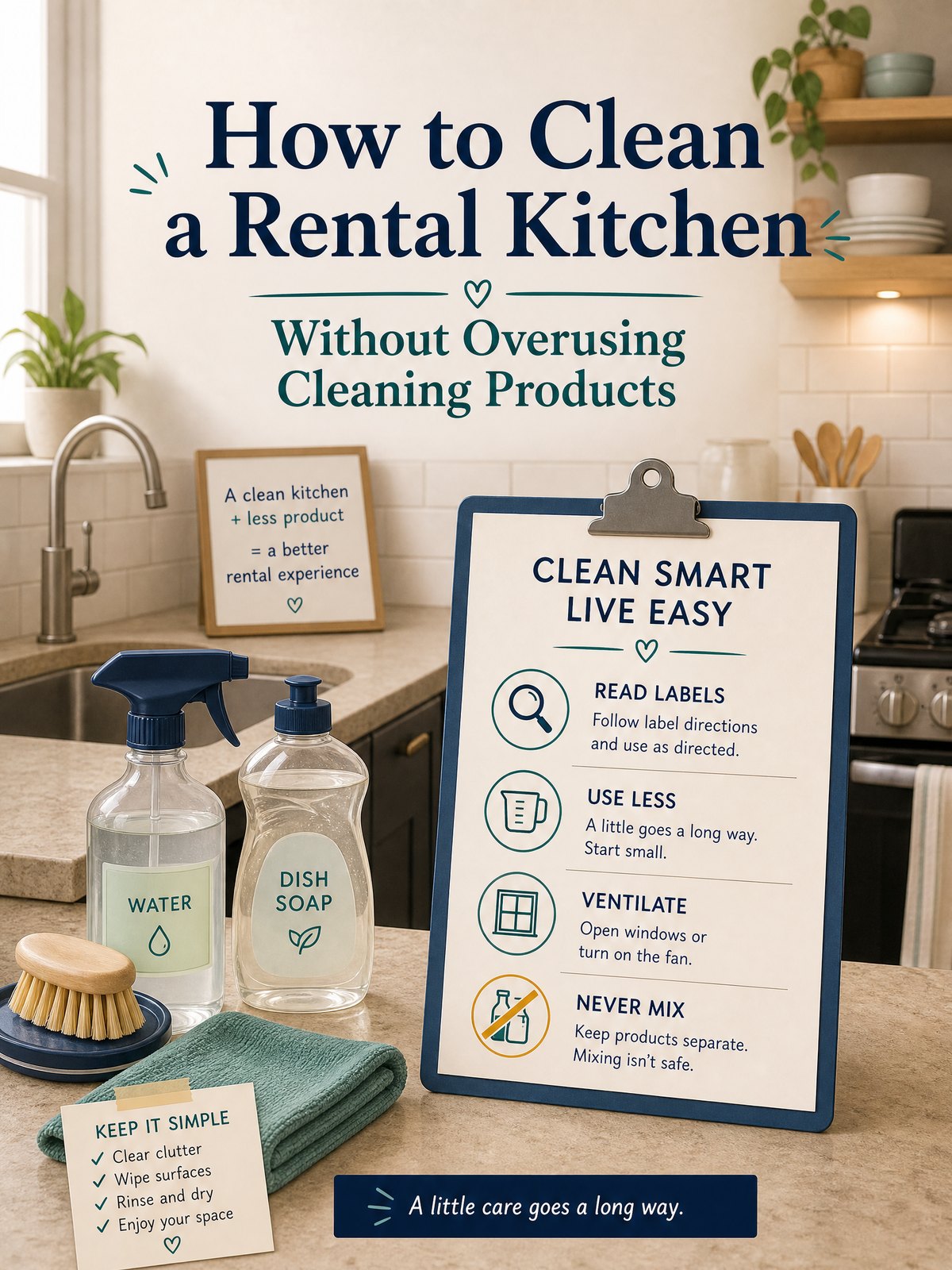
Renting a small kitchen often means limited storage, shared utilities, and rules in your lease about what you can change. Overusing sprays, antacids, or specialty cleaners wastes money, creates clutter, and can make ventilation or disposal harder in a small space.
This article shows a compact, label-first approach: clean with soap and water for routine dirt, reserve disinfectants for illness-related or high-risk situations, and follow product labels and local rules for safe use and disposal.
Start with the real constraint
The practical limits in a rental kitchen are ventilation, storage for cleaning supplies, and any lease requirements about altering fixtures or storing hazardous materials. Those limits mean you should prioritize actions that work with what you already have instead of buying many specialty products.
From a health-resource standpoint, the U.S. Centers for Disease Control and Prevention distinguishes cleaning with soap and water from disinfecting, and says cleaning alone is sufficient in most situations unless illness-related circumstances make disinfection appropriate. That makes cleaning first, then deciding whether to disinfect, a useful default strategy for renters.
Also remember disposal rules: the U.S. Environmental Protection Agency notes that products such as cleaners and similar household hazardous items can need special disposal care. Always follow product labels and your local collection guidance for leftover liquids or containers.
At-a-glance plan
| Task | What to use | Time | Decision signal |
|---|---|---|---|
| Daily wipe-down of counters and high-touch spots | Dish soap, warm water, microfiber cloth | 5–10 minutes | Visible crumbs, spills, or meal prep finished |
| Weekly sink/stovetop clean and trash check | Nonabrasive cleaner or soap paste, scrub brush | 15–30 minutes | Sticky surfaces, food residue, or odors |
| Monthly fridge and cabinet quick tidy | Soap and water for surfaces; discard expired food per label/local rules | 30–45 minutes | Mold, leaks, or food past use-by dates |
| As-needed deep clean or disinfection | Disinfectant following label directions; ventilate per product label | 30–90 minutes depending on scope | Illness in household or high-risk contamination concerns |
Build the system step by step
- Gather a minimal kit: dish soap, a few microfiber cloths, a scrub brush, a bucket, gloves, and a small spray bottle for diluted cleaner if you prefer.
- Establish the routine: wipe counters after each meal, run a quick sink rinse nightly, and take trash out before it smells or attracts pests.
- Do a weekly focused session: stovetop, sink drain, and visible cabinet faces. Use soap and water first to remove grease and food residue.
- Decide when to disinfect: follow the CDC guidance that cleaning alone is usually adequate unless there are illness-related reasons; if disinfecting is warranted, follow the disinfectant label for proper contact time and ventilation.
- Handle leftovers and products responsibly: check product labels and local disposal rules for any cleaners that require special handling or collection.
These steps create a system that keeps work small and frequent rather than large and chemical-heavy. The key habits are cleaning first, checking whether disinfection is actually needed, and following label and local guidance for safe use and disposal.
Trade-offs to consider
Choosing fewer products and more elbow grease has pros and cons. Be realistic about what you can maintain given time, ventilation, and lease limitations.
- Using only soap and water reduces chemical exposure and disposal needs but may require more scrubbing time for greasy spots.
- Disinfecting for peace of mind can add cost and require careful ventilation and label-following; reserve it for illness-related situations when possible, per CDC guidance.
- Storing fewer supplies minimizes clutter but means you may need to restock more often or adapt when a specific stain or spill appears.
Keep it workable
Set small, specific habits that match your schedule: a two-minute wipe after dinner, a fifteen-minute weekend tidy, and a monthly fridge check. If your lease or building rules restrict storage or chemical use, keep replacements in an accessible communal spot or use products that match allowed storage. Always follow product labels, manufacturer instructions, and local authority guidance when handling and disposing of cleaners.
FAQ
Do I need to disinfect my counters after every meal?
Not usually: the CDC explains that cleaning with soap and water is sufficient in most situations; disinfect when there are illness-related concerns or high-risk exposures, following the disinfectant label instructions.
Can I mix cleaners to save time?
Do not mix products unless the product labels explicitly allow it; labels offer manufacturer instructions and safety information, and mixing chemicals can create hazardous fumes—follow label guidance and local rules for safe use.
How should I dispose of leftover cleaners or empty containers?
The EPA advises that products like cleaners can need special disposal care; follow the product label and your local household hazardous waste collection guidance for proper disposal.
Next, pick one small habit from the at-a-glance table and do it daily for two weeks to see the difference. Track what worked and adjust the schedule to fit your space and lease rules.
Sources and fact-checking
This guide provides practical editorial guidance. Requirements and safe choices can depend on the product, lease, local rules, and individual situation.
- U.S. Centers for Disease Control and Prevention — Cleaning and Disinfecting — CDC distinguishes cleaning with soap and water from disinfecting, and says cleaning alone is sufficient in most situations unless illness-related circumstances make disinfection appropriate.
- U.S. Environmental Protection Agency — Household Hazardous Waste — EPA notes that products such as paints, cleaners, oils, batteries, and pesticides can need special disposal care, and advises following labels and local collection guidance.
Fact-checked against the linked official resources on August 27, 2026.