A Small-Space Dishwashing Routine That Keeps the Sink Usable
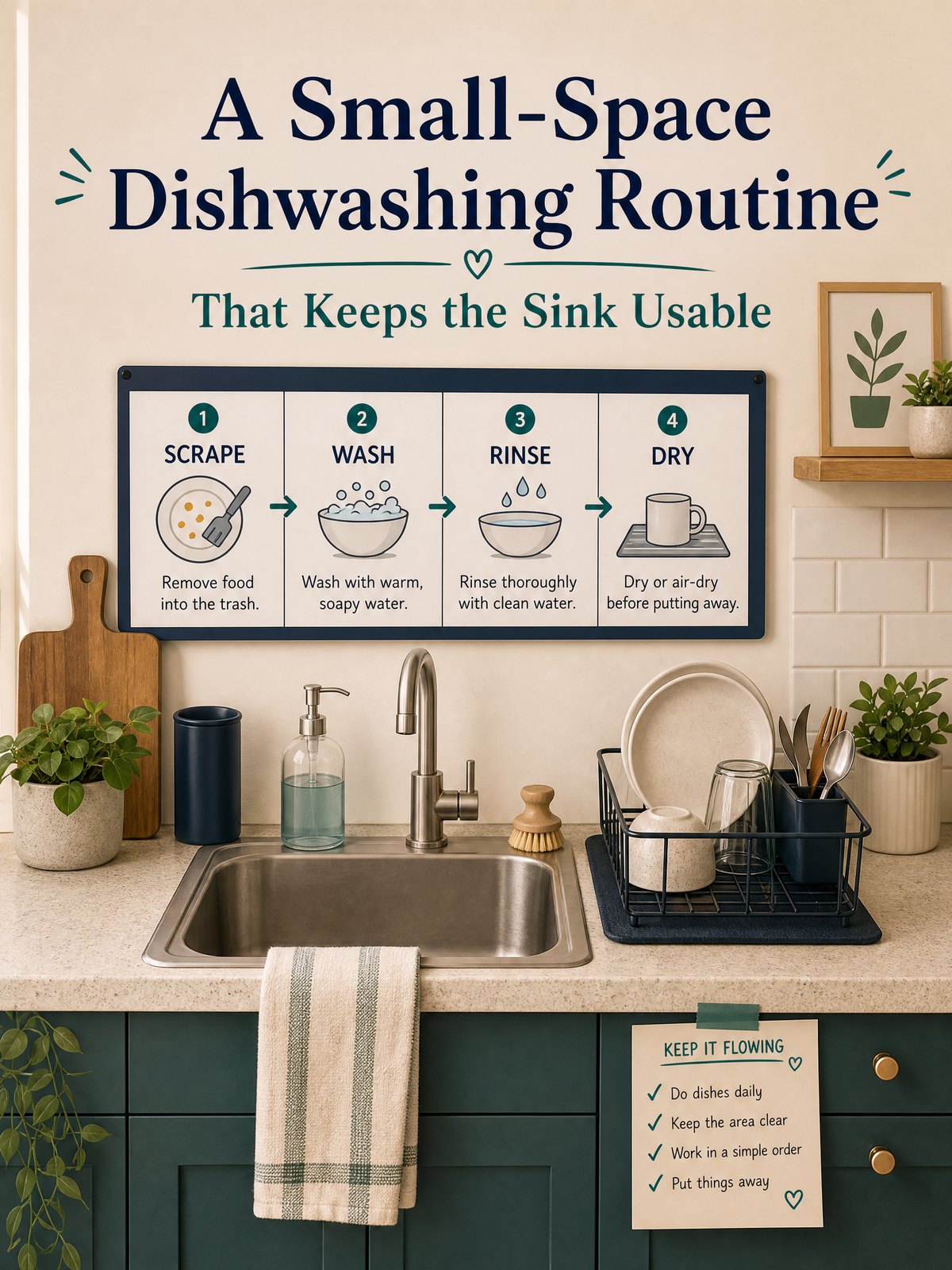
In a one-sink kitchen, the common struggle is keeping the sink usable while cooking, eating, and storing clean dishes. Without a second basin to rinse, soak, or line up drying, dishes can pile up until the sink becomes a work-stopping obstacle.
This article lays out a small-space dishwashing routine focused on two decisions: when to wash during your day, and in what order to wash and store items so the sink stays usable. The steps are practical options you can adapt to your meal size and schedule.
Start with the real constraint
The single physical limit is obvious: you can only use the sink for one task at a time. That forces trade-offs between washing, rinsing, and prepping food. In a one-sink layout you also have limited counter space to stage drying dishes, so every decision about timing and storage affects whether the sink is blocked.
Accepting that limit lets you design a routine around two control points: a repeatable wash trigger (for example, after each meal or right after cooking) and a storage order that frees the sink quickly. Treat these as practical options rather than rules; adapt them to your lease, appliance instructions, and your household needs.
At-a-glance plan
| When to wash | What to wash first | Decision signal / timing | Where to store or dry |
|---|---|---|---|
| Right after cooking | Large pans and utensils used for the meal | Pan still warm and food residue easiest to remove | Hang pans or place on a compact rack to clear sink |
| After each meal | Plates, bowls, flatware | Counter becomes cluttered or before next prep task | Stack dry items in a cabinet or on a small tray |
| End-of-day quick cycle | Any remaining cups and cutting boards | Before bed to avoid overnight buildup | Put away items that are fully dry, towel-dry others |
| Illness or heavy soiling | Surfaces and items touched by a sick person | Follow cleaning guidance for illness-related circumstances | Clean surfaces per product label and CDC guidance on cleaning vs disinfecting |
Build the system step by step
- Choose your primary wash trigger. Decide whether to wash right after cooking, after each meal, or only at the end of the day. Treat this as a personal planning approach and test one option for a week.
- Stage a minimal drying area. Reserve a small section of counter or a compact rack for air-drying. A towel on a cutting board can be a temporary tray for towel-drying; this is a practical option if you lack space for a rack.
- Wash in order of size and function. Start with the largest, greasiest items (pans, pots), then do plates and bowls, and finish with cups and flatware. Washing greasy items first keeps oil out of the rinse water when possible, a common kitchen technique that many find helpful.
- Use a two-part action at the sink. Scrape and soak briefly in a basin or a bowl if needed, then wash with soap and water. If soaking is required, keep the amount of time short so the basin doesn’t block the sink. This is a practical option to control sink availability.
- Store strategically as you finish each item. Put away anything that is dry or towel-dryable immediately to free counter space. Collapse stackable items and nest bowls to reduce the number of items resting on the drying area.
These steps form a repeatable sequence: pick a timing, keep a small, consistent drying footprint, and wash in an order that clears the sink earliest. If someone in your household is ill, follow the CDC distinction between cleaning with soap and water and disinfecting: cleaning alone is sufficient in most situations unless illness-related circumstances make disinfection appropriate.
Trade-offs to consider
Every decision will trade speed for convenience or vice versa. A routine that keeps the sink free may add small regular tasks; batching dishes saves time but can leave the sink unusable for longer periods.
- Wash after every meal: reduces clutter but increases the number of short tasks you do each day.
- Batch-wash once or twice daily: saves time overall but requires planning to avoid blocking the sink during key prep times.
- Air-dry vs towel-dry: air-drying uses less effort but needs storage space; towel-drying is faster but requires a clean towel and more handling.
Keep it workable
Make the routine sustainable by setting a simple habit anchor: wash one item immediately after each use (cup or plate) or always clear pans right after cooking. Reassess weekly and tweak the trigger or the position of your drying station. When using cleaners, follow the product label and manufacturer instructions; for any questions about safe cleaning or disinfecting in illness scenarios, refer to the CDC guidance linked below.
FAQ
Can I soak pans in the sink when I only have one basin?
Soaking is a practical option but keep it brief so the sink remains usable; consider using a large bowl or basin inside the sink to confine the soak and free as much space as possible. Always follow any appliance or utensil care instructions and your lease rules regarding sink use if applicable.
How should I handle drying when counter space is tiny?
Use compact solutions: a folded towel, a small dish tray, or a hanging rail for pots and pans. Prioritize putting away items as soon as they are dry to avoid letting the drying area expand. Treat these measures as personal planning approaches to maximize limited surface area.
Do I need to disinfect dishes and surfaces after cooking?
Cleaning with soap and water removes soils and most germs; per CDC guidance, cleaning alone is sufficient in most situations unless there are illness-related circumstances that require disinfection. For disinfecting steps and product instructions, follow CDC recommendations and the product label.
Try the routine that fits your schedule for two weeks and observe which trigger keeps the sink usable. Adjust the washing order and your drying footprint until clearing the sink feels automatic.
Sources and fact-checking
This guide provides practical editorial guidance. Requirements and safe choices can depend on the product, lease, local rules, and individual situation.
- U.S. Centers for Disease Control and Prevention — Cleaning and Disinfecting — CDC distinguishes cleaning with soap and water from disinfecting, and says cleaning alone is sufficient in most situations unless illness-related circumstances make disinfection appropriate.
- FoodSafety.gov — Cold Food Storage Chart — FoodSafety.gov provides food-specific refrigerator and freezer storage guidance and directs readers to use the official chart for details.
Fact-checked against the linked official resources on August 27, 2026.