How to Clean Under the Bed in a Small Apartment Without Turning It Into an All-Day Project
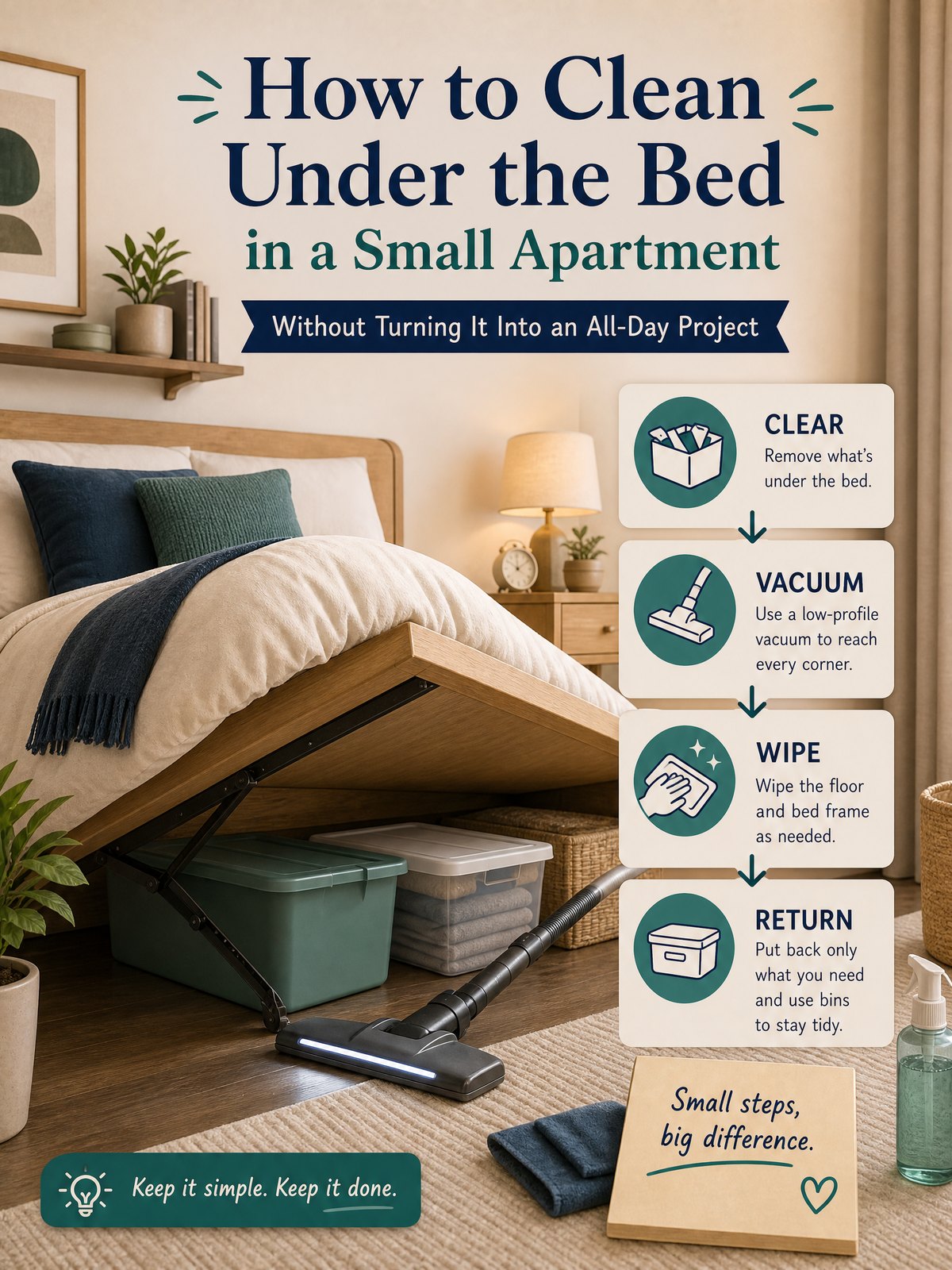
Under-bed space in a small apartment is useful for storage but easy to ignore until it turns into a dust, lint, or clutter trap. The usual deep-clean approach — pulling everything out and scrubbing for hours — is effective but rarely fits a busy schedule.
This article gives a short pull-out, sort, wipe, and return sequence you can finish in a single focused session. The method prioritizes speed and repeatability so the area stays tidy with minimal disruption to your day.
Start with the real constraint
Low clearance and awkward access are the main constraints. If you can’t slide fully under the bed without lying on the floor, you’ll need tools and a plan that avoid crawling under for long periods.
Safety and property rules matter. The U.S. Consumer Product Safety Commission advises following manufacturer instructions, securing TVs and top-heavy furniture where appropriate, and keeping climb-attracting items away from the top of furniture. If your bed frame, storage boxes, or a mounted item could shift when you pull or push under-bed items, check the manufacturer instructions or your lease before you start.
Also keep in mind that cleaning and disinfecting are different tasks. The U.S. Centers for Disease Control and Prevention says cleaning with soap and water is often sufficient for routine dirt and dust; disinfection is typically reserved for illness-related situations. Follow product labels and local guidance when deciding whether to disinfect.
At-a-glance plan
| Step | What to do | Typical time | Decision signal |
|---|---|---|---|
| Pull out | Slide out boxes and loose items onto the floor at mattress edge | 3–7 minutes | Can you reach items without moving the mattress? |
| Sort | Quickly sort into keep, relocate, and toss piles | 5–10 minutes | Does an item get used every month? |
| Wipe | Vacuum or sweep accessible area, then wipe frame and visible floor | 5–12 minutes | Is dust visible or is there residual lint? |
| Return | Replace only the keep items neatly; label boxes for next time | 3–6 minutes | Are heavier items at the bottom and labeled? |
Build the system step by step
- Prepare a clear work area: move bedside items and put down a washable mat or old towel. Have a trash bag, donation bag, two small bins (keep/relocate), a duster or microfiber cloth, and a stick vacuum or small broom ready.
- Pull out reachable items: without forcing the mattress or frame, slide boxes and containers partway out so you can stand and work. If something is stuck, stop and check manufacturer guidance before levering or lifting.
- Sort fast: handle each item once. Put things you use at least monthly in the keep bin, items that belong elsewhere in the relocate bin, and obvious trash into the trash bag. If you’re unsure, set a one-month review label as a practical option.
- Wipe and clear: use a vacuum with a crevice tool or a broom to remove dust along the visible floor and bed-frame edges. Follow with a damp microfiber cloth to capture remaining dust. If you decide disinfection is needed for illness-related reasons, follow product labels and the CDC distinction between cleaning and disinfecting.
- Return thoughtfully: put back only the keep items in labeled, low-profile containers so you can slide them in and out easily. Place heavy items at the bottom and keep frequently used things toward the front.
These steps are designed to be repeatable. The goal is a short, focused session rather than a deep purge. Labeling and simple bins make the next session faster and reduce the temptation to cram everything back without sorting.
Trade-offs to consider
Faster routines reduce time but may leave low-priority clutter that needs a fuller purge later. Decide which trade-offs match your schedule and storage needs.
- Speed vs. completeness: a ten- to twenty-minute pass keeps things tidy but won’t replace a seasonal deep clean.
- Accessibility vs. density: storing fewer boxes makes access easier but reduces total stored volume.
- Plastic vs. fabric containers: rigid containers stack neatly and protect items, while soft bins squeeze into low clearance but may compress contents and trap dust.
Keep it workable
Set a recurring 15–20 minute slot in your calendar every 4–8 weeks to run this quick routine. After each session, update labels (date and contents) and move any relocate items out of the bedroom that same day to avoid re-cluttering. If you have limited time, focus on the front half of the under-bed area and expand the scope at the next session.
FAQ
How do I clean under a low-clearance bed without crawling?
Use a stick vacuum with a flat head or a broom with a long handle plus a damp microfiber cloth for the final pass. You can slide items partly out to increase reach. If moving the mattress is required, check the bed manufacturer’s instructions first and treat that as a separate, planned task.
Should I disinfect the area under the bed?
Follow the CDC distinction: cleaning with soap and water removes dirt and most dust and is sufficient for routine maintenance. Disinfection is generally reserved for illness-related situations; follow product label instructions and local guidance when disinfection is needed.
How do I prevent pests or mold under the bed?
Keep the area dry and avoid storing damp textiles. If you suspect a pest or mold problem, follow your lease and local authority guidance before treating; contacting building management or a professional is often required under rental agreements. Using sealed containers is a practical option to reduce exposure of stored items.
Pick a 15–20 minute block on a day you already clean another area to make this routine stick. Keep a small bin and labels handy so the next session starts immediately.
Sources and fact-checking
This guide provides practical editorial guidance. Requirements and safe choices can depend on the product, lease, local rules, and individual situation.
- U.S. Centers for Disease Control and Prevention — Cleaning and Disinfecting — CDC distinguishes cleaning with soap and water from disinfecting, and says cleaning alone is sufficient in most situations unless illness-related circumstances make disinfection appropriate.
- U.S. Consumer Product Safety Commission — Anchor It! — CPSC advises following manufacturer instructions, securing TVs and top-heavy furniture where appropriate, and keeping climb-attracting items away from the top of furniture.
Fact-checked against the linked official resources on August 27, 2026.