What to Do With Leftover Paint, Batteries, and Cleaners Before Moving
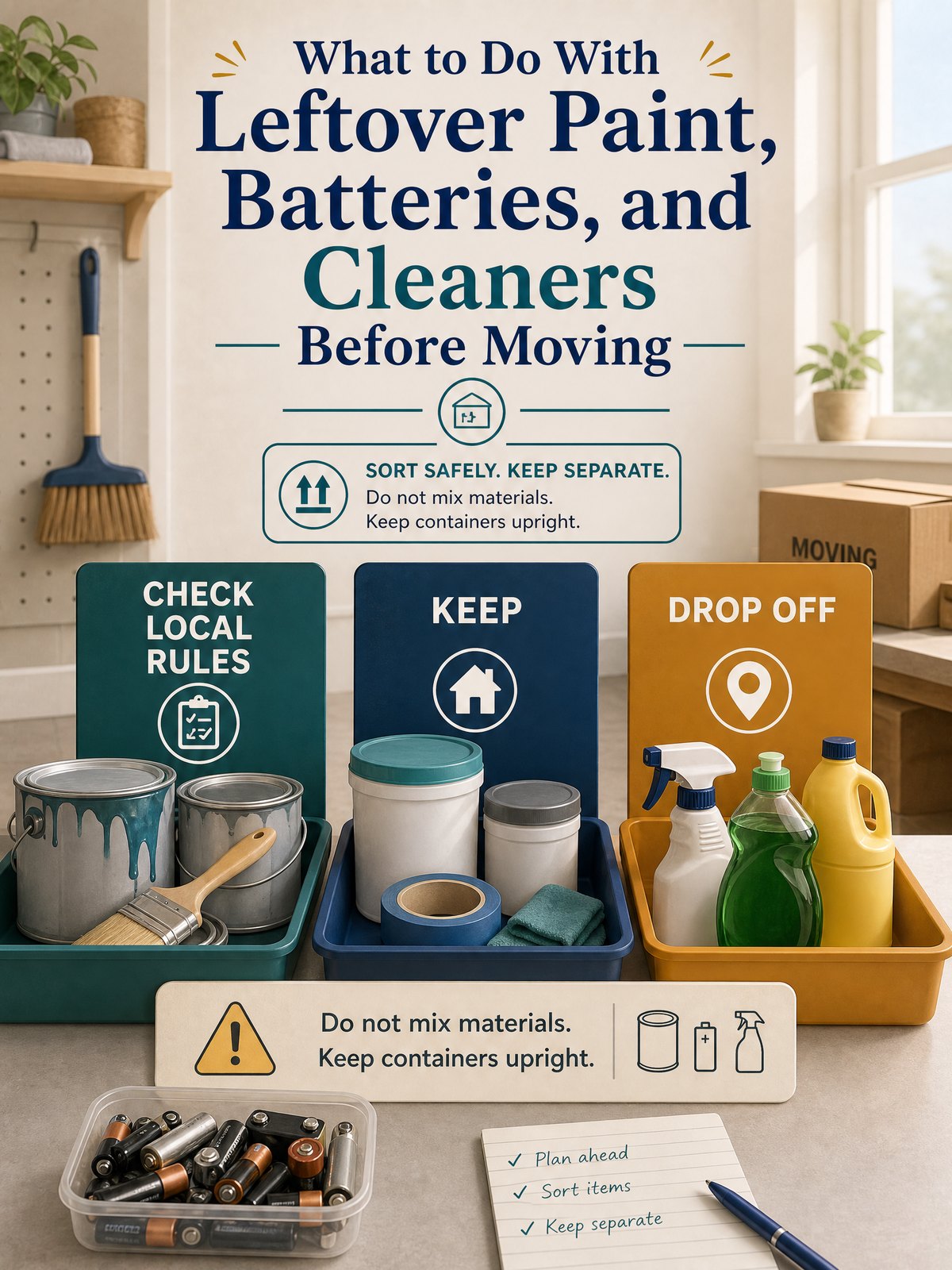
Moving is a natural moment to clear out what you don’t want to haul: leftover paint, batteries, and household cleaners often add weight and worry to a move. The challenge is deciding what is safe and legal to toss, donate, keep, or bring to a special collection without guessing.
This guide explains a simple decision flow that starts with product labels and local hazardous-waste guidance, so you avoid surprises on moving day. You’ll get a short plan, step-by-step setup, trade-offs to weigh, and clear FAQs to use in the week before your move.
Start with the real constraint
The real constraint is not how much you can carry but what you are allowed to transport and how those products must be handled. Some products require special disposal because of safety, environmental rules, or local collection policies; the U.S. Environmental Protection Agency notes that products such as paints, cleaners, oils, batteries, and pesticides can need special disposal care, and advises following labels and local collection guidance.
Before planning what to do, accept this working rule: product labels and your local household hazardous-waste (HHW) program set the acceptable options. If you rent, also check your lease or ask your landlord about leaving potentially hazardous material behind. The rest of this article gives a manageable method that keeps those primary sources central to your decisions.
At-a-glance plan
| Category | What to check first | Quick action (within 7–14 days) | At move time |
|---|---|---|---|
| Paints and solvents | Read the can label for disposal instructions and any warning about fumes or flammability | Confirm local HHW drop-off or collection schedule; consider donating sealed, usable cans after checking acceptance policies | Keep clearly labeled cans upright in a ventilated vehicle compartment and follow carrier or local rules for transport |
| Batteries (single-use and rechargeable) | Look for recycling symbols and label guidance; check whether batteries are lithium, alkaline, or rechargeable | Gather batteries by type, tape terminals if required by local guidance, and locate an HHW facility or authorized drop-off | Carry batteries in separate, nonconductive containers; do not mix battery types in a single bag or box |
| Household cleaners and chemicals | Read product label for disposal warnings and follow manufacturer instructions when present | Keep original containers; secure lids and clean any leaks; schedule HHW disposal if label or local guidance indicates | Pack cleaners upright in a secondary container to prevent spills and bring any required paperwork if using a hazardous-waste drop-off |
| Other items (oils, pesticides, aerosols) | Check labels and local HHW lists for prohibited or accepted items | Isolate flammables and aerosols; confirm whether your HHW program accepts them or requires a specialized disposal | Transport in well-ventilated, secure areas and follow any carrier or local rules for flammable materials |
Build the system step by step
- Gather and inventory: In one session, collect all leftover paints, batteries, cleaners, oils, aerosols, and pesticides into a single area. Keep products in their original containers when possible and make a quick list of each item’s brand, size, and visible label instructions.
- Read labels and flag actions: For every item, read the label for disposal instructions, hazard symbols, and transport guidance. Flag items clearly as “keep,” “donate,” “HHW drop-off,” or “check county rules.”
- Contact local HHW resources: Use your city or county website or call local public works to confirm which items they will accept, drop-off hours, and if an appointment or fee is required. The EPA recommends following labels and local collection guidance.
- Prepare items safely for transport: Secure lids, wipe drips, and place smaller containers inside a secondary box or bin. For batteries, follow local guidance about taping terminals or separating types. Label boxes with contents and handling notes for movers or rental trucks.
- Complete disposal or donation early: Schedule HHW drop-off or community collection at least a week before move day. If pursuing donation or trade outlets, confirm acceptance policies and arrange pickup or drop-off.
This stepwise approach turns a messy pile into a short checklist you can finish on a weekday, rather than scrambling on moving day. Make the contacts and appointments early, and keep a single list so anyone helping you — friends, movers, or the landlord — understands what needs special handling.
Trade-offs to consider
Choices about leftover hazardous products often balance convenience, cost, and risk. Decide which matters most for your situation and plan accordingly.
- Time vs. effort: Scheduling an HHW appointment takes time but reduces the risk of improper disposal; dropping items with your trash to save effort is a personal option only if local rules allow it and labels permit.
- Transport vs. donation: Carrying usable paint or cleaners to a donation center saves waste but may be impractical for long-distance moves; donating locally before you move is often easier.
- Costs vs. completeness: Some jurisdictions charge for HHW disposal; paying the fee clears items responsibly, while skipping disposal may leave you with risky items at the new place — check options and decide what you can afford.
Keep it workable
Maintain the system by having a small, labeled bin for hazardous items in your utility area and a simple inventory sheet. When you buy new household chemicals, add them to the sheet and note disposal instructions or acceptance locations so you’re not surprised next time you move.
FAQ
Can I pour leftover cleaners or paint down the drain?
Follow the product label and local authority guidance; pouring hazardous products down drains is not recommended unless the label or local rules explicitly permit it, and you should verify local sewer or septic system rules before taking that approach.
What if my landlord forbids leaving chemicals behind?
Check your lease and talk to your landlord; if the lease prohibits leaving hazardous materials, arrange removal before you move and follow label and local HHW guidance to dispose of the items appropriately.
Are batteries safe to pack with household goods?
Generally, batteries should be packed by type and in a way that prevents terminals from touching metal or other batteries; follow local HHW guidance about taping terminals and transporting batteries safely, and ask your moving company about any restrictions they have.
Take one concrete step now: make the quick inventory and check two labels for disposal wording. Then look up your county HHW page and schedule any needed drop-offs before move week.
Sources and fact-checking
This guide provides practical editorial guidance. Requirements and safe choices can depend on the product, lease, local rules, and individual situation.
- U.S. Environmental Protection Agency — Household Hazardous Waste — EPA notes that products such as paints, cleaners, oils, batteries, and pesticides can need special disposal care, and advises following labels and local collection guidance.
Fact-checked against the linked official resources on August 27, 2026.