Moving Day Essentials: What to Pack in Your First-Day Bag
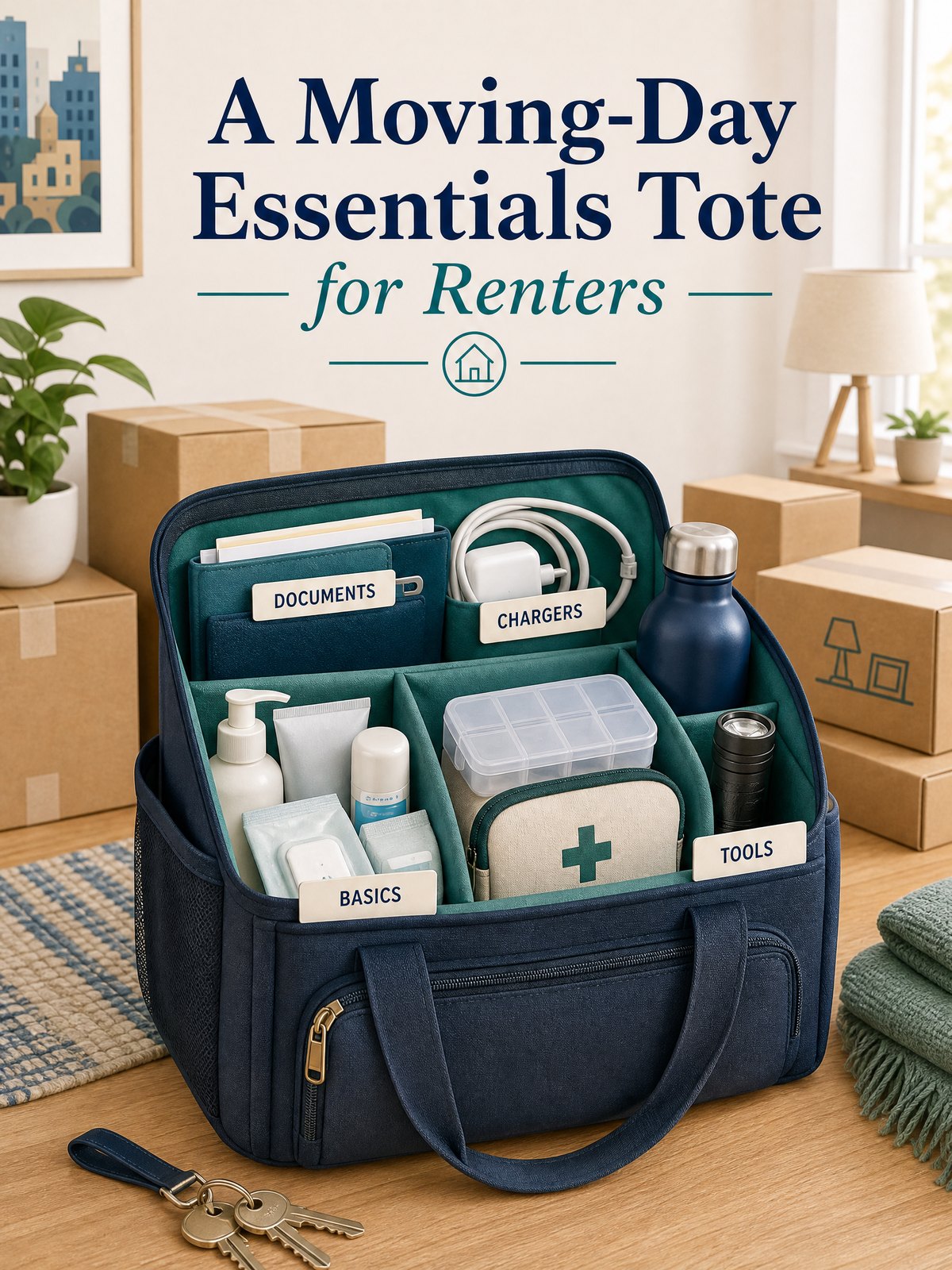
Moving day essentials are the items that should stay with you instead of disappearing into a moving truck, storage unit, or stack of sealed boxes. For renters, one well-planned first-day bag can keep identification, lease paperwork, medications, chargers, keys, cleaning basics, and overnight supplies accessible from the final walk-through through the first morning in the new home.
The goal is not to pack another heavy box. It is to build a compact access system for the things that would cause the biggest delay, expense, or stress if you could not find them for 24 hours.
Quick answer: what belongs in a moving day essentials bag?
Pack critical documents, daily medications, phone power, keys and access instructions, basic hygiene items, one change of clothes, water and simple snacks, a small cleaning kit, and any supplies needed by children or pets. Keep valuables and anything required at a specific time on your person when practical. The bag should travel with you, not inside the moving truck.
Moving day essentials at a glance
| Category | Pack | Why it stays accessible | Best container |
|---|---|---|---|
| Identity and move documents | Photo ID, lease, keys, mover estimate, inventory, building instructions | Needed for access, handoff, payment, or a dispute | Water-resistant document pouch |
| Health | Daily medications, medication list, glasses, basic first aid | May be needed on a schedule before boxes are opened | Small labeled pouch kept with you |
| Phone and power | Phone, charging cable, wall plug, charged power bank | Supports directions, contacts, access codes, and payment | Zippered tech pouch |
| Apartment access | Old and new keys, parking pass, elevator reservation, contact numbers | Prevents delays at either property | Bright pocket or key clip |
| First-night basics | Toiletries, clothes, towel, bedding basics, flashlight | Keeps the first night functional without full unpacking | Backpack, tote, or small suitcase |
| Cleaning and food | Trash bags, cloths, sealed cleaner, water, shelf-stable snacks | Handles quick cleanup and delays | Separate leak-resistant section |
1. Start with documents and access items
Documents are difficult to replace during a move and easy to bury in an ordinary box. Ready.gov recommends gathering critical household, insurance, financial, and medical information and keeping important records in a secure, accessible location. Apply that principle to moving day by using one document pouch rather than several loose folders.
Include the documents you will realistically need for the move:
- Government-issued photo identification
- Lease, move-in or move-out instructions, and property contact information
- Proof of renters insurance when your building requires it
- Parking, loading-zone, elevator, or key-return instructions
- Utility activation or transfer confirmations
- Written mover estimate, inventory, and signed paperwork
- Receipts or payment confirmations connected to the move
If you are using an interstate mover, the Federal Motor Carrier Safety Administration says movers should provide written documents such as an estimate and inventory, and advises consumers to review documents before signing. Keep your copies accessible until delivery and final payment are complete.
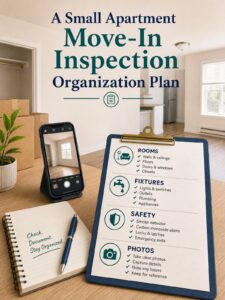
For a structured condition record at the new apartment, use A Small Apartment Move-In Inspection Organization Plan.
2. Keep medications and health needs with you
Do not put time-sensitive medication into a box that may spend hours in a truck or storage area. Ready.gov includes prescription medications, health information, eyeglasses, and individual medical needs in its preparedness guidance. During a move, keep daily medications in their original containers when possible and follow the storage directions on each label.
- Pack enough scheduled medication for the move and the first night.
- Carry a current medication list and pharmacy or clinician contact information if you depend on regular treatment.
- Keep temperature-sensitive medicine under the storage conditions provided by the pharmacist or manufacturer.
- Pack glasses, contact supplies, hearing-aid batteries, mobility items, and other daily aids.
- Keep medication out of reach of children and pets.
The essentials bag is not a substitute for medical planning. If a medication has special transport or temperature requirements, confirm them with a pharmacist before moving day.
3. Build a phone and power pouch
Your phone may hold directions, building access codes, mover contact details, digital payment methods, and utility confirmations. Keep its charging equipment together so a missing cable does not become an unnecessary purchase.
A simple power pouch can contain:
- One fully charged phone
- The correct charging cable and wall adapter
- A charged portable battery
- Vehicle adapter if your trip requires one
- Headphones only if you expect to use them
- A paper copy of essential phone numbers in case the phone is lost or damaged
Test the cable and power bank the night before. Bringing several mystery cables adds clutter without improving reliability.
4. Add first-night items, not a full vacation wardrobe
Plan for one night and the following morning. If the move may be delayed, increase the amount based on the actual schedule rather than filling the bag with “just in case” clothing.
- One complete change of clothes and sleepwear
- Toothbrush, toothpaste, soap, and personal hygiene supplies
- A towel and a small amount of toilet paper
- Pillowcase, sheet, or compact bedding needed before bedroom boxes are opened
- Water bottle and shelf-stable snacks
- Flashlight or headlamp
- Any child comfort item or pet supplies needed immediately
If the kitchen will remain packed, prepare a separate food and utensil box using How to Set Up an Open-First Kitchen Box for the First Week After a Move.
5. Pack a small, leak-resistant cleaning section
Renters often need to wipe a surface, collect trash, or complete a final touch-up before returning keys. Keep the kit limited and isolate liquids from documents, medications, and electronics.
- A few trash bags
- Two microfiber cloths or disposable towels
- One sealed, correctly labeled all-purpose cleaner suitable for the intended surface
- Hand soap or sanitizer
- Disposable gloves if your planned cleanup requires them
Follow product labels, do not mix cleaners, and do not transfer a chemical into a food or drink container. Large bottles, paint, pesticides, and questionable products belong in a separate transport or disposal plan, not the essentials bag.
6. Decide what to buy and what to use from home
Search results for moving day essentials often lead to moving companies, self-storage businesses, packing suppliers, and ready-made moving kits. A preassembled kit can save time, but most households already own many of the necessary items.
| Item | Use what you own when | Consider buying when |
|---|---|---|
| Bag or small suitcase | It closes securely and is easy to carry | You need hands-free carrying or weather protection |
| Document pouch | An existing folder closes and stays dry | You need a water-resistant organizer for repeated moves |
| Portable battery | Your trip is short and charging access is reliable | Your phone controls access, navigation, or payment during a long day |
| Cleaning supplies | Your current products are sealed, labeled, and surface-appropriate | You need a travel-size replacement rather than transporting a leaking bulk bottle |
| First-aid supplies | Your existing kit is complete and in date | Important items are missing or expired |
Buy for a specific problem, not because a generic checklist labels every item essential. The best bag is the one you can carry and keep track of while handling keys and paperwork.
7. Add renter-specific moving day essentials
A renter has to coordinate two properties and often a property manager, elevator schedule, loading area, or inspection window. Add only the items connected to those obligations.
- Old-home keys, mailbox keys, remotes, and access cards that must be returned
- New-home keys, building codes, and parking credentials
- Move-out and move-in checklists
- Phone number for each property manager or leasing office
- Photos or confirmation of the unit condition and key handoff
- Any required certificate, reservation, or written building instruction
Keep old and new keys on separate labeled rings. This small step reduces the chance of handing over the wrong key or locking an essential set inside the moving truck.
8. Pack the bag on a short timeline
- Two days before: gather documents, confirm mover and building details, and charge the power bank.
- The night before: add clothing, hygiene items, cleaning basics, and nonperishable snacks.
- Move-day morning: add medications after the scheduled dose, phone, wallet, keys, water, and temperature-sensitive items.
- Before loading begins: put the bag in your vehicle or another controlled location and tell household members it must not enter the truck.
- Before leaving each property: verify documents, medication, phone, wallet, and keys using a five-item check.
Common mistakes
- Using an oversized open tote: it becomes heavy and small objects fall out. Choose a bag that closes.
- Packing every possible contingency: the bag stops being accessible when it is filled like a suitcase.
- Mixing liquids with documents: separate cleaners and water in a leak-resistant section.
- Letting movers load the bag: place it in your vehicle before loading starts.
- Keeping only digital records: save key information offline or on paper in case connectivity or battery power fails.
- Forgetting household-specific needs: add child, pet, disability, dietary, and medical items based on the people actually moving.
FAQ
Should I use a bag or an open-first box?
Use a bag for items that must remain physically with you, such as documents, medication, keys, phone power, and valuables. Use an open-first box for bulkier household items that can travel with your belongings, such as basic cookware, bedding, or pantry supplies.
Which moving documents should stay accessible?
Keep identification, lease and property instructions, utility confirmations, mover estimates and inventory, payment records, and any building access or reservation paperwork. Interstate-move documents should remain accessible until delivery and payment are complete.
How should I carry medications on moving day?
Keep scheduled medications with you, preferably in original labeled containers, and follow storage instructions. Carry enough for the planned move and the first night. Ask a pharmacist about products requiring refrigeration or other special handling.
Does every family member need a separate essentials bag?
Not necessarily. One document and technology bag can serve the household, while each person may use a small personal bag for clothing, hygiene, medication, or comfort items. The best arrangement depends on who will travel together and who needs independent access.
Final moving day essentials check
- Documents and property access instructions
- Medications and daily health items
- Phone, cable, wall plug, and charged power bank
- Old and new keys kept separate
- One-night clothing and hygiene supplies
- Small leak-resistant cleaning section
- Water, snacks, child needs, and pet needs
Pack the bag before the final boxes are sealed and put it in your vehicle before loading starts. If one item would stop the move, create an unexpected purchase, or leave someone without medication or access, it belongs with you.
Sources and fact-checking
This guide provides general planning information. Follow medication labels, leases, building rules, and written instructions from your mover or property manager.
- Ready.gov — Financial Preparedness — Guidance on gathering and safeguarding important household, insurance, financial, and medical records.
- Ready.gov — Build a Kit — Official guidance on portable supplies, medications, documents, chargers, hygiene items, and individual household needs.
- Federal Motor Carrier Safety Administration — Tips for a Successful Move — Official guidance on written mover estimates, inventories, consumer documents, and reviewing forms before signing.
Fact-checked against the linked official resources on October 28, 2026.