A Lease Document Checklist to Organize Before You Move
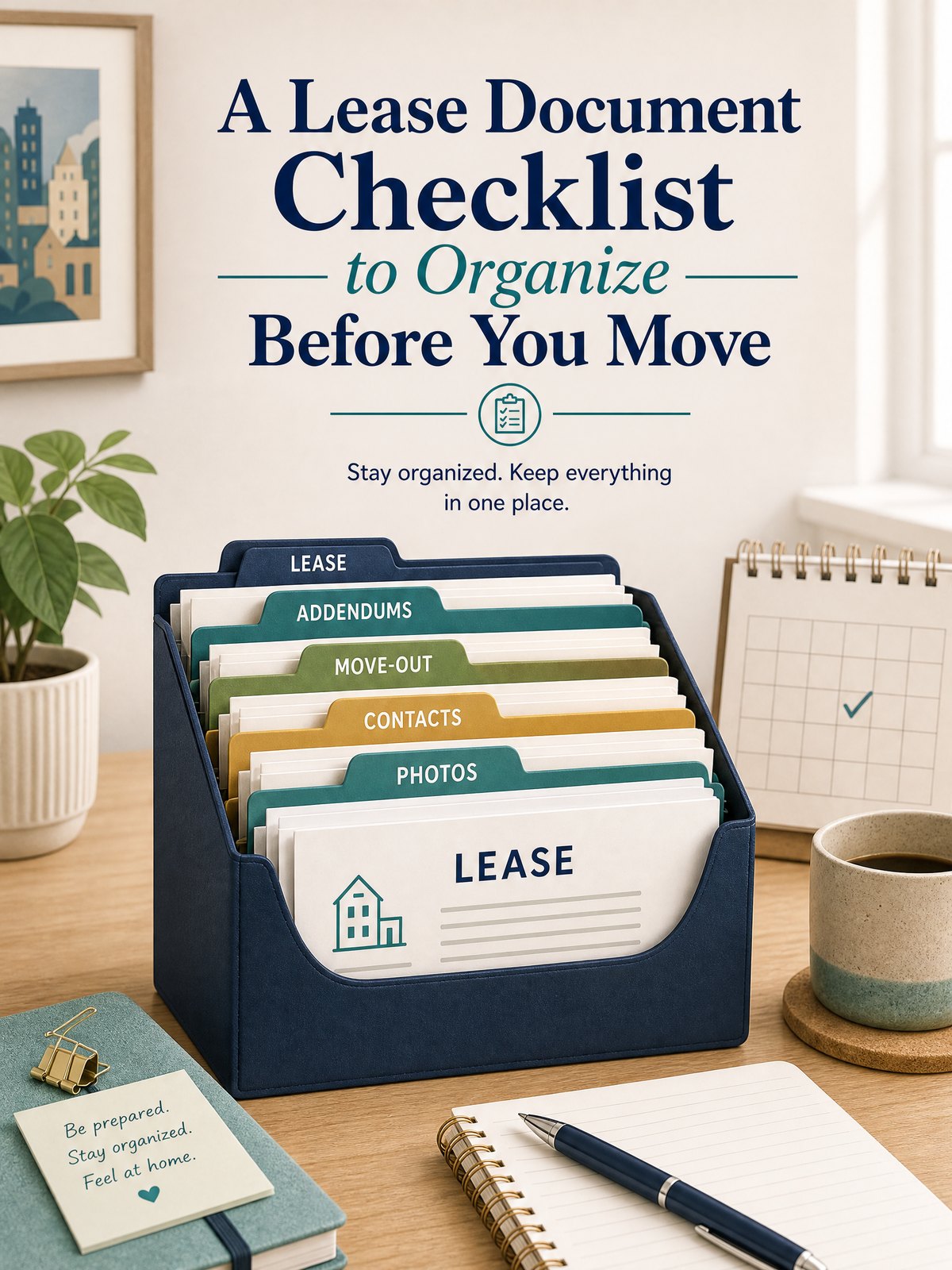
Moving into a new rental is easier when your paperwork is gathered, labeled, and where you can reach it. This short guide helps you collect lease pages, renters insurance information, utility account details, and emergency contacts into one reliable system before the move.
The outcome: a compact packet (digital and/or physical) you can access during move day, when paying bills, and in an emergency. Where the advice touches leases, product safety, or emergency planning, follow your lease, product label, manufacturer instruction, local authority, or the supplied official source as appropriate.
Start with the real constraint
The real constraint when you move is time under pressure: unpacking, changing addresses, and setting up utilities compete with decisions you should not rush. You will save time later by stopping once and collecting the documents and contact details you will need repeatedly.
Also accept a second constraint: not all records need the same protection level. A signed lease deserves safe storage and ready access; a dated work-order for a repaired light may be fine in a folder. Ready.gov advises organizing critical household, insurance, financial, and medical records before an emergency and safeguarding them in a secure accessible location. Use that guidance as the baseline; other storage, retention, and sharing choices are practical options to adapt to your routine.
At-a-glance plan
| Item | Where to find it | When to collect | Why it matters |
|---|---|---|---|
| Lease and signed addenda | Printed lease folder and final emailed copy from landlord | Before move-in or first day | Shows terms, move-in condition, and contact points for repairs |
| Renters insurance policy and claim contact | Insurance app or insurer email and policy PDF | Before move and at policy renewal | Documents coverage and who to call after loss |
| Utility account numbers and setup details | Account emails, final bills, or provider login page | Within 48 hours of scheduling service | Ensures you have power, water, heat, and internet when needed |
| Emergency contacts and service numbers | Phone list, landlord emergency line, local nonemergency police number | Before move and posted in the new home | Quick access during repairs, medical events, or urgent landlord issues |
Build the system step by step
- Designate one collection spot: pick a physical folder or a folder in a cloud service. Label it clearly and decide who can access it. This is a personal planning approach to reduce searching when you need documents.
- Gather core items first: the executed lease, move-in checklist/photos, inventory receipts, and any move-related correspondence with the landlord. If you have questions about lease terms or obligations, verify with your lease and landlord before acting.
- Add proof-of-insurance and policy provider contact details. Keep both the policy number and the insurer’s claims phone or app link. Storing a quick “how to file a claim” note is a practical option for faster action later.
- Collect utility account information: account numbers, provider names, scheduled start dates, and confirmation emails. Write down the method you used to pay deposits or setup fees and save receipts as a personal planning approach to track costs.
- Create a buttoned-up emergency list: landlord emergency line, local police nonemergency number (question to verify locally), poison control, primary medical provider, and a trusted nearby friend or neighbor. Post a printed copy by the main door and save a digital contact list on your phone.
After you complete these steps, copy the folder to at least one secure digital location and keep a recent printed packet where you can reach it during move-in. Remember Ready.gov’s recommendation to safeguard critical records in a secure accessible location; choose the combination of physical and digital storage that you will actually maintain.
Trade-offs to consider
Every system balances convenience, security, and cost; choose the mix that fits your comfort and situation.
- Physical binder vs. digital folder: physical is quick without passwords; digital allows off-site backup and remote sharing — a practical option depending on your routine.
- Single master copy vs. multiple synced copies: one master reduces version confusion; multiple copies reduce loss risk but need updating as a personal planning approach.
- Minimal file set vs. comprehensive archive: keep only what you’ll use often for ease, or archive all receipts and communications for future disputes — consider which is worth the extra maintenance.
Keep it workable
Set one simple maintenance habit: update the folder after any move-related event (new utility confirmation, insurance renewal, lease amendment). Every three months for the first year after a move, glance through the packet and remove duplicates or expired confirmations. Label any updated files with dates to avoid confusion. If a document touches your lease, insurance, or safety systems, follow the lease terms, product labels, or official guidance as appropriate.
FAQ
Should I keep a paper copy of my lease if I have a digital copy?
Yes—keeping a paper copy is a practical option many renters use because it’s quick to reference during move-in and proves helpful when internet access is limited; still keep the signed digital copy in a secure place too.
How long should I keep move-in photos and repair emails?
Keep photos and repair-related emails until the next lease renewal or move-out, or longer if there is an ongoing dispute; this is a personal planning approach, and if you face specific questions about retention requirements, verify locally or consult official sources.
Can I share my document folder with a roommate or partner?
Yes, sharing access is common; decide in advance which items are shared and which are private, and use access controls on digital folders or clearly labeled sections in a physical binder to prevent accidental edits or loss.
Next step: pick your folder location and set aside 30 minutes to collect the four core items listed in the table. Once that’s done, schedule one short monthly check for the first three months to keep the system current.
Sources and fact-checking
This guide provides practical editorial guidance. Requirements and safe choices can depend on the product, lease, local rules, and individual situation.
- Ready.gov — Financial Preparedness — Ready.gov advises organizing critical household, insurance, financial, and medical records before an emergency and safeguarding them in a secure accessible location.
Fact-checked against the linked official resources on August 27, 2026.