Move-In Cleaning Kit: What to Pack for an Apartment
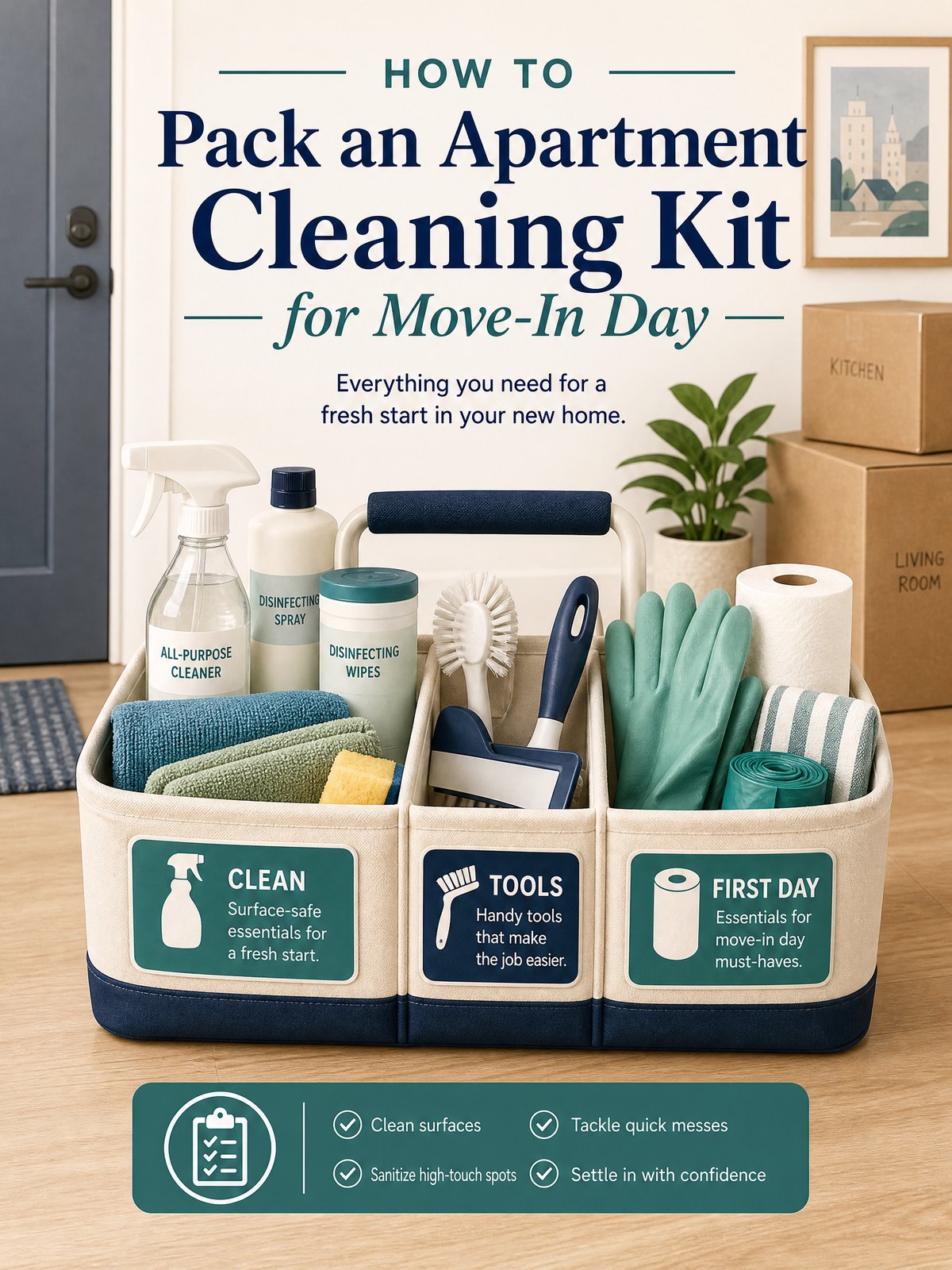
This guide focuses on cleaning kit for U.S. renters and small-home movers, with a practical system for choosing what to buy, what to prepare, and what to verify before moving day.
Moving into a new apartment often comes with limited time, limited space, and a handful of unknowns: what the previous tenant left behind, what surfaces need wiping, and whether the smoke detector has dust in the crevice. You don’t need a garage full of cleaners to make the place ready for boxes and bedding.
This guide shows how to pack one compact, practical move-in cleaning kit with only essential tools, a short action plan for the first hour and first day, and label-first safety steps. It highlights what to read on product labels and when to follow your lease or local rules.
Start with the real constraint
The real constraint on move-in day is time and portability: you may be carrying boxes and an armful of linens while trying to make the main surfaces usable before you unpack everything. Aim to keep the kit small enough to carry with one hand or stash in a single tote or small bin.
Another constraint is safety and disposal. Read product labels before use and never mix chemicals unless the label explicitly permits it. If you need guidance on disposing of cleaners, paints, batteries, or similar items, follow product labels and local collection guidance — those items can need special disposal care.
At-a-glance plan
| Step | Time | Decision signal |
|---|---|---|
| Quick sweep and wipe of entry and counters | First 15–30 minutes | If floors have visible debris or counters look dusty |
| Clean high-touch spots (doorknobs, switches) | Next 10–15 minutes | If surfaces feel sticky or are discolored |
| Bathroom refresh: sink, toilet rim, shower quick wipe | 15–30 minutes | If fixtures show soap scum or grime |
| Unpack essentials and spot-clean where you’ll sleep | After main surfaces are usable | If bedding will touch surfaces or floors directly |
Build the system step by step
- Choose a small container: a plastic tote, tote bag, or small bucket works. The container should fit under a sink or inside a closet for the first week.
- Pack cleaning tools only: one microfiber cloth, a scrub brush, an extendable duster, a handheld broom or dustpan, and one multipurpose spray labeled for the surfaces you have.
- Add safe consumables: one roll of paper towels or a pack of reusable wipes, a small bottle of dish soap, and a pair of disposable or reusable gloves.
- Include finishing items: a trash bag, a small box of trash bags, and a portable hand soap or sanitizer for quick handwashing if needed.
- Label and store documentation: tuck the product labels or a printed note with any lease cleaning requirements, and keep a small notepad to record any damage you spot while cleaning.
The goal is to have everything required to make the most-used rooms functional right away. For products, read labels before use: the label tells you appropriate surfaces, contact time, dilution if needed, and whether the product is intended for disinfecting or only cleaning. The U.S. Centers for Disease Control and Prevention distinguishes cleaning with soap and water from disinfecting, and notes that cleaning alone is sufficient in most situations unless illness-related circumstances make disinfection appropriate. When you finish the move-in basics, you can decide whether to expand the kit for deeper or specialty cleaning.
Trade-offs to consider
No single kit covers every surface or scenario. Choosing what to include means balancing weight, convenience, and coverage.
- Weight vs. completeness: Carrying a full set of specialty cleaners adds heft; a single multipurpose product plus soap and elbow grease is lighter but may require more scrubbing.
- Disposable vs. reusable: Paper towels are quick for moves but create waste; microfiber cloths are more sustainable and work for multiple surfaces if you wash them.
- Immediate cleanliness vs. professional cleaning: A compact kit will make an apartment liveable quickly; hiring a cleaner or doing a full deep clean later is a reasonable option to handle stubborn or hidden dirt.
Keep it workable
After move-in day, keep the kit compact and restock only what you used in the first week. Store the bin under a sink or on a shelf labeled for “move-in/quick clean.” If a product is nearly empty, replace it with an appropriately sized travel bottle rather than a full gallon. Follow product labels for storage, and follow your lease or building rules for any shared-supplies or disposal requirements.
Choose a Cleaning Kit by Task, Not by Brand
A practical cleaning kit needs fewer products than most people expect. Pack one general cleaner that is compatible with the surfaces in the apartment, dish soap, microfiber cloths, a non-scratch sponge, trash bags, gloves, a small brush, paper towels, and a compact vacuum or broom. Add a product only when the lease inspection or a visible condition gives it a specific job.
Keep every chemical in its original labeled container and place liquids upright in a leak-resistant bin. Do not pour cleaners into drink bottles or combine leftovers to save space. EPA guidance warns that incompatible household hazardous products can react, ignite, or become unsafe to recycle or discard. The product label and local waste program should control disposal decisions.
Clean in an order that protects your time
Start with the bathroom sink and toilet, then the kitchen food-contact areas, and finally the floors. This creates two usable rooms quickly and prevents floor cleaning from being undone by repeated trips. Photograph existing stains, damaged caulk, pests, or leaks before scrubbing them away, and compare the condition with the move-in inspection plan. Keep personal essentials separate in the first-day moving bag so toiletries are not mixed with cleaning chemicals.
The goal is not to disinfect the entire apartment. It is to remove dirt, make key surfaces usable, and document conditions that may need maintenance. If a product requires ventilation or protective equipment that the apartment cannot provide, stop and choose a safer method or contact the property manager.
FAQ
What’s the difference between cleaning and disinfecting?
Cleaning removes dirt and many germs using soap and water or a general cleaner; disinfecting uses products designed to kill bacteria and viruses. The U.S. Centers for Disease Control and Prevention distinguishes these actions and says cleaning alone is sufficient in most situations unless there are illness-related reasons to disinfect.
Can I mix cleaners to make them stronger?
No. Do not mix cleaners unless the product labels explicitly state it is safe to combine them. Mixing certain cleaners can create hazardous fumes or reduce effectiveness; always read and follow the manufacturer’s instructions on the label.
How should I dispose of leftover products or old paint left by the previous tenant?
Follow product labels and local collection guidance for disposal. The U.S. Environmental Protection Agency notes that items like paints, cleaners, oils, batteries, and pesticides can need special disposal care and advises using local hazardous-waste collection programs when required.
Next, pack your kit, read the labels, and tackle the entry and bathroom first so you can sleep and set up a bed without worrying about grime. If you find anything that needs special handling or disposal, check your lease and local authority guidance before proceeding.
Do I need a separate disinfectant in my move-in cleaning kit?
Not for every surface. Clean visible dirt first and follow the product label. Disinfect where it is appropriate for the surface and situation, rather than mixing or layering products in an attempt to make them stronger.
Sources and fact-checking
This guide provides practical editorial guidance. Requirements and safe choices can depend on the product, lease, local rules, and individual situation.
- U.S. Centers for Disease Control and Prevention — Cleaning and Disinfecting — CDC distinguishes cleaning with soap and water from disinfecting, and says cleaning alone is sufficient in most situations unless illness-related circumstances make disinfection appropriate.
- U.S. Environmental Protection Agency — Household Hazardous Waste — EPA notes that products such as paints, cleaners, oils, batteries, and pesticides can need special disposal care, and advises following labels and local collection guidance.
Fact-checked against the linked official resources on November 1, 2026.