Moving Unpacking Service vs. DIY: A First-48-Hours Plan
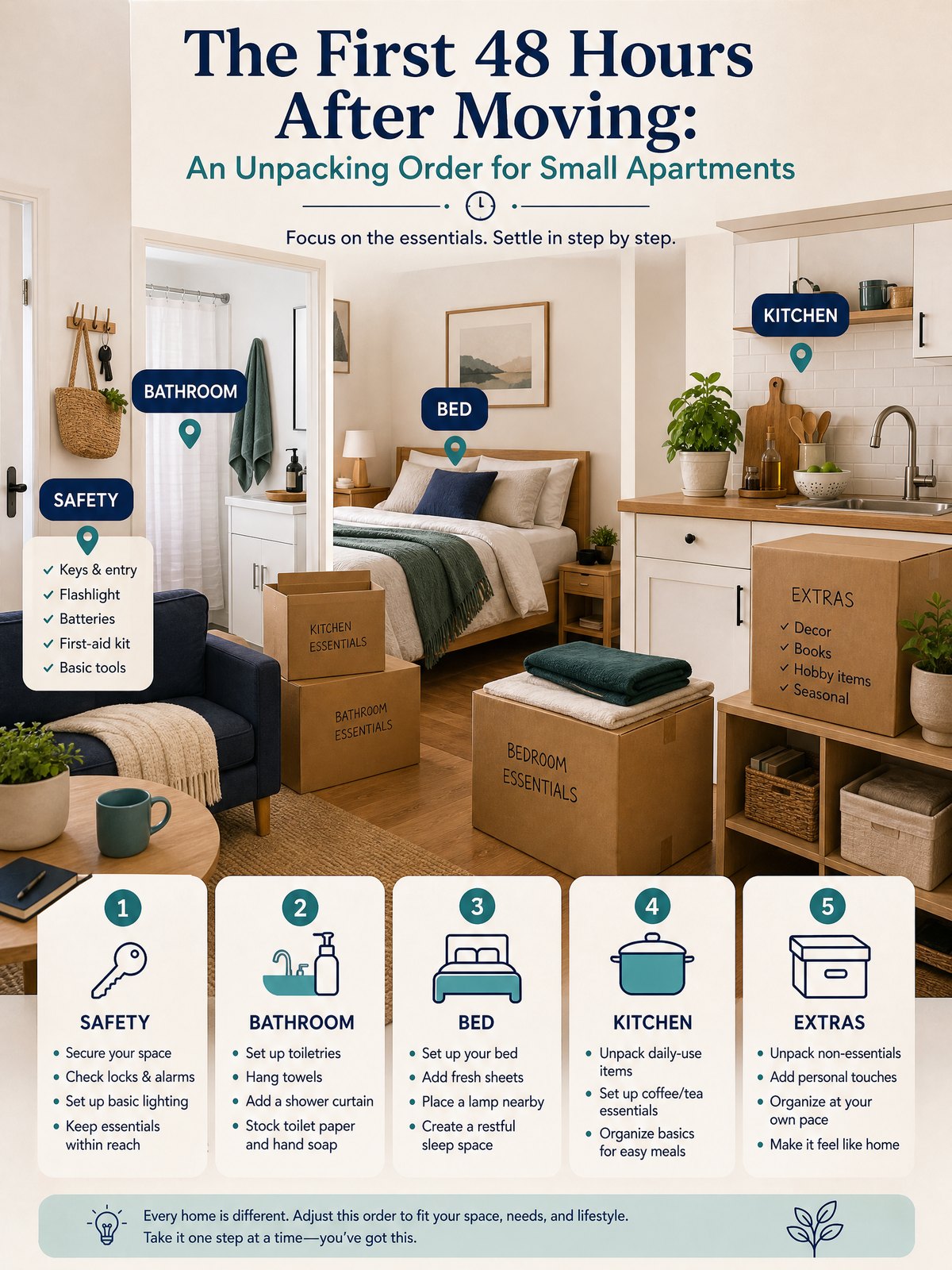
This guide focuses on moving unpacking service for U.S. renters and small-home movers, with a practical system for choosing what to buy, what to prepare, and what to verify before moving day.
Moving into a small apartment is a cramped, exhausting puzzle — and the first 48 hours set the tone. You don’t need every box opened to make the place livable; you need a focused order that gets the essentials working first.
This guide gives a simple, prioritized plan for the first two days: get a place to sleep, a working bathroom routine, something to eat, important documents within reach, and the basic safety items checked. It’s designed for renters and small-home dwellers who want function quickly without committing to a full unpacking marathon.
Start with the real constraint
Space is the limiting factor in a small apartment. You probably have one or two flat surfaces, a closet, and limited floor area; those constraints change how many boxes you can open at once and where you can stage belongings. Treat available flat surfaces as temporary staging zones, not permanent storage.
Time is the other constraint. You’ll be tired after moving day; doing too much will slow you down. The point of a 48-hour plan is to identify the handful of boxes or bags that restore core daily routines so you can rest and function, then pause and reassess before expanding into full unpacking.
At-a-glance plan
| Priority | What to find/unpack | Target within 48 hours | Decision signal |
|---|---|---|---|
| Sleep | Mattress or airbed, bedding, pillow, basic curtain or eye mask | Night 1: ready to sleep comfortably | If you can fall asleep within 30 minutes, move to next priority |
| Bathroom & hygiene | Towels, toiletries, shower curtain, toilet paper, small trash bag | Within 6–12 hours: shower and toilet routine possible | Showerable and toilet stocked for 48 hours |
| Food & basic kitchen | Trash bag, dish soap, one pot/pan, spoon, bowl, easy food, coffee/tea | Within 12–24 hours: one hot or cold meal ready | At least two simple meals available without cleaning every dish |
| Documents & safety | IDs, lease, insurance papers, charging cables, flashlight, first-aid basics | Within 24–48 hours: important documents accessible and basic safety checked | If critical documents are in one labeled folder, mark it as done |
Build the system step by step
- Unpack a sleep kit first. Make a single box or bag labeled “sleep” with sheets, pillow, pajamas, and an alarm or phone charger. Put the mattress or airbed where it will stay and set up bedding now so the space feels finished.
- Create a bathroom bag. Put daily toiletries, a towel, toilet paper, and a small bin together. If you share a bathroom in a building, keep essential items in a portable bag you can carry back and forth.
- Open a small kitchen kit. Only unpack what you need for two days: one pot or pan, one plate or bowl, a cup, utensils, dish soap, a sponge, and a trash bag. Choose shelf space or a single cabinet for these items so you don’t spread dishes around the apartment.
- Assemble an essentials folder and a safety corner. Put IDs, your signed lease, banking and insurance info into one folder and place it where it’s easy to grab. Create a small safety corner with a flashlight, fresh batteries, a basic first-aid kit, and a list of local emergency numbers. Label everything if possible.
- Pause, live, and reassess. After the initial setup, give yourself the rest of the first two days to use the apartment: sleep in your set-up bed, shower, and prepare simple meals. Note what still blocks regular life and prioritize unpacking only those items next.
These steps intentionally limit immediate decisions and physical spread. The “pause and live” step prevents low-priority tasks from crowding your new space and lets you make better decisions about permanent storage once you’ve used the apartment a day or two.
Trade-offs to consider
Any fast plan requires trade-offs between speed and neatness. Choose which corners you tolerate messy for 48 hours so the essentials get done.
- Speed vs. neat storage: unpacking only essentials gets you functional sooner but may require reorganizing later.
- Temporary surfaces vs. long-term placement: using a table for staging is quick but means another round of sorting into proper homes later.
- Minimal comfort vs. full setup: a basic bed kit gets sleep sooner, but you may choose to unpack a favorite pillow or lamp early for comfort.
Keep it workable
Set a simple 30–60 minute micro-routine each day for the first week: one box to open, one shelf to assign, and one donation or discard decision. Use labeled boxes or color-coded tags so items you postpone are easy to find. Following your lease and any building rules about appliance installation, shared areas, and trash disposal is important; verify specifics with your landlord or property manager as needed.
What a Moving Unpacking Service Should Actually Include
A moving unpacking service may open boxes, place basic items, assemble simple organizers, flatten packing material, or coordinate a room-by-room setup. The name alone does not define the scope. Get a written list of included tasks, exclusions, hourly minimums, disposal responsibilities, and the process for reporting damaged items before anyone begins.
Use paid help where it changes the first 48 hours most: making the bed, opening bathroom and kitchen essentials, clearing safe walking paths, and setting up medication or work supplies. Save low-priority books, decorations, and seasonal storage for later. If the unpacking provider is part of an interstate moving company, keep the mover’s estimate, inventory, and other written records together and review the FMCSA consumer guidance.
When DIY is the better value
DIY works well when boxes are clearly labeled, furniture is already placed, and you can unpack without blocking exits. The moving box labels system reduces the time spent searching, and the first-day bag keeps critical items outside the unpacking queue.
Choose service when time, mobility, childcare, work, or building access makes a slow setup expensive. Choose DIY when privacy and careful placement matter more than speed. In either case, photograph damaged cartons before opening them, keep important documents secure, and avoid asking helpers to install or anchor items beyond their training.
FAQ
How do I protect important documents right away?
Collect IDs, lease, insurance, bank information, and medical info into a single folder and place it where it’s accessible but not in plain sight. Organizing critical records before an emergency is recommended by official preparedness guidance as a prudent step; consider a small lockable box or a designated shelf for security.
Should I anchor furniture now or wait?
Securing tall or top-heavy furniture is a safety measure you can schedule after the first 48 hours if you’re exhausted, but it’s reasonable to prioritize anchoring if you have young children, pets, or if the furniture feels unstable; follow manufacturer instructions and product labels for anchoring. The U.S. Consumer Product Safety Commission advises following manufacturer instructions and securing TVs and top-heavy furniture where appropriate.
Can I skip unpacking kitchen items and just order food?
Ordering food is a practical option for the first night, but unpacking a minimal kitchen kit makes the next day less costly and gives you more control over dietary needs and waste. Plan to have at least two simple meals available within 24 hours so you don’t rely entirely on takeout if that’s not sustainable for you.
Take the first hour after reading this and assemble your sleep and bathroom kits; that single step will change how liveable the apartment feels. After those are done, decide on one kitchen item and the document folder to complete today, then rest and evaluate tomorrow.
What should I ask before hiring a moving unpacking service?
Ask what rooms and tasks are included, whether packing materials will be removed, how damage is documented, the hourly minimum, cancellation terms, and whether the provider is separate from the interstate mover.
Sources and fact-checking
This guide provides practical editorial guidance. Requirements and safe choices can depend on the product, lease, local rules, and individual situation.
- Ready.gov — Financial Preparedness — Ready.gov advises organizing critical household, insurance, financial, and medical records before an emergency and safeguarding them in a secure accessible location.
- U.S. Consumer Product Safety Commission — Anchor It! — CPSC advises following manufacturer instructions, securing TVs and top-heavy furniture where appropriate, and keeping climb-attracting items away from the top of furniture.
- FMCSA — Tips for a Successful Move — FMCSA advises consumers to verify movers, obtain written estimates, and keep important moving documents.
Fact-checked against the linked official resources on November 1, 2026.