
Moving Organizer: Build a Binder for an Apartment Move
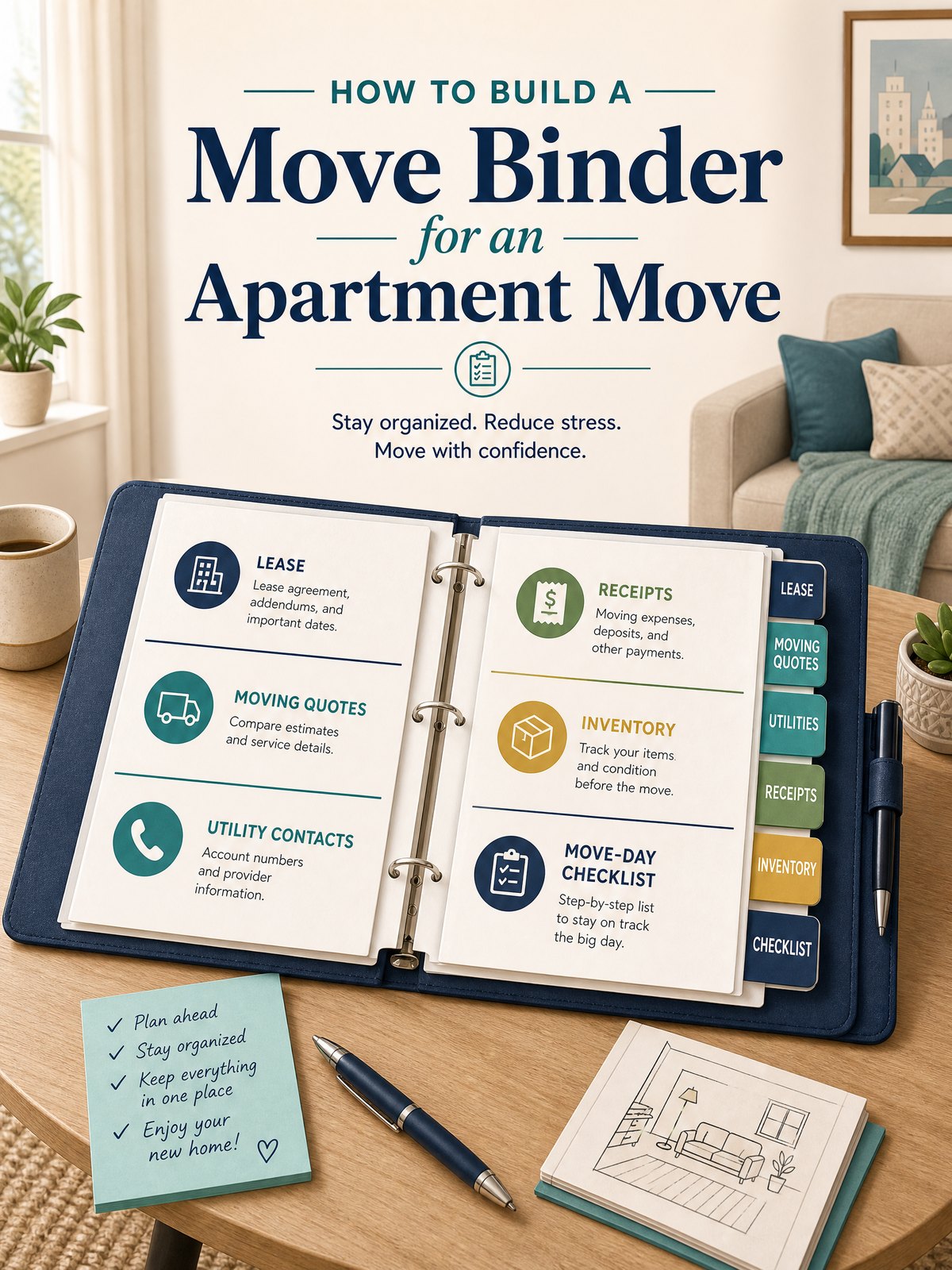
This guide focuses on moving organizer for U.S. renters and small-home movers, with a practical system for choosing what to buy, what to prepare, and what to verify before moving day.
Moving across town or into a new apartment compresses a lot of important papers into a short, stressful window. Without one place for your lease, receipts, moved-in photos, and reservation confirmations you spend time hunting instead of handling the actual move.
This article shows how to build a compact, portable move binder that keeps those records and contacts together so you can find what you need during packing day, move day, and the first weeks in the new place.
Start with the real constraint
The single real constraint on most apartment moves is time: you usually have a date you must be out, a move-in appointment at the new place, and a lease that sets move-out and move-in responsibilities. Treat time as the primary limit when deciding what goes into your binder and what stays in storage boxes.
Space is the second constraint. Your move binder should be small enough to travel with you—car, Uber, or the first load that goes into a truck—so you have critical documents and vendor contacts immediately available. If your lease contains specific move-out rules or required notices, follow your lease first; that is the authoritative source for what you must show and when.
Also consider security: Ready.gov advises organizing critical household, insurance, financial, and medical records before an emergency and safeguarding them in a secure accessible location. Use that principle here: keep originals or certified copies for essential documents and create secure digital backups as a practical option.
At-a-glance plan
| Task | Contents | Timing | Decision signal |
|---|---|---|---|
| Collect key documents | Lease, photo ID, renter’s insurance info, utility account numbers | 2–3 weeks before move | If any document is missing, request replacement now |
| Organize logistics | Move company contact, elevator reservation, parking permits, confirmation numbers | 1–7 days before move | Confirm vendor arrival times and access instructions |
| Track expenses | Receipts, deposit refunds, prepaid services lists | Move day and immediately after | Keep receipts until refund or charge resolved |
| Quick access kit | Keys, basic tool list, checklist, new-address card | Pack with first-load items | If you need a signature or key at arrival, binder goes with you |
Build the system step by step
- Choose a portable container: a slim three-ring binder, a zippered document pouch, or a small accordion file are all practical options—pick what you will actually carry during the move.
- Create a contents page and section dividers labeled: Lease & IDs, Move Logistics, Payments & Receipts, Photos & Condition, Contacts & Notes. Put the contents page at the front so anyone you hand the binder to can find things quickly.
- Gather originals and copies: place the lease, ID, renter’s insurance declarations, and any signed condition forms in clear sleeves. Keep originals for documents your lease requires and scan or photograph everything as a personal planning approach to create a secure backup.
- Compile vendor and reservation details: print confirmations and write down phone numbers for movers, building managers, elevator reservations, and utility setup. For any rental listing, verify ownership and watch for red flags—FTC advises verifying listings, avoiding pressure to pay quickly, and not using gift cards, wire transfers, or cryptocurrency for payments.
- Add a move-day kit: include a small stack of signed checklists, a pen, a list of parking or access codes, photocopies of keys if allowed by your lease, and a pocket for receipts you collect on move day.
After you build these sections, run a quick mock check: open the binder and answer three questions in under a minute—where is the lease, who is the primary contact for move-day access, and where are receipts to track costs? If any answer stalls you, simplify that section or move a copy to the front.
Trade-offs to consider
Every choice about what to carry trades security, convenience, and redundancy. Be explicit about which you prioritize for your situation.
- Carry originals vs. copies: originals are authoritative but risk loss; keeping originals at a trusted location and carrying certified copies is a practical option.
- Paper binder vs. digital files: paper is quick with spotty wifi, digital is easily duplicated—scanning documents for cloud storage is a personal planning approach but verify security settings locally.
- Comprehensive vs. slim kit: a full binder helps long-term organization but may be bulky; a slim kit speeds move day access while leaving nonessential records boxed for later review.
Keep it workable
Maintenance matters more than perfection. After move day, take 30–60 minutes to purge temporary receipts, file the condition photos with the lease section, and label any refunds or deposits with expected dates. Treat the binder as a living file for the first 30 days—if something changes, update or remove it so it stays useful rather than becoming clutter.
Use a Moving Organizer as a Control File
A moving organizer should hold the records that answer urgent questions: who is responsible, what was promised, what was paid, and what condition was documented. Use a slim binder, accordion file, or secure digital folder with the same sections. The format matters less than being able to retrieve a document in under a minute.
Create tabs for lease and building rules, mover or truck rental, utilities, insurance, receipts, inventory, property photos, and contacts. Keep originals only when necessary and place sensitive pages in a closed inner folder. Back up essential records to a secure account, but do not rely on phone service or a nearly empty battery as your only access method.
Separate action papers from reference papers
Put documents needed today in the front pocket: keys, parking instructions, reservation numbers, payment confirmation, and the mover’s written records. Reference material can stay behind the divider. FMCSA advises consumers using interstate movers to keep estimates and other important documents. Ready.gov likewise emphasizes organizing household and financial records so they remain accessible.
Add the move-out photo checklist and the rental scam verification checklist when the binder includes a new lease. Record every call that changes a price, time, or service and request the change in writing.
FAQ
What documents should I always have in the binder?
Always have a copy of your signed lease, a photo ID, contact info for the landlord or property manager, proof of renter’s insurance if applicable, move-day vendor contacts, and recent photos showing the apartment’s condition; if your lease specifies other paperwork, follow your lease for required documents.
Should I keep digital copies instead of paper?
Digital copies are a convenient backup and a personal planning approach for portability; however, keep at least scanned copies accessible offline (on your phone or a USB drive) in case of poor connectivity and follow manufacturer and service instructions for encryption or cloud security as appropriate.
How long should I keep move-day receipts and records?
Keep receipts related to deposits, move-related charges, and any repairs until the charge is settled and you’ve confirmed your security deposit reconciliation; this is a practical option and the timing can vary, so check any timelines in your lease or with vendors.
When you finish assembling the binder, take it on one shorter trip—like a supermarket run—to confirm it’s comfortable to carry and contains everything you reach for. After the move, decide which documents move into long-term storage and which stay in a compact household file.
Should the moving organizer travel with me or go on the truck?
Keep it with you. The binder may contain identification, lease records, mover documents, receipts, and access instructions that you may need before the truck is opened.
Sources and fact-checking
This guide provides practical editorial guidance. Requirements and safe choices can depend on the product, lease, local rules, and individual situation.
- Ready.gov — Financial Preparedness — Ready.gov advises organizing critical household, insurance, financial, and medical records before an emergency and safeguarding them in a secure accessible location.
- Federal Trade Commission — Rental Listing Scams — FTC advises verifying a listing and ownership information, being cautious of pressure to pay quickly, and avoiding payment methods such as gift cards, wire transfers, or cryptocurrency for a rental listing.
- FMCSA — Tips for a Successful Move — FMCSA advises consumers to verify movers, get written estimates, and keep moving documents.
Fact-checked against the linked official resources on November 1, 2026.