Bathroom Cabinet Organization for Roommates in Small Spaces
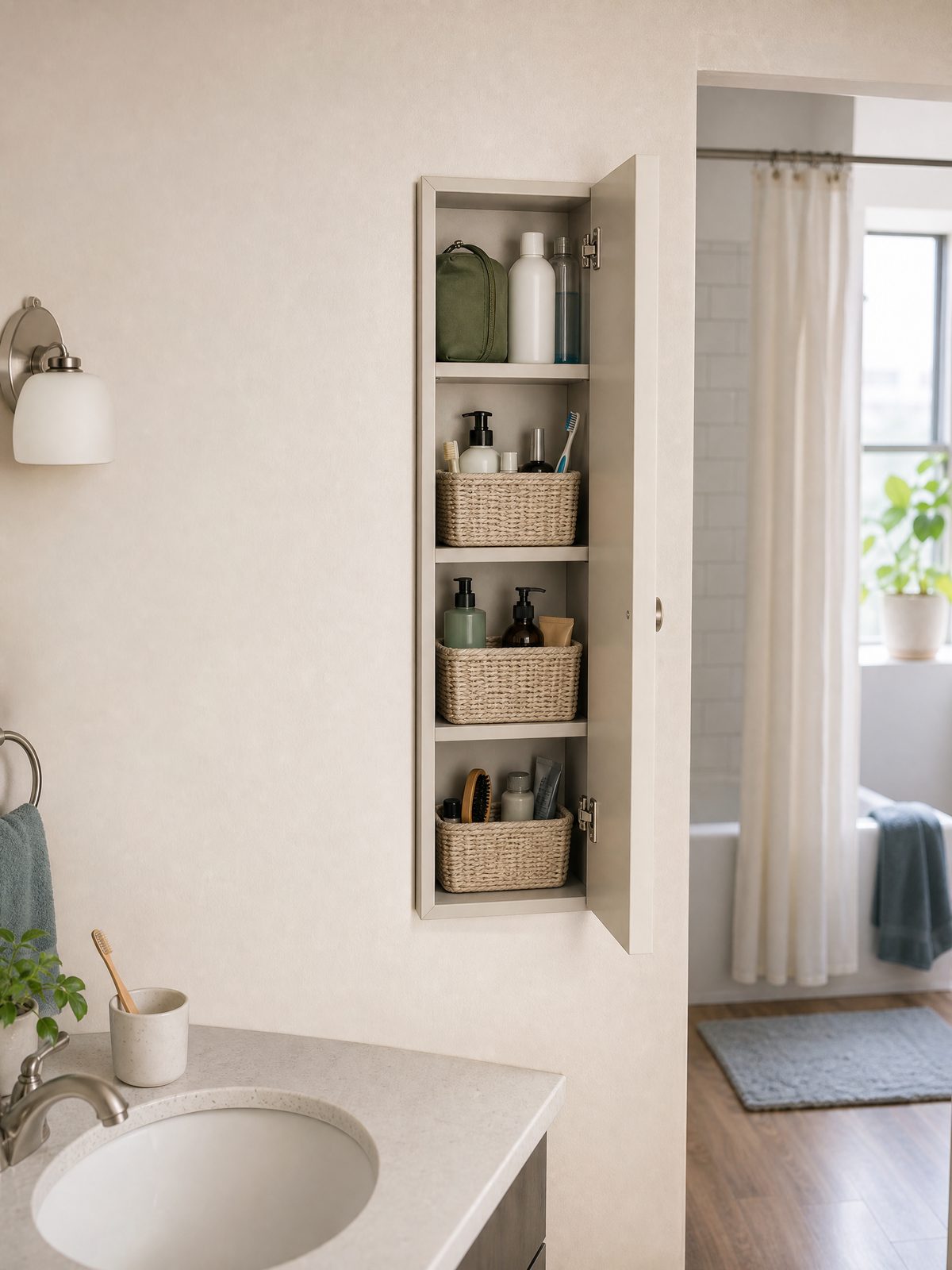
Bathroom cabinet organization works best in a shared small space when each person has one defined toiletry zone, shared backups stay in a separate bin, and products that do not belong in a humid bathroom are moved elsewhere. Start by measuring the usable cabinet, assigning equal containers instead of vague shelf territory, and deciding who replaces shared supplies. This prevents most mix-ups without turning the bathroom into a wall of labels.
The goal is not to fit every personal-care product into one cabinet. It is to make the items used at the sink easy to reach while keeping ownership, refills, and safer storage choices obvious. The system below is designed for roommates, couples, siblings, and families sharing a compact bathroom.
Choose the right bathroom cabinet organization plan
Before buying organizers, decide what the cabinet actually needs to hold. A medicine cabinet above the sink is usually shallow and favors small daily items. A vanity cabinet may be deeper, but plumbing, hinges, and leaks reduce the usable footprint. A tall wall cabinet can hold more, although upper shelves may be inconvenient for everyday products.
| System | Best for | Main advantage | Watch for |
|---|---|---|---|
| One removable tray per person | Two to four people with different routines | Clear ownership and easy counter-to-cabinet reset | Trays need matching footprints to keep space fair |
| Left-and-right shelf zones | Two people with similar amounts of toiletries | No extra containers required | Loose items can drift across the center line |
| Daily caddies plus one backup bin | Very shallow cabinets or changing schedules | Daily products travel together and backups stay visible | Overfilled caddies become hard to lift and clean |
| Category bins shared by everyone | Households that intentionally share most basics | Fewer duplicate products | Poor fit when people prefer separate skincare or dental items |
For most roommates, individual trays plus one shared backup bin offer the best balance. They make personal boundaries visible while still allowing the household to pool items such as unopened hand soap, extra toilet paper, or guest supplies. If your bathroom needs storage beyond one cabinet, compare renter-safe options in our renter-friendly bathroom storage guide before adding adhesive shelves or over-the-door hardware.
Measure before buying bins or turntables
Measure the interior width, depth, and height with the door closed. Then note the hinge swing, shelf supports, pipes, and any lip around the opening. Use the smallest usable measurement, not the outside cabinet dimensions. Leave enough clearance to lift a tray without scraping the shelf above it.
- Shallow tray: useful for tubes, dental items, contact-lens supplies, or small skincare bottles that need to stay upright.
- Handled caddy: useful when someone carries products to another mirror or needs to remove the entire routine at once.
- Stacking drawer: useful for low-frequency items only if the drawer can open fully without hitting plumbing or a cabinet frame.
- Turntable: useful in a deep cabinet with bottles of similar height, but inefficient in a narrow medicine cabinet.
Avoid buying a multipack simply because every container matches. The organizer should solve the cabinet’s shape and the household’s routine. A smaller open tray is often more useful than a tall lidded box that hides products and creates another surface to unstack.
Sort products by owner, frequency, and storage needs
Empty the cabinet and make four groups: daily personal items, occasional personal items, shared supplies, and items that should live somewhere else. Discard empty packaging, but do not guess about disposal for medicines or potentially hazardous products.
Cosmetics deserve a closer look. The U.S. Food and Drug Administration says shelf life depends partly on how a product is used and stored, and notes that bathroom moisture may make it easier for bacteria and fungi to grow. Follow the manufacturer’s directions, keep containers and applicators clean, and move products away from the bathroom if their labels call for cooler or drier storage.
Medicine needs a separate decision. FDA guidance says a damp bathroom cabinet can reduce the effectiveness of medicines even before the printed expiration date, and advises reading the label for specific storage instructions. In many homes, a cool, dry, access-controlled drawer, closet shelf, or storage box is a better location. Do not create a communal medicine bin for roommates, and keep medicines away from children and anyone for whom they were not prescribed.
Build personal zones that stay fair
Give each person one defined container or one clearly bounded shelf section. Equal containers are easier to negotiate than equal-looking shelf space because bottles have different shapes. Put the items used every morning at the front. Store occasional tools or backups behind them only if the daily tray can still be removed easily.
- Assign one color or plain-text name per person. Keep the label small and readable from the cabinet opening.
- Set a container limit. If a person’s tray no longer lifts out cleanly, they choose what moves to secondary storage.
- Keep toothbrushes and damp tools ventilated. Do not seal wet items in an airtight bin.
- Reserve one neutral area. This is for genuinely shared supplies, not overflow from the fullest personal tray.
If labels tend to become visual clutter, use one consistent wording system. Our guide to home organization labels for shared spaces explains how to label ownership, destination, and refill status without covering every container in instructions.
Create a shared-supply bin with a refill rule
A shared bin should contain only items everyone has agreed to share. Common examples include unopened hand soap, guest toiletries, or a spare roll that fits the cabinet. Personal skincare, prescriptions, razors, and specialty dental products should stay in owner zones unless the household explicitly decides otherwise.
Choose one refill rule that can be understood at a glance. For example, place the open item in front and one backup behind it. When the backup moves forward, the person who opens it adds the item to a shared shopping list. This is more reliable than estimating when a bottle is “almost empty.”
Do not use the bathroom cabinet as an overflow location for household cleaners. If cleaners are stored under a sink elsewhere, keep the plumbing visible, retain original labels, and separate them from toiletries. See our under-sink storage ideas for cleaning supplies for organizer trade-offs. EPA guidance says potentially hazardous household products should be stored and disposed of according to their labels, kept in original containers, and never mixed with other products.
Use a five-minute weekly reset
The reset should be short enough that the household will repeat it. Pick a consistent day and do only four jobs: return loose items to owner zones, wipe dry spills, move empty packages out, and check whether the shared backup has been opened. A deeper review can happen every few months or when a roommate moves in or out.
During the reset, look for leaking bottles, containers with unreadable labels, and products that changed color, smell, or texture. Follow the product label and manufacturer guidance rather than creating a universal expiration rule for cosmetics. For unwanted medicines, use FDA disposal guidance and available take-back options instead of placing them in a general decluttering pile.
Common mistakes and practical trade-offs
- Buying organizers before measuring: attractive bins can waste depth or block hinges. Measurement should come first.
- Using one large communal basket: it saves setup time but recreates the original problem because ownership and refill responsibility disappear.
- Storing every backup in the bathroom: bulk stock consumes prime space. Keep only the next agreed backup in the cabinet and store the rest in a dry secondary location.
- Putting medicine in the “medicine cabinet” by default: the cabinet name does not override a medicine’s label or humidity concerns.
- Over-labeling: labels help with ownership and restocking, but too many instructions become background noise.
- Ignoring access needs: frequently used items should be reachable without standing on a tub edge or unstable object. Place heavier containers lower when possible.
Privacy and visibility also require a choice. Clear bins make inventory easier, while opaque bins conceal personal products. A useful compromise is an opaque owner tray with an open top and a simple exterior label. The contents remain less visible, but the tray can still be lifted and checked for leaks.
FAQ
What is the best organizer for a shared bathroom cabinet?
For most shared bathrooms, use one shallow removable tray or handled caddy per person plus one separate bin for agreed shared backups. Choose the organizer only after measuring the cabinet’s interior depth, hinge clearance, and shelf height.
Should medicine stay in a bathroom cabinet?
Not automatically. FDA guidance warns that damp bathroom storage can reduce medicine effectiveness. Read each label and ask a pharmacist when instructions are unclear. A cool, dry, secure location is often more appropriate, especially when children or other household members could gain access.
How do roommates divide cabinet space fairly?
Use equal-footprint trays rather than an informal left-and-right split. Each person decides what fits in their tray, while one neutral bin holds only the supplies everyone has agreed to share. Revisit the arrangement if the number of residents changes.
How often should a shared bathroom cabinet be reorganized?
Do a five-minute reset weekly and a fuller review every few months, after a spill, or when someone moves in or out. The weekly reset should return items, remove empties, wipe moisture, and trigger any shared refill.
Sources and fact-checking
This guide gives general organization options. Product labels, manufacturer instructions, medicine directions, household access needs, and local disposal programs take priority.
- U.S. Food and Drug Administration — Shelf Life and Expiration Dating of Cosmetics — storage conditions, moisture, cleanliness, and cosmetic shelf life.
- U.S. Food and Drug Administration — Don’t Be Tempted to Use Expired Medicines — label-directed storage, bathroom humidity, access control, and disposal options.
- U.S. Environmental Protection Agency — Household Hazardous Waste — original containers, readable labels, safe storage, and local disposal guidance.
Fact-checked against the linked official resources on November 6, 2026.