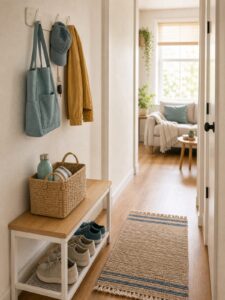
The Small Hall Closet Reset: Coats, Shoes, Linens, and Cleaning Gear
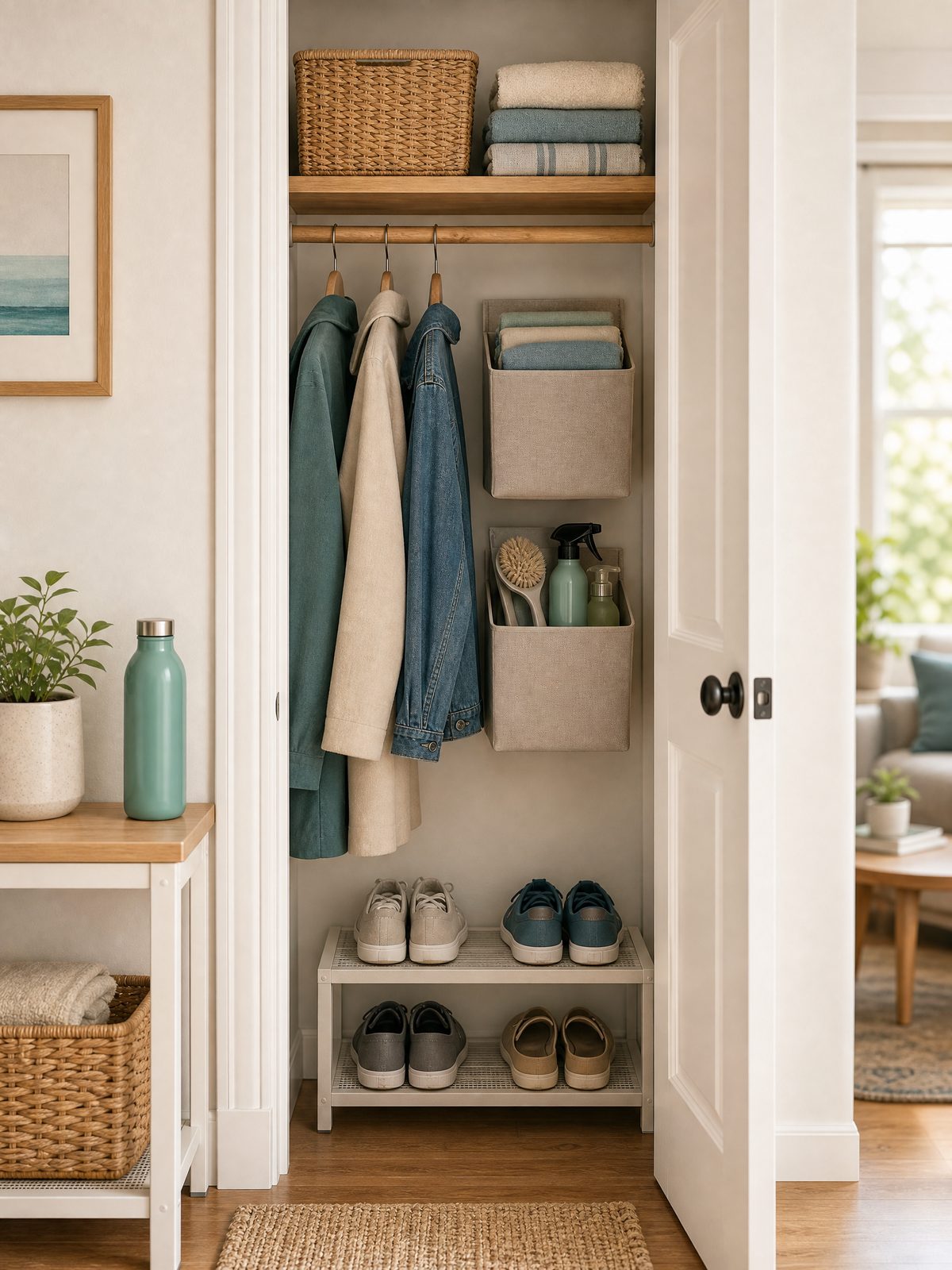
Too many small-entry closets turn into a pileup: coats shoved to the back, shoes scattered on the floor, quilts jammed above boots, and a bottle of cleaner teetering on a shelf. Narrow hall closets demand an allocation plan so everything has a clear place and nothing is stacked where it can fall or create a hazard.
This article shows a simple allocation plan for a narrow hall closet that covers coats, shoes, linens, and cleaning gear, and it highlights which items you should avoid stacking unsafely. Follow your lease, product labels, and manufacturer instructions where those apply, and verify local disposal rules when needed.
Start with the real constraint
The single most important limit is physical depth: many hall closets are 20–24 inches deep, which fits a coat hang but not deep piles of boxes. That depth makes vertical organization and defined zones essential; without clear zones you end up stacking soft things on top of heavy things or placing hazardous liquids above linens.
Another constraint is access: this is a high-traffic transition area, so frequently used items must be reachable at eye or arm level. Less-used bulk items can live higher or in labeled bins. When your plan touches safety (heavy furniture, top shelves) remember the U.S. Consumer Product Safety Commission advises following manufacturer instructions, securing TVs and top-heavy furniture where appropriate, and keeping climb-attracting items away from the top of furniture. Also, when you store cleaners, paints, batteries, or oils, the U.S. Environmental Protection Agency notes those products can need special disposal care and advises following labels and local collection guidance.
At-a-glance plan
| Area | Typical contents | Where it lives | Decision signal / timing |
|---|---|---|---|
| Coats and outerwear | Everyday coats, light jackets, umbrella | Single row on hanger rod; heavy winter coat at outside end | If you wore it in last 30 days, keep here; otherwise seasonal bin |
| Shoes | Daily shoes, boots, one pair of guests’ slippers | Shoe tray or low shelf on floor; boots on side wall or boot tray | Rotate seasonally; discard or donate if not worn in 6–12 months (practical option) |
| Linens | Spare towels, light blankets, guest sheet set | High shelf in clear bin or labeled folded stack, breathable bag | Keep only one reserve set per sleeping area; reassess twice yearly |
| Cleaning & small gear | Spray cleaner, microfiber cloths, handheld vacuum, broom | Lower shelf or narrow caddy; store liquids in spill tray at bottom | Store liquids where spills won’t drip on linens; check labels before disposal |
Build the system step by step
- Empty the closet and sort into four piles: keep, relocate, donate, toss. Work quickly to force decisions; set a 30–45 minute timer (personal planning approach).
- Measure the interior depth and height. Note the hanging rod height and the usable top shelf depth so you can pick appropriately sized bins (practical option).
- Create zones: hanging for coats, floor or low shelf for shoes, high shelf for linens, and a bottom-shelf caddy for cleaning gear. Use visual labels on bins so items return to the right zone.
- Address safety: place liquids and hazardous products on the lowest shelf in a spill tray and never above linens or bedding. If you store heavy boxes, put them low and secured; for top-heavy furniture concerns, follow manufacturer instructions or anchored recommendations from official sources.
- Install small aids: a slim boot tray, a tension rod for scarves, or a clear-front bin for guest linens. These are practical options to keep the zones functional.
After these steps, practice one-minute resets for a week: at the end of each day, spend a minute returning stray items to their labeled zone. The physical act of returning items reinforces the allocation plan and reveals any friction points that need an adjustment.
Trade-offs to consider
Every choice trades capacity, convenience, and visibility. Pick what matters most for your household and be explicit about those priorities.
- Capacity vs. access: deeper stacks increase capacity but make retrieval awkward; keeping more items visible improves access but reduces storage density.
- Rigid zones vs. flexibility: strict zones keep order but can feel restrictive; a one-bin overflow is a practical option for unpredictable days.
- Open shelves vs. opaque bins: open shelves are faster to use but look messier; opaque bins hide clutter and require stronger labeling habits (personal planning approach).
Keep it workable
Set two short maintenance checkpoints: a 60-second nightly reset and a 10-minute monthly check to move seasonal items or discard expired cleaning products. For disposal questions about cleaners, paints, batteries, oils, or pesticides, follow the product label and local collection guidance as noted by the U.S. Environmental Protection Agency. If your plan affects the apartment fixtures or requires hardware changes, follow your lease and landlord rules.
FAQ
Can I stack boxes on the top shelf above linens?
Stacking soft linens under heavy or leaking containers risks damage; as a safe practice place boxes with solid, sealed contents on top shelves and keep liquids on lower shelves. This is a practical option to reduce stains and collapses.
How should I store a vacuum, broom, or mop in a narrow closet?
A slim caddy or wall hooks keep upright tools organized off the floor and free up shoe space; secure hooks to the closet wall per landlord rules, and follow manufacturer instructions for any mounted hardware if applicable (question to verify locally).
What should I do with old cleaners and paint found in the closet?
The EPA notes that paints, cleaners, oils, batteries, and pesticides can need special disposal care and advises following labels and local collection guidance; check your city’s hazardous-waste collection schedule before discarding.
Start with the empty-and-sort step this weekend and pick one labeled bin for linens to keep the top shelf tidy. Revisit the plan after a month and tweak zones where you notice friction.
Sources and fact-checking
This guide provides practical editorial guidance. Requirements and safe choices can depend on the product, lease, local rules, and individual situation.
- U.S. Consumer Product Safety Commission — Anchor It! — CPSC advises following manufacturer instructions, securing TVs and top-heavy furniture where appropriate, and keeping climb-attracting items away from the top of furniture.
- U.S. Environmental Protection Agency — Household Hazardous Waste — EPA notes that products such as paints, cleaners, oils, batteries, and pesticides can need special disposal care, and advises following labels and local collection guidance.
Fact-checked against the linked official resources on August 27, 2026.