How to Organize Books in a Small Apartment Without Adding a Large Bookcase
Books are both useful and sentimental, but in a small apartment they can quickly consume valuable floor and wall space. If you can’t add a large bookcase, you still can control what stays, what gets displayed, and what leaves the apartment.
This article shows a straightforward decision framework—keep, display, borrow, donate—plus a compact storage plan that keeps favorites accessible without a new tall bookcase or extra floor clutter.
Start with the real constraint
The real constraint isn’t just square footage; it’s what you can reasonably maintain. If every flat surface becomes a pile of books, your living area and cleaning routines suffer. Start by accepting that some books will need to move out of the apartment, be stored in compact ways, or be used differently.
Also consider safety and lease rules before installing any fixtures. If you plan to fasten shelves or anchor stacked furniture, follow the product label, manufacturer instructions, and any guidance from your landlord; for heavy or top-heavy setups, the U.S. Consumer Product Safety Commission advises securing TVs and top-heavy furniture where appropriate and keeping climb-attracting items off the top of furniture. These are practical safety points to verify for your specific pieces and building rules.
At-a-glance plan
| Step | Decision signal | Action | Estimated time |
|---|---|---|---|
| Sort by use | Read in 6 months? | Keep active reads and reference; tag rest for display, donate, or borrow | 30–60 minutes |
| Choose display spots | Visible daily or decorative? | Limit to 10–15 favorites; use wall-mounted or narrow ledges | 20–40 minutes |
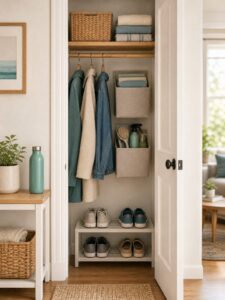
| Create overflow strategy | Not display, but keep | Use flat storage (under bed), slim baskets, or a small shelf in a closet | 30–60 minutes |
| Donate or borrow | Never re-read or duplicates | Donate, swap, or rely on library/ebook options | 15–30 minutes |
Build the system step by step
- Gather everything into one spot. Pull books from shelves, nightstands, bags, and stacks so you can see the full quantity and types.
- Quick triage: make four piles labeled Keep, Display, Borrow/Library, Donate. Make decisions fast—if a title triggers a longer discussion, temporarily mark it to avoid slowing the whole process.
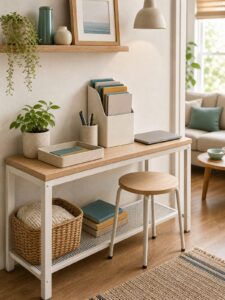
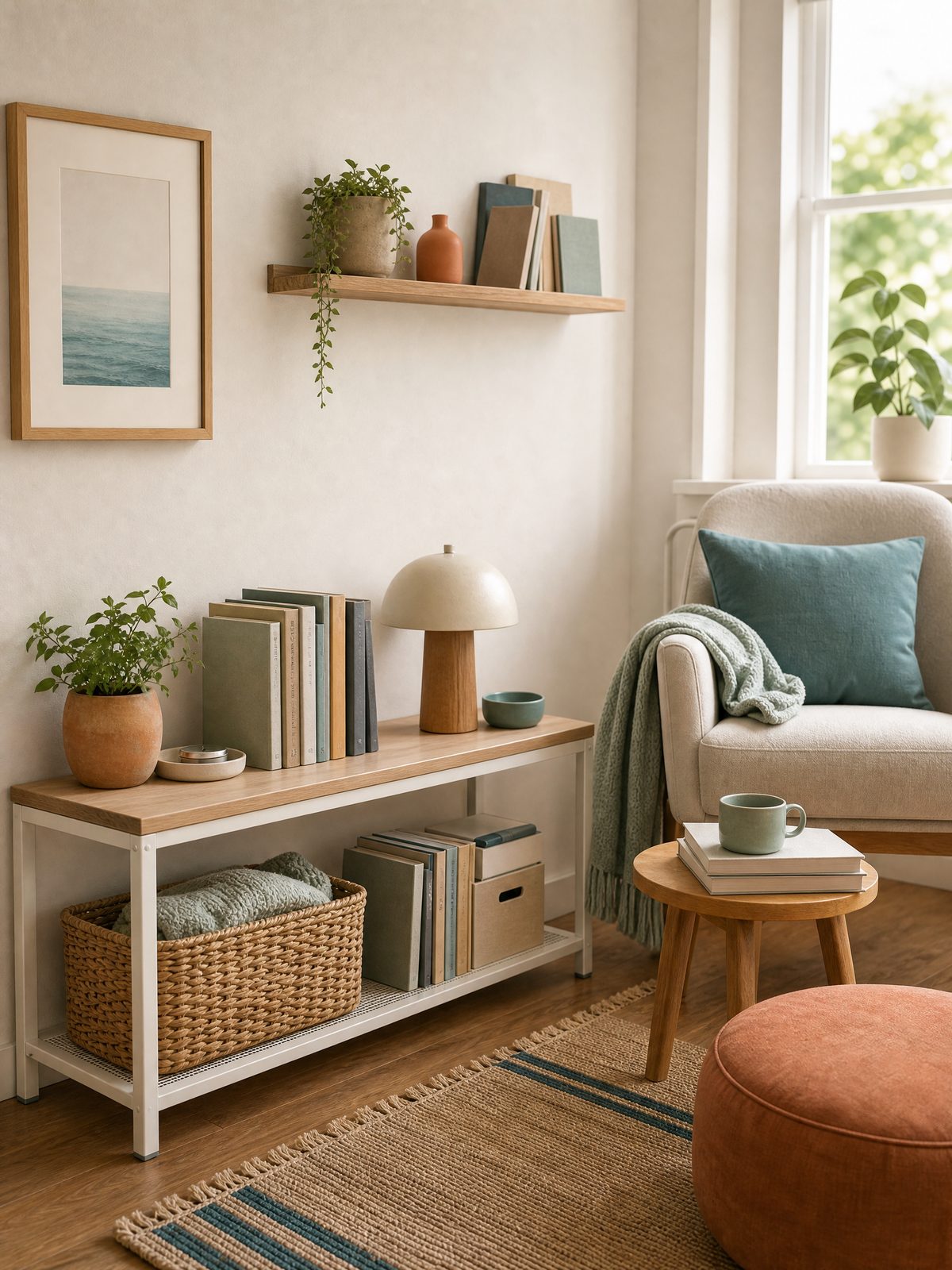
- Decide your display rule. Choose a single, slim display area—one wall ledge, a few picture ledges above a desk, or the top of a low dresser—and limit displayed books to the number that looks intentional in that space.
- Organize keepers into compact storage. Put reference titles you use often on a shallow shelf or drawer; casual reading can go in a decorative basket; slow-season books can be slipped into a flat container under the bed.
- Dispose and replace: take the donate pile out within a week, borrow any replacements from the library or digital sources, and label keepers so you know which ones are non-negotiable.
After these steps you’ll have a repeatable system: a designated display area, an overflow plan that avoids vertical piles, clear signals for when a book should leave, and a habit of moving donations out quickly.
Trade-offs to consider
No single approach is perfect; choose trade-offs that match how you use books and how much maintenance you want to do.
- Display fewer books for a neater look, but accept more frequent swapping if your reading rotates quickly (practical option).
- Use under-bed or closet storage to save floor space, which makes access slower when you want a tucked-away title (personal planning approach).
- Rely on library or digital borrowing to reduce ownership, which can be less satisfying for collectors and requires planning around availability (question to verify locally).
Keep it workable
Set a monthly ten-minute check: re-evaluate the display, remove books you haven’t reached in six months, and drop donations at the next free day. Consistent small edits prevent reaccumulation and keep the system from becoming a weekend project every season.
FAQ
How do I store heavy reference books without a tall bookcase?
Store heavy volumes flat in a low, stable location such as a dresser drawer, a reinforced shelf inside a closet, or a shallow under-bed container; if you stack vertically, keep stacks short and stable. Verify any modifications against product labels and landlord rules when appropriate.
Can I use wall-mounted shelves in a rental?
Wall-mounted shelves are a space-efficient option, but check your lease and get permission if required. Follow the shelf manufacturer’s instructions for installation and any building-specific guidance on drill work or anchors.
What if I can’t decide which books to donate?
Use a time-based test: place unsure titles in a box and label it with a date three to six months ahead; if you haven’t retrieved a book by that date, consider donating or listing it for swap. This turns indecision into a low-effort experiment.
Next, pick one small display spot and a single overflow container you can live with for a month. After that month, reassess and move at least three books into donate or borrow categories to test the system.
Use a short trial before buying more storage. Place the books you plan to keep in their proposed spots for one normal week. Notice whether you can return a book without starting a new stack and whether the location stays accessible during cleaning. If not, reduce the display group or change the assigned location before spending money on another storage product.
Sources and fact-checking
This guide provides practical editorial guidance. Requirements and safe choices can depend on the product, lease, local rules, and individual situation.
- U.S. Consumer Product Safety Commission — Anchor It! — CPSC advises following manufacturer instructions, securing TVs and top-heavy furniture where appropriate, and keeping climb-attracting items away from the top of furniture.
Fact-checked against the linked official resources on August 27, 2026.