How to Organize Cleaning Supplies Safely in a Small Home
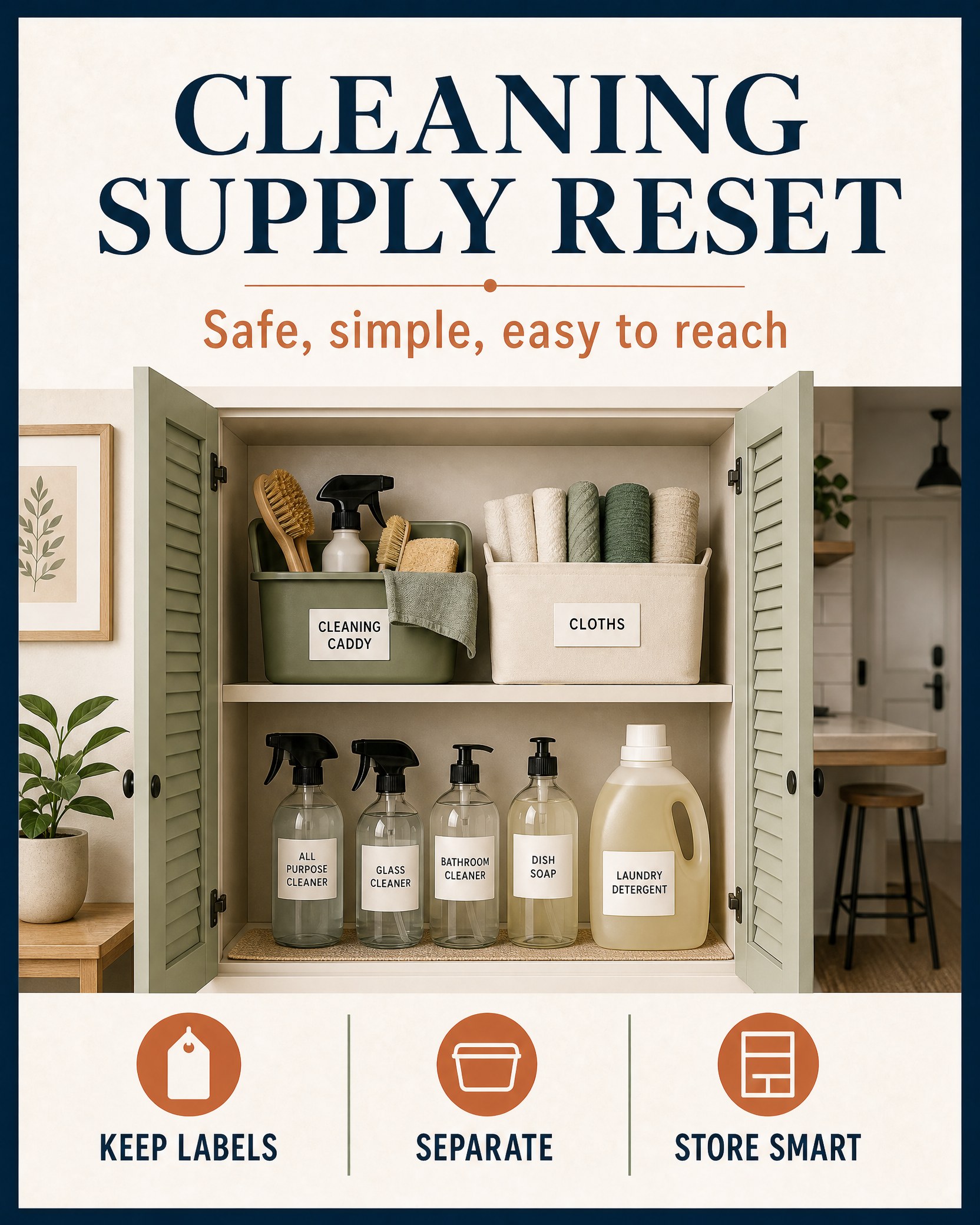
When space is limited, keeping cleaning supplies accessible and safe can feel impossible. Start with a simple system that separates clean tools from dirty ones, keeps manufacturer labels intact, and stores hazardous products where children and pets can’t reach them.
This guide lays out a realistic process you can do in an hour, explains the trade-offs of common storage choices, and finishes with a clear next step so you can protect people and keep your small home tidy without creating clutter.
A clean-versus-dirty separation plan
Designate two clearly marked zones: one for clean supplies and tools and one for dirty or used items that need laundering, drying, or disposal. Clean items include boxed sponges, fresh microfiber cloths, and unopened bottles. Dirty items include used rags, mop heads, and soiled brushes.
- Use breathable baskets or mesh bags for dirty textiles so they dry and don’t mildew.
- Assign a small, labeled bin for soiled disposable items that need to go directly to trash or recycling.
- Keep cleaning tools that contact waste (toilet brushes, garbage bin liners) separate from general-surface tools and store them lower or behind a door.
Trade-offs: separation uses a bit more floor or cabinet space but reduces cross-contamination and makes it easier to know when something needs washing or replacement.
The original-label rule
Keep chemicals and cleaners in their original containers whenever possible. The original-label rule means you retain the manufacturer instructions, dilution guidance, and safety warnings that belong to that product.
If you must transfer a product (for travel or a smaller caddy), keep the original bottle somewhere safe or attach a copy of the original label to the new container. Always include the product name and date on the replacement container.
Important: follow the directions on product labels and do not mix cleaners. Labels are the primary source of safe-use instructions.
Child/pet-aware storage review
Run a brief review of every storage spot to assess risk to kids and pets. Ask: Is this within reach? Could a curious pet knock this over? Is there temperature or moisture that could damage seals?
- High shelves, locked cabinets, or a short, lockable bin under the sink work well when space allows.
- For open storage, use latches, magnetic locks, or heavy lids on containers.
- Keep spill-absorbent materials (paper towels, old towels) nearby to clean up accidental leaks quickly.
Trade-offs: locking or high storage improves safety but can reduce convenience for quick clean-ups. Decide which products must be secured and which can stay handy.
Compact storage solutions for small homes
Small homes benefit from vertical and portable solutions. Consider which option matches your routine: a grab-and-go caddy for quick rooms, a fixed under-sink organizer for supplies you use less often, or wall hooks that keep mops and brooms off the floor.
At-a-glance reference
| Storage option | Best for | Pros | Cons |
|---|---|---|---|
| Rolling or handled caddy | Daily quick cleans | Portable; limits what you bring into rooms | Can be tipped if overloaded |
| Under-sink pull-out | Bulky bottles | Hidden, keeps chemicals out of sight | Limited space; may need child latch |
| Over-door caddy | Bathrooms/small closets | Uses vertical space; easy install | Hangs in view; may be accessible to kids |
| Wall-mounted pegboard or hooks | Mops, brooms, brushes | Keeps floor clear; customizable | Requires wall space and install |
Quick caddy setup
Fill a small caddy with essentials: one multi-surface cleaner (in original container), a microfiber cloth for surfaces, a scrub brush, and disposable gloves. Store heavier, less-used bottles elsewhere.
Maintenance routine and trade-offs
Set a simple routine: a weekly visual scan for leaks and accessibility, and a monthly inventory of what’s low or expired. Wipe up small spills immediately and launder reusable cloths promptly. Keep a short list posted on the inside of a cabinet door listing contents and last-check date.
Trade-offs: a strict routine takes a few minutes each week but prevents larger messes and safety risks later. If you’re short on time, focus weekly checks on child/pet risk and spills, and do a fuller inventory once a month.
Related guide: A Weekly Cleaning Schedule for a Small Apartment That You Can Keep
Related guide: Small Bathroom Organization: A Renter-Friendly Plan That Keeps Counters Clear
Next step: a 20-minute safe storage session
- Gather all cleaning items in one spot and separate into clean and dirty piles.
- Put any unlabeled bottles aside and either return them to original containers or label them clearly with product name and date.
- Choose one compact storage solution (caddy, under-sink pull-out, or wall hooks), and place highest-risk items out of reach or behind a latch.
- Do a quick safety check: no leaks, lids tight, and cloths drying.
That single session will cut clutter and leave you with a repeatable system that fits your space and household. Adjust for the trade-offs that matter most—convenience, aesthetics, or safety—and remember to follow product labels for safe use and storage.
FAQ
Where should I store bleach and other strong chemicals?
Keep them in their original, tightly sealed containers in a cool, dry place out of reach of children and pets. If stored under the sink, use a childproof latch and store away from foods and cleaning tools you use on food-prep surfaces. Always follow the product label for storage instructions.
Is it OK to decant cleaners into smaller bottles or unlabeled sprays?
The original-label rule discourages unlabeled decanting. If you decant, keep the original label somewhere safe or attach clear labeling to the new bottle that names the product and lists the date. Never leave cleaners in unlabeled containers.
How often should I check and refresh my cleaning supplies?
Do a quick weekly check for spills, loose lids, and access hazards, and a fuller monthly check to note low supplies or expired products. Regular small checks save time and reduce the chance of accidents later.
Sources and fact-checking
This article provides practical editorial guidance. Safety, cleaning, disposal, rental, and product decisions can depend on the item, its instructions, and local requirements.
- U.S. Environmental Protection Agency — Household Hazardous Waste — For cleaners, paint, batteries, oils, pesticides, or other potentially hazardous leftovers, follow the product label and local collection guidance.
- U.S. Centers for Disease Control and Prevention — Cleaning and Disinfecting — For everyday home cleaning, use product-label directions; disinfecting may be appropriate when illness circumstances call for it.
Fact-checked against the linked official resources on August 27, 2026.