How to Set Up an Open-First Kitchen Box for the First Week After a Move
Moving day can leave your kitchen boxes at the bottom of a pile while you prioritize beds and toiletries. Without an easy-to-open, intentionally packed “open-first” kitchen box, you may end up eating cold takeout or digging for utensils for hours.
This article shows how to pack and use a single open-first kitchen box that supports safe, simple meals for the first week after a move. The goal is to reduce decision fatigue and to keep basic food safety checks within reach—then unpack the rest of the kitchen on your own schedule.
Start with the real constraint
The real constraint after a move is not shelf space or style—it’s time and access. You probably will not want to unpack every cabinet the first night, and you want at least one reliable spot where you can make a meal, wash a cup, and find a charger.
Another constraint is food safety: perishables may need refrigeration or freezer space immediately. Use the FoodSafety.gov cold food storage chart for specifics on how long items keep and what needs refrigeration right away (this is an official source to check for storage times and details).
At-a-glance plan
| Step | When to do it | Core items | Decision signal |
|---|---|---|---|
| As you pack the truck | Morning of move (practical option) | One medium box, a reusable bag with cooler elements, a small dish soap bottle, sponge, hand towel | If you need food before cabinets are set up, this box is within arm’s reach |
| Unload first | Put this box on top of the other boxes at the door (personal planning approach) | A plate, bowl, two utensils, one sharp knife, cutting board, measuring cup, can opener | Open this box first as soon as you can access the kitchen area |
| Set up a mini station | Within the first few hours after arrival (personal planning approach) | Portable electric kettle or small hot plate (if allowed), microwave-safe container, basic seasonings in a small jar | If you are eating meals from the box instead of takeout, keep replenishing it |
| Restock or retire | By day 4–7, based on grocery needs (personal planning approach) | Trash bag, replaceable sponge, extra paper towels, zip-top bags for leftovers | When you have time to unpack cabinets, move reusable items into permanent storage |
Build the system step by step
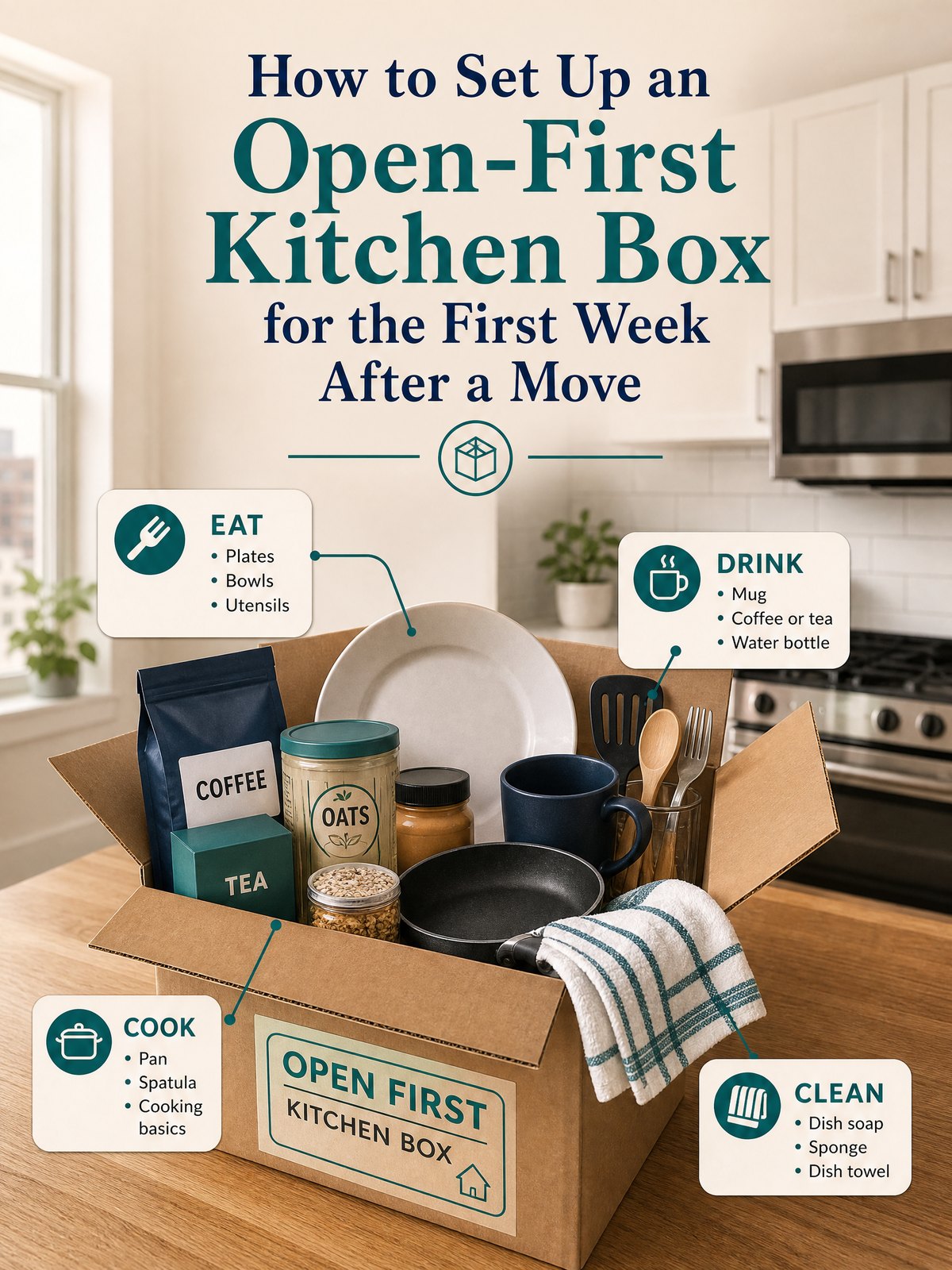
- Choose one sturdy, easy-to-open box or a plastic tote dedicated to immediate food needs. Label it clearly “OPEN FIRST—Kitchen” on at least two sides so movers or friends can spot it.
- Pack items by task rather than by category: plates and bowls together, prep tools together, cleanup items together, and a small, sealed bag with nonperishables and condiments. This reduces rummaging time.
- Include one-zone cooking tools: a single heat source you can legally use where you’ll be staying (this is a personal planning approach—verify with your lease or building rules), one small pan or microwave-safe bowl, and a kettle if you plan simple hot meals.
- Add a small “safety and freshness” packet: a thermometer or note to check the fridge temperature, a list of fridge/freezer items that must be refrigerated (consult FoodSafety.gov for storage guidance), and a few reusable storage containers.
- Pack a short checklist and a pen: where you’ve placed perishable groceries, approximate purchase dates, and a reminder to consult the FoodSafety.gov cold food storage chart for perishable timing and storage decisions.
After you assemble the box, assign it to be unloaded first and put it within reach of the place you’ll set up your temporary cooking area. Treat the box as a single mini-kitchen that supports three basic tasks: cook or heat, eat, and clean. Packing by task saves time when you are tired and keeps safety tools visible.
Trade-offs to consider
Designing a one-box kitchen is about prioritizing access over completeness; you choose which conveniences to keep handy and which to unpack later.
- Space vs. convenience: a plastic tote is more durable and stackable but takes more space in the truck than a box (practical trade-off).
- Immediate comfort vs. unpacking speed: pack a favorite mug and seasoning now, or leave more items boxed to speed final unpacking (personal planning approach).
- Low-tech vs. full cooking: a kettle and microwave take less setup than a burner and pan, but they restrict meal choices (practical trade-off).
Keep it workable
Make the open-first box a reusable habit: after unpacking, restock the box with a few essentials for short moves, overnight guests, or power outages. Keep a printed note inside with a short inventory so you can rebuild the box quickly. Regularly check the contents for worn sponges, expired condiments, or missing utensils and replace them before your next move or before storing the box long-term.
FAQ
What perishable foods should I prioritize for the fridge right after arrival?
Check the FoodSafety.gov cold food storage chart for item-specific guidance; the chart is the official resource to determine what needs refrigeration and how long items stay safe. Use that chart before deciding whether to cook, refrigerate, or discard items.
How do I handle a building or lease restriction on cooking appliances?
If your lease or building rules restrict certain appliances, follow those rules and consider lower-risk alternatives (for example, a microwave or kettle if allowed)—this is a question to verify locally with your landlord or property manager and by following any appliance manufacturer instructions.
How much should I pack in the open-first box?
Pack enough items to prepare and eat simple meals for a few days: two place-settings, basic prep tools, one cleaning kit, and a small selection of pantry staples. Exact quantities are a personal planning approach—tailor them to how many people will rely on the box and how long you expect to delay unpacking.
Next, gather the perishable groceries and check the FoodSafety.gov chart before deciding what to refrigerate or cook. After that, open the box first when you arrive and set up the mini station where it’s easiest to use.
Sources and fact-checking
This guide provides practical editorial guidance. Requirements and safe choices can depend on the product, lease, local rules, and individual situation.
- FoodSafety.gov — Cold Food Storage Chart — FoodSafety.gov provides food-specific refrigerator and freezer storage guidance and directs readers to use the official chart for details.
Fact-checked against the linked official resources on August 27, 2026.