
How to Downsize a Closet Before Moving to a Smaller Place
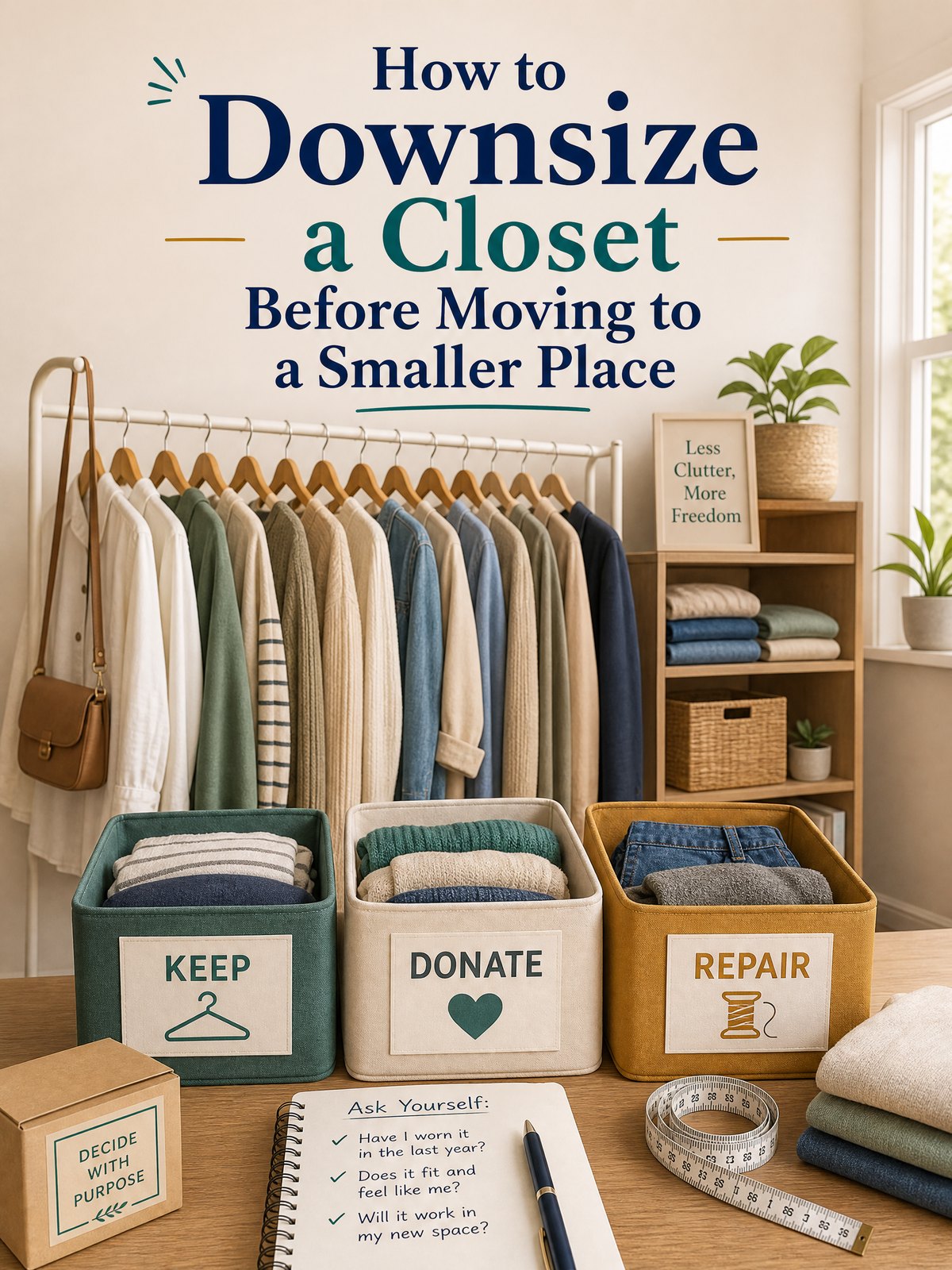
Moving into a smaller place means your closet will likely shrink first. The hard part isn’t just deciding what to toss — it’s picking a realistic number of items you can live with in the space available and packing toward that capacity.
This article helps you choose a wardrobe capacity before you pack, follow a short practical reduction plan, and keep a smaller closet working after the move so clothes don’t spill into other rooms.
Start with the real constraint
Before you start culling, measure. The real constraint is not sentimental attachment; it is the storage volume you will actually have where you’re moving. Measure hanging rod length, shelf depth and drawer counts in the new place or check the closet photos and floor plan the landlord provided.
Once you know the space, translate it into capacity: how many hangers fit on the rod at a comfortable spacing, how many folded items a shelf will hold without causing overflow, and how many drawers you can use. Treat those numbers as a hard budget when you decide what to keep.
At-a-glance plan
| Step | Action | Timing | Decision signal |
|---|---|---|---|
| 1 | Measure new closet and set item limits (hangers, shelf stacks, drawers) | Day 1 | If current items > limit, mark excess to review |
| 2 | Sort into keep, repair, donate, store boxes using the limits | Days 2–3 | Items not worn in 12 months → candidate to remove (personal planning approach) |
| 3 | Try a one-month “living with” test for the keep pile before packing the rest | 30 days | If you don’t miss an item, consider donating or storing it |
| 4 | Pack only the allowed number of items for the new closet; label overflow boxes | Move week | Overflow boxes go to labeled storage or out the door within 60 days |
Build the system step by step
- Measure and set a capacity budget: calculate hanger count and shelf/drawer capacity in the new space, then set a conservative buffer for breathing room.
- Empty and inventory: take everything out of your current closet and sort by category (shirts, pants, outerwear, activewear, work clothes, accessories).
- Apply quick decisions by category: hold up each item and use a streamlined rule — fit it into the budget, or move it to donate/repair/store piles.
- Stage a living test: for borderline items, box them labeled “test” and live a month without them to see what you actually miss.
- Pack and label with intent: pack only the items that fit the new capacity and label overflow boxes with what must leave first if space gets tight.
Following these steps creates a predictable system rather than a one-off purge. Measuring first prevents the common mistake of keeping too many clothes “just in case.” The living-test step gives you permission to be conservative without feeling permanent about every decision.
Trade-offs to consider
There is no one perfect closet size; different choices trade convenience, cost and flexibility. Be explicit about which you prioritize so you make choices you’ll live with.
- Convenience vs. variety: keeping fewer items simplifies dressing but reduces outfit variety for special situations.
- Cost vs. access: using paid storage preserves seasonal pieces but adds expense and a layer of planning to get items back.
- Sentiment vs. space: saving sentimental garments takes space; consider photographing or repurposing items as a compromise (personal planning approach).
Keep it workable
After the move, do a weekly five-minute check for the first two months: return stray clothes to the closet, re-evaluate one overflow box, and tidy shelves so that what’s visible reflects what you intentionally chose to keep. If you rent, follow your lease regarding any fixture changes; for safety and installation of furniture, follow product labels and manufacturer instructions.
FAQ
How do I know what a realistic hanger count is?
Measure the rod length in inches, divide by a comfortable hanger width you prefer (a common practical choice is 1.5–2 inches per hanger), and subtract a small margin so garments aren’t crammed; treat the result as your target capacity to guide decisions.
What if I have specialty items like formal wear or uniforms?
Group specialty items into a small dedicated section or a labeled garment bag; if you have only occasional need, consider short-term storage or photographing the items and keeping one representative piece in the regular closet as a space-saving practical option.
Can I keep overflow boxes in the new apartment long-term?
Keeping overflow boxes long-term often undermines downsizing. If you must store items, label boxes clearly and set a reminder to reassess in 30–90 days; if a box hasn’t been opened in that time, consider donating or disposing of its contents following local rules.
Decide your wardrobe capacity now so packing serves the move instead of the reverse. Make one clear rule you can follow during packing and enforce it for the first six weeks after the move to cement the new habit.
Make uncertain choices reversible. Put the clothes you are unsure about in one labeled box or section, rather than forcing an immediate permanent decision. After a normal stretch of wear and laundry, revisit that group using what you actually reached for. This approach keeps the closet usable now while giving difficult decisions a clear review point.
Sources and fact-checking
This guide provides practical editorial guidance. Requirements and safe choices can depend on the product, lease, local rules, and individual situation.
- U.S. Consumer Product Safety Commission — Anchor It! — CPSC advises following manufacturer instructions, securing TVs and top-heavy furniture where appropriate, and keeping climb-attracting items away from the top of furniture.
Fact-checked against the linked official resources on August 27, 2026.