Cardboard Pickup Service or Recycling for Moving Boxes?
A cardboard pickup service can clear a post-move box pile quickly, but it is not always the best first choice. Start by matching the size and condition of your moving boxes to the fastest realistic option: reuse, giveaway, curbside recycling, drop-off, or paid pickup. Moving boxes are helpful right up until the last room is unpacked. Then they become a bulky second project, taking over the entryway, blocking closets, and making a new home feel unfinished.
The best approach is not to keep every box or book the first hauler you find. Sort boxes by condition and likely use, keep a small number with a clear purpose, and compare free local routes before paying for removal. This guide gives renters and small-space households a practical plan for the first 48 hours, plus the quote details that matter when a pickup service is the sensible tradeoff.
Quick answer: when to use a cardboard pickup service
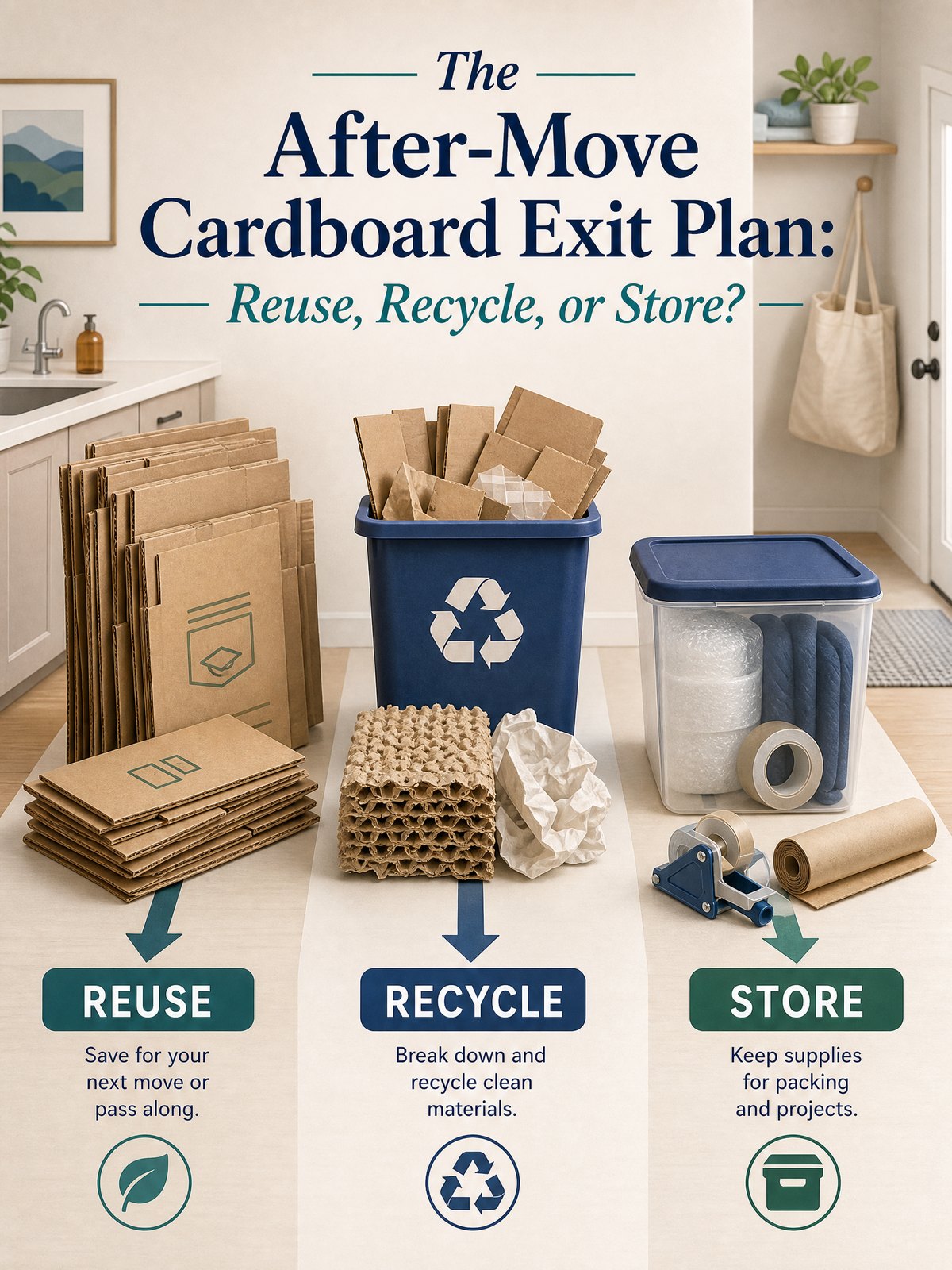
Use five routes: reuse, give away, curbside recycling, recycling drop-off, or a paid cardboard pickup service. Keep only sturdy boxes with a defined purpose. Offer clean boxes to other movers while they are still useful. Flatten recyclable boxes and confirm local rules. If the pile is too large for your bin or vehicle, compare a local cardboard pickup service with a junk-removal provider. Keep wet, moldy, pest-damaged, or chemically contaminated boxes separate until you verify the correct route.
Start with a 48-hour box triage
Choose one temporary sorting area that does not block a doorway, heater, stair, or main walking path. Do not spread empty boxes through several rooms. Work through one room at a time and move each empty box to one of the four categories.
| Box condition | Best next step | Timing | What to check |
|---|---|---|---|
| Clean, dry, and sturdy | Reuse, give away, or recycle | Decide within 48 hours | Realistic next use and available storage |
| Clean specialty box for a TV, monitor, or appliance | Keep only if it protects an item you still own | Review within two weeks | Warranty, return window, and storage cost |
| Torn or crushed but clean | Flatten for recycling if locally accepted | Remove with the next collection | Local size and bundling rules |
| Wet, moldy, pest-damaged, or strongly odorous | Keep separate and verify disposal guidance | Handle promptly | Local program rules and indoor hygiene |
| Large clean pile that will not fit curbside service | Compare a recycling drop-off or paid cardboard pickup service | Remove by your building deadline | Travel time, quote, access fees, and the provider’s recycling policy |
| Stained by paint, oil, cleaner, or another chemical | Do not mix with ordinary recycling until verified | Check before disposal | Product label and local household hazardous-waste guidance |
Step 1: keep only boxes with a specific job
A box is not worth storing simply because it might be useful someday. Give every saved box a named purpose. Good examples include an active return, seasonal items that already fit the box, or an upcoming move with a realistic date.
Set a physical limit before you start. In a small apartment, that might be one flat stack behind a shelf or a small group of nested boxes on a high closet shelf. The exact number matters less than the boundary. If the boxes do not fit in the assigned space, reduce the stack.
- Keep the strongest boxes in two or three useful sizes.
- Remove loose packing material before nesting boxes.
- Write the intended use and review date on the top box.
- Do not keep damp or musty cardboard indoors.
If you are still reducing what will go into your new storage, see How to Downsize a Closet Before Moving to a Smaller Place.
Step 2: give reusable boxes away while they are still useful
Clean moving boxes lose value quickly when they sit outdoors or absorb moisture in a garage. If you do not need them, offer them soon. Neighbors, coworkers, local community groups, schools, small businesses, and people preparing for a move may be able to reuse them.
Describe the approximate sizes, condition, pickup location, and whether the boxes are flattened. Do not claim that boxes are clean if they carried leaking products, food, pests, or strong odors. Arrange pickup in a way that fits your building rules and personal safety preferences.
Step 3: prepare cardboard for local recycling
The U.S. Environmental Protection Agency says cardboard containers and boxes can be recycled and recommends flattening boxes before placing them in the bin. EPA also emphasizes that local programs can have different rules, so check your city, county, building, or waste hauler before setting out a large stack.
- Empty every box. Remove foam, plastic film, loose trash, and other non-cardboard packing material.
- Flatten the box so it takes less room in the bin or collection area.
- Keep cardboard dry while it waits for collection.
- Follow local instructions for bundling, size limits, and where cardboard must be placed.
- Do not leave boxes in a hallway or shared trash room if your lease or building rules prohibit it.
EPA currently notes that pizza boxes can generally be recycled after food scraps are removed, even when grease is present. However, paper or cardboard takeout containers with food left on them may not be recyclable. That distinction is a useful reminder not to rely on a blanket “any stain means trash” rule. Your local recycling program has the final word.
Step 4: decide when a cardboard pickup service is worth it
A cardboard pickup service is a practical option when the boxes will not fit your local collection, you do not have a suitable vehicle, your building requires rapid removal, or carrying a large stack down stairs is unrealistic. Search results may include junk-removal companies, waste and recycling providers, local haulers, and specialized cardboard pickup businesses. Compare the service scope rather than assuming every provider handles clean cardboard the same way.
Compare at least two current quotes when possible. Ask whether pricing is based on volume, location, stairs, indoor versus curbside pickup, and same-day scheduling. Also ask what happens to clean cardboard after collection. A low pickup price does not automatically mean the material will be recycled.
- Photograph the complete pile so the provider can estimate its volume.
- Confirm whether boxes must be empty or flattened.
- Ask about stairs, elevators, parking, and in-home pickup fees.
- Verify the final price before confirming the appointment.
- Cancel duplicate curbside or drop-off plans once pickup is booked.
Step 5: separate boxes exposed to hazardous products
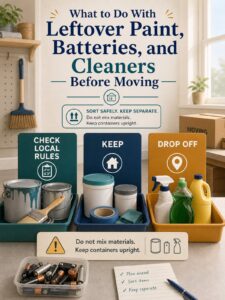
Moving boxes sometimes carry paint, cleaners, oils, batteries, pesticides, or other garage and maintenance products. EPA says these products can contain hazardous ingredients and may require special care during disposal. If a container leaked, isolate the box and follow the product label and local household hazardous-waste instructions.
Do not reuse a contaminated box for clothing, food, toys, pet supplies, or general household storage. Do not mix unknown residue with ordinary recycling. EPA advises residents to contact local environmental, health, or solid-waste agencies for area-specific household hazardous-waste options.
A two-week exit plan that prevents permanent box clutter
On day two, finish unpacking the boxes needed for daily life and flatten obvious recycling. By the end of week one, list reusable boxes for pickup and move recycling to the approved collection area. On day fourteen, review the saved stack. If a box still has no defined purpose, let it go.
You can make the review easier with three calendar reminders:
- Day 2: clear walkways and flatten empty boxes.
- Day 7: complete giveaways and confirm the recycling route.
- Day 14: reduce stored boxes to the preset space limit.
If the kitchen is still packed, organize one accessible essentials box before recycling everything. See How to Set Up an Open-First Kitchen Box for the First Week After a Move.
Common mistakes to avoid
- Keeping every specialty box: original packaging can be useful, but the storage cost is high in a small home.
- Putting full boxes beside a recycling bin: many programs require boxes to be empty and flattened.
- Ignoring building rules: a correct recyclable can still create a problem if it blocks a shared space or is placed out on the wrong day.
- Reusing damaged cardboard indoors: moisture, odors, pest evidence, and chemical residue are reasons to remove or verify a box rather than store it.
- Waiting too long to give boxes away: clean boxes are most useful immediately after a move, before they weaken or get wet.
- Booking pickup without a complete quote: stairs, indoor removal, parking, and volume can change the total, so verify what the quoted price includes.
FAQ
How many moving boxes should I keep?
Keep only what fits in a defined storage area and has a likely use. For many renters, a small nested set of sturdy boxes is more manageable than saving every box. Review the stack after two weeks and again after any return windows close.
Do I need to remove all tape and shipping labels?
Preparation rules vary by recycling program. Empty and flatten the boxes first, then follow your local program’s instructions about tape, labels, staples, and bundling. Avoid spending time on requirements your local collector does not have.
Can wet cardboard be recycled?
Wet or weakened cardboard can be difficult to store and collect, and moldy or contaminated material may not be accepted. Keep boxes dry when possible and check with your local program if cardboard has been soaked, become moldy, or contains residue.
What should I do with a box that held paint or cleaners?
If the product was sealed and the box is clean, follow normal local cardboard guidance. If there was a leak or visible residue, keep the box separate, read the product label, and contact your local household hazardous-waste or solid-waste program before disposal.
Final checklist
- Clear all main walkways within 48 hours.
- Keep only clean, dry boxes with a named purpose.
- Offer reusable boxes before they deteriorate.
- Empty and flatten cardboard for local recycling.
- Verify rules with your building and local program.
- Separate boxes with chemical residue or other contamination.
- Review the saved stack after two weeks.
A new home feels settled faster when empty packaging has a deadline. Choose the few boxes you genuinely need, flatten the clean remainder, and compare curbside, drop-off, giveaway, and paid pickup based on the size of your pile. That is the simplest way to decide whether a cardboard pickup service is worth paying for without turning moving boxes into permanent clutter.
Sources and fact-checking
Recycling and disposal requirements vary by community. Confirm current instructions with your local recycling, solid-waste, or household hazardous-waste program.
- U.S. Environmental Protection Agency — How Do I Recycle Common Recyclables? — Current EPA guidance on flattening cardboard, pizza boxes, food residue, and checking local program rules.
- U.S. Environmental Protection Agency — Household Hazardous Waste — Guidance for products such as paints, cleaners, oils, batteries, and pesticides.
Fact-checked against the linked official resources on October 26, 2026.