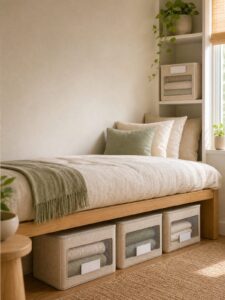
Laundry Room Organization for Small Spaces: One-Basket System
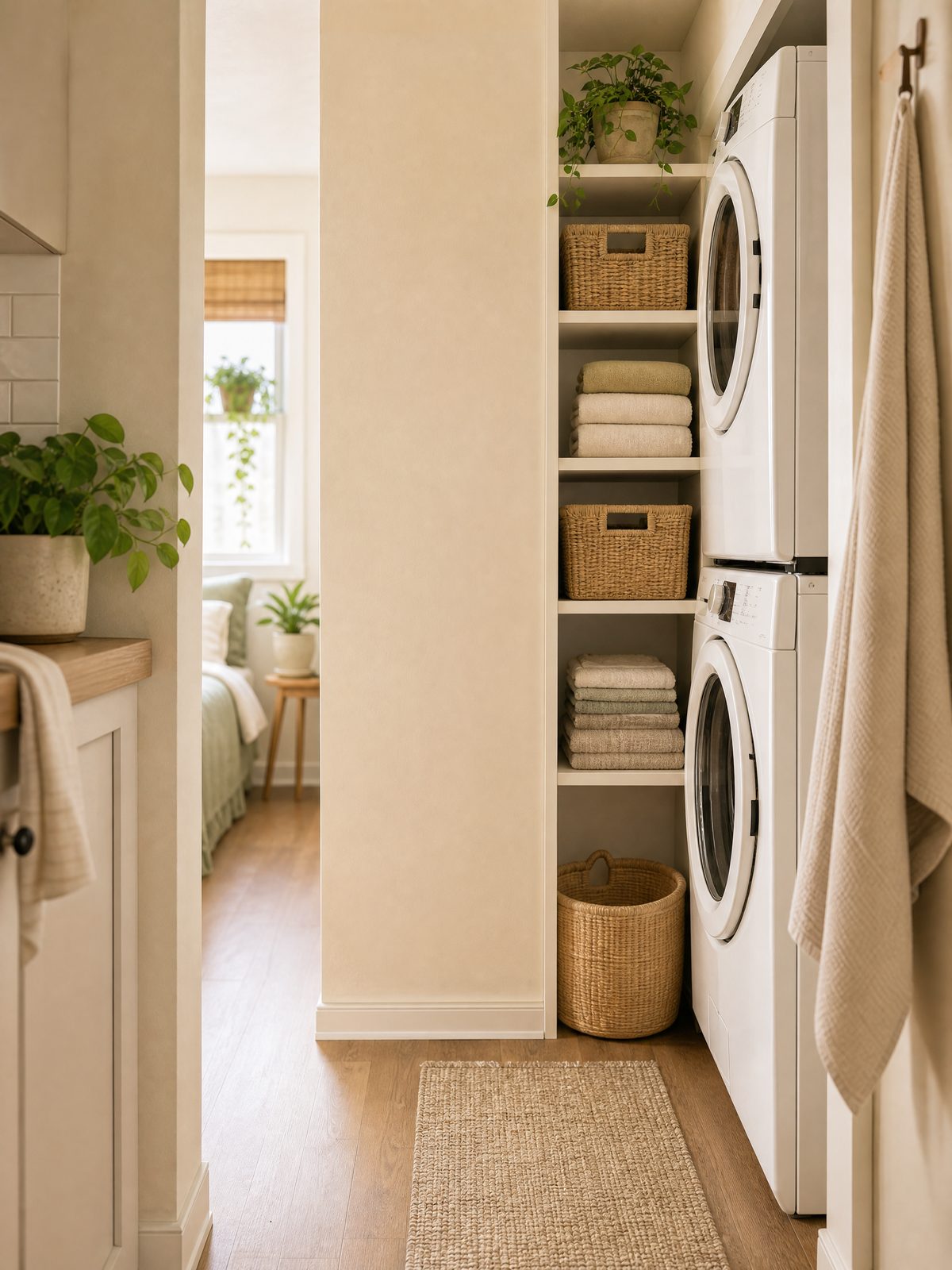
Laundry room organization in a small space depends less on adding shelves and more on creating a clear path for clothes. A one-basket-per-person system gives every household member one container, one fill signal, and one return point, so laundry is less likely to become a shared floor pile.
This setup can work beside a stacked washer and dryer, in a laundry closet, or when the machines are in a shared apartment-building room. The baskets do not need to live beside the machines. They need to fit the route from bedroom to washer and back.
Quick answer: organize the flow before the room
Give each person a basket that is easy to carry, assign it a home, and agree on what the basket means at each stage. In the simplest version, clothes enter the basket when they are ready to wash, the basket travels with the load, and clean folded clothes return in the same basket.
This removes the need for a large central hamper and reduces sorting by owner after washing. If your household sorts by color, fabric, or washing instructions, do that at the machine rather than filling a tiny laundry area with permanent sorting bins.
| Stage | Basket location | Visible signal | Next action |
|---|---|---|---|
| Collect | Bedroom, closet, or bathroom location that does not block a path | Basket reaches the agreed fill line | Owner checks labels and plans a load |
| Wash | Machine-side only while the load is active | Empty basket stays with the load | Use it to carry dry clothes away |
| Fold or hang | One clear surface or portable folding point | Clean clothes go directly back into the owner’s basket | Fold, hang, and return the same day when practical |
| Reset | Basket returns to its assigned home | Laundry area is free of personal baskets | Start the next cycle only when capacity exists |
Step 1: measure the route and basket home
Measure the width, depth, and height of the intended basket location. Also measure door openings, narrow hallways, and the clearance in front of the machines. A basket that fits a cubby but cannot move through the route without hitting furniture will not make laundry easier.
Decide whether each basket belongs in the person’s room, on an open shelf, or in a vertical rack. In very small homes, bedroom placement often keeps the laundry nook clear. The machine area should remain a working zone rather than permanent storage for everyone’s clothes.
Before adding racks, hooks, or shelves, check the lease and product installation instructions. Do not reduce access to appliance controls, doors, vents, utility connections, or the walking path. Our safer small-apartment laundry area guide covers those planning constraints in more detail.
Step 2: choose the right laundry basket organizer
Commercial laundry organization products include slim hampers, rolling sorters, stacking basket frames, collapsible baskets, wall-mounted bags, and carts. Choose the product category after identifying the space problem.
| Option | Works best when | Check before buying | Main trade-off |
|---|---|---|---|
| Open plastic basket | The basket travels between a bedroom and nearby machines | Handle comfort, empty weight, and doorway width | Contents remain visible |
| Soft handled hamper | You carry laundry through stairs or a shared building | Seam strength, washable material, and stable base | May collapse while loading |
| Stacking basket frame | Floor space is scarce but vertical clearance is available | Overall stability, basket removal angle, and wall clearance | More expensive and not always renter-friendly |
| Rolling laundry sorter | The household sorts loads together in one location | Wheel quality, total width, and filled weight | Occupies permanent floor space |
| Collapsible basket | The basket can be stored empty between loads | Locking strength and comfortable grip | Repeated folding adds a step |
One basket per person does not require matching products. However, similar dimensions make a shared shelf or rack easier to plan. Color, a removable name tag, or a simple symbol can distinguish ownership without adding permanent labels.
Step 3: set one fill signal
A basket should trigger action before it becomes too heavy or overflows. Choose a visible fill line, a scheduled wash day, or a category trigger such as “work clothes are running low.” The signal must fit your machine access and the load guidance for the fabrics involved.
ENERGY STAR advises using appropriate load sizes and settings and following the washer manufacturer’s instructions. A full-looking basket is not proof that its contents make an appropriate machine load. Check garment labels, separate items when required, and do not force an oversized load into the appliance.
For shared machines, plan the carry and timing before leaving the apartment. The apartment-building laundry checklist can help with supplies, machine availability, and the trip back.
Step 4: use a two-signal clean-and-dirty system
If the same basket carries dirty and clean clothes, use an unmistakable signal. For example, a clip on the handle can mean “clean,” while no clip means “ready to wash.” Another option is a washable liner that is turned inside out for the return trip.
The signal should prevent clean clothing from sitting beside detergent bottles or on a machine top. Clean the basket according to its manufacturer’s instructions when it becomes soiled. CDC household cleaning guidance emphasizes cleaning surfaces with soap or detergent and following product label directions; disinfecting is generally an additional step for specific circumstances rather than a substitute for routine cleaning.
Step 5: create a portable folding point
A tiny laundry space may not have a counter. Use a bed, dining table with a clean protective surface, or a foldable board stored away from the machine. The best folding point is close enough to use but does not permanently occupy the laundry path.
Sort clean clothing by owner directly into the personal basket. If several people’s clothes share one load, place each empty basket near the folding point and separate items once. The basket then becomes the return vehicle rather than another place for clean clothes to wait.
Keep supplies separate from personal baskets
Store detergent and laundry products according to their labels and away from the personal-basket rack. Do not pour products into unmarked decorative containers. A small tray or one handled supply caddy keeps products together without mixing them with clothing.
Keep only the supplies used regularly in the laundry zone. Bulk refills and specialty products can live in another appropriate storage location when the lease, label, and household safety needs allow. The goal is not to fill every shelf; it is to preserve working clearance.
A five-minute weekly laundry room organization reset
- Return empty personal baskets to their assigned homes.
- Remove clean clothes that have been waiting in the laundry area.
- Wipe the portable folding surface and basket handles when needed.
- Check that the walking path and appliance access remain clear.
- Restock only the laundry products that are actually running low.
If baskets repeatedly collect in the laundry area, the system has too much waiting time. Move folding closer to the bedrooms, schedule a shorter return step, or reduce the number of loads started at once.
Common mistakes and trade-offs
Buying a large sorter for a tiny nook: multiple compartments are useful only when the sorter fits the room and matches how you wash.
Using the basket as clean-clothes storage: this leaves no container for the next load. Set a return deadline or use a separate temporary folding surface.
Mounting storage without checking the lease: a product may be advertised as space-saving but still require anchors or clearance your rental does not allow.
Keeping baskets beside hot or moving equipment: follow the appliance manual and maintain the access and clearance specified by the manufacturer.
FAQ
Does one basket per person work in a very small apartment?
Yes, when the baskets live in bedrooms or closets rather than permanently beside the washer. Measure the route and choose slim, soft-sided, or collapsible options that are easy to carry.
Should each person sort lights and darks in separate baskets?
Not necessarily. In a small home, one personal basket can collect clothing, with sorting done at the machine according to garment labels and washer instructions. Use multiple compartments only when they match your actual laundry routine.
How do I keep clean and dirty clothes from sharing the same basket?
Use a removable clean liner, a colored handle clip, or another clear signal, and clean the basket according to its care instructions when soiled. Do not place clean clothes into a visibly dirty basket.
What should I measure before buying a laundry basket organizer?
Measure the product location, doorways, carrying route, machine-door swing, vertical clearance, and the space needed to remove each basket. Also consider filled weight and handle comfort.
Sources and fact-checking
Follow garment labels, appliance manuals, cleaning-product labels, lease requirements, and building laundry-room rules. Product dimensions and installation requirements vary.
Fact-checked against the linked official resources on November 3, 2026.